

Just over a year after the hurricane, Jamaicans are restoring the means to earn, learn and live at home. Their experiences reveal what makes recovery possible, and why so many are still waiting.
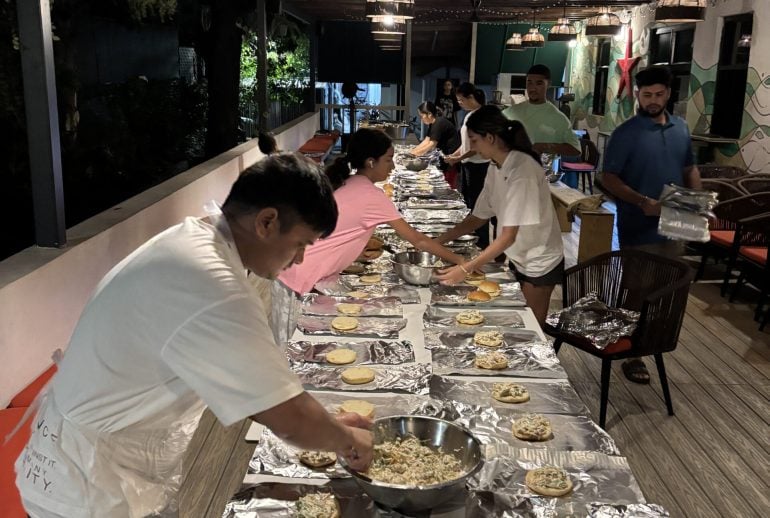
Mystic Thai chefs began work at four in the morning, preparing meals to help get food out around Jamaica after Melissa. Photographed on 31 October 2025. OCEAN Style.
Courtland Blake makes cabinets, doors and bed frames. In All Hands & Hearts’ October 21 account, his work supports his family, two employees and his daughter’s college education. Melissa destroyed the workshop on which those different futures depended. A grant paid for a new roof, electrical repairs and equipment. By the time of that report, the business was operating again.
“If it weren’t for this grant, I wouldn’t have the roof. I wouldn’t have come this far,” Blake told the organisation.
There is a whole household economy inside that repair. Restoring a workshop allows its owner to take orders and pay people whose own bills have continued through the disruption. The assistance becomes useful through the work it makes possible. A year after Melissa, that connection between a repaired building and a life that can function again runs through Jamaica’s recovery, along with the frustration of people who have yet to reach it.
Melissa made landfall near New Hope, Westmoreland, on October 28, 2025. The National Hurricane Center’s final report places it at approximately 12:25 p.m. Jamaica time, a Category 5 hurricane. Its account describes catastrophic destruction across western Jamaica, including severe damage to concrete buildings as well as the loss of wooden structures and roofs. The report, dated February 25, 2026, records 45 known deaths in Jamaica. Behind that dated reckoning are families for whom an anniversary also marks a year of someone’s absence.
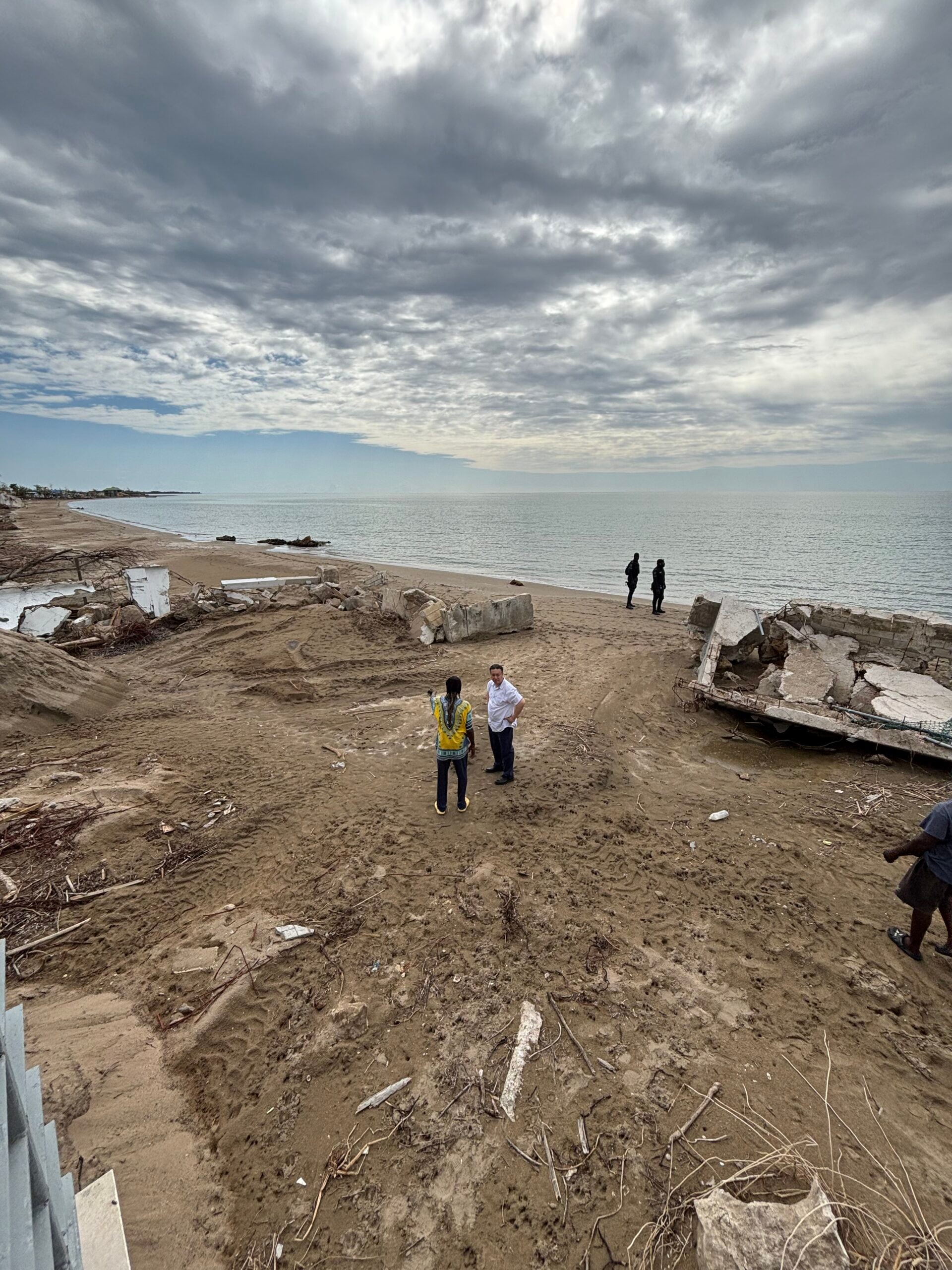
In the first weeks, people needed to eat while almost everything that sustained their ordinary lives was interrupted. World Central Kitchen worked through Jamaican cooks, volunteers and restaurant partners, establishing field kitchens in Montego Bay and Negril. By November 24, 2025, it reported more than two million meals served. Its January 20, 2026 wrap-up put the completed Jamaica response at 6.7 million meals over nearly three months. Reaching families cut off by damaged roads had required motorcycles, four-wheel-drive vehicles and aircraft. As households regained the means to cook, the response also included more than 36,000 meal kits.
One of those local partners was Nathalee, owner of Kajay’s Seafood Restaurant in New Hope, Westmoreland. In WCK’s account, damage initially prevented her from cooking, so she organised the distribution of meals supplied by the Montego Bay kitchen and other partners. The restaurant later resumed cooking while keeping its team employed. Familiar people and places helped turn a large relief operation into food a neighbour could actually receive.
Jamaica’s cultural networks carried help across borders too. Food For The Poor’s November 6 report described Cedella Marley joining students in South Florida to pack more than 1,600 hygiene kits. The Bob and Rita Marley Foundations also mobilised food, clean water and emergency supplies through their One Love in Action response, with partners including Food For The Poor and Global Empowerment Mission.
Through the Sean Paul Foundation, Sean Paul combined a pledge to match up to US$50,000 in donations with work on the ground. Food For The Poor reported on November 1 that he and his family had helped volunteers pack 1,000 food kits. Shaggy, recounting his own relief mission in a November 2025 Associated Press interview, described bringing supplies from Miami and transferring them into smaller vehicles to reach damaged communities. Water, tarpaulins, sanitary supplies and batteries were among the things he carried.
The Buju Banton Foundation records working with Miami-Dade County to collect and deliver relief supplies for Jamaicans affected by Melissa. These efforts depended on people who could sort, transport and distribute what was donated. Shaggy also spoke about ordinary Jamaicans filling their cars and heading out to help. Volunteers sorting boxes and finding a route into a damaged community were part of the same effort.
That work continued as emergency assistance gave way to repairs. UNDP’s August account describes Petersfield residents turning storm debris into bins and school seating, while salvaged lumber and zinc went towards home repairs in Petersfield and Sawyers. Welder Garth Martin made a bin from recovered material. Paid clean-up also gave residents a way to equip themselves for further work: Gregory Anthony of Sawyers said his earnings enabled him to buy painting and carpentry tools. Materials recovered from the storm and wages earned clearing them could both contribute to the next job.
Yet enterprise needs more than a willingness to work. Marine Beale ran a small café opposite a school in Savanna-la-Mar. Melissa destroyed both her business and her house. In an IFRC anniversary account published on October 27, she was living in transitional accommodation. She used her first Red Cross cash transfer to buy food. The business that could restore her income remained her next concern.
“Once my business is up, I know I can survive,” she told the organisation.
Beale’s experience makes the order of recovery painfully clear. A person may need assistance to get through today before she can use assistance to earn tomorrow. The Jamaica Red Cross and IFRC reported cash and voucher support to 7,161 households by the anniversary update. Their account also described thousands of families still displaced. A transfer can relieve immediate pressure without resolving the loss that created it.
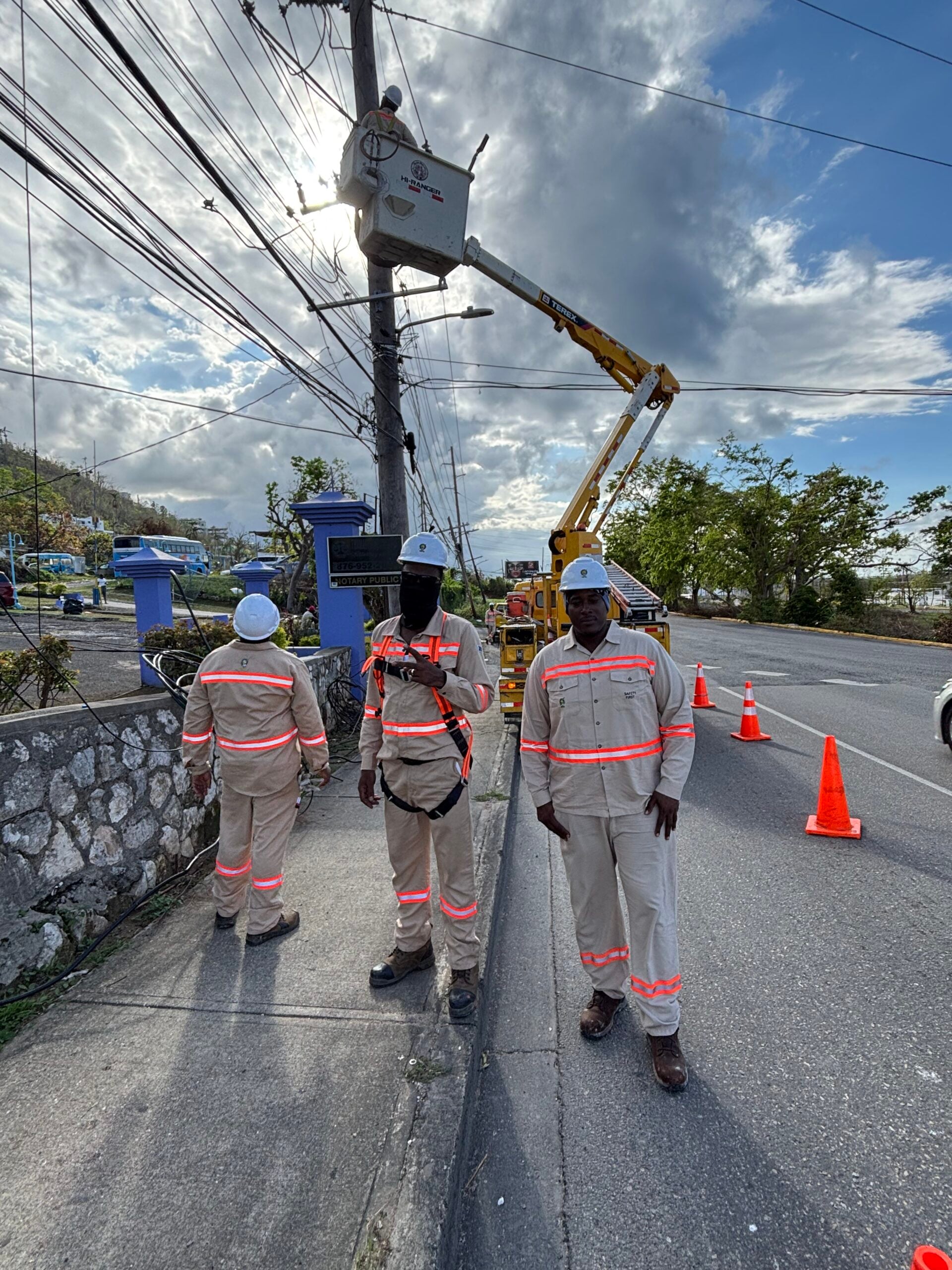
Access to help can itself require help. At an October application drive in St Elizabeth, tax officials processed registrations for people who needed a TRN to apply for the Government’s business restoration grants. Justices of the peace assisted with verification, and volunteers helped applicants navigate the online process. An October 17 Observer report republished by the Ministry of Industry, Investment and Commerce put applications at 1,485 as of that update. The J$500 million programme had opened on October 6.
Those were applications, with eligibility checks still part of the process. The ministry’s portal explains that approved support is paid to suppliers for eligible repairs, tools or equipment. For an applicant, the practical questions continue beyond submitting a form: whether support is approved, what it will replace, and when that replacement will allow work to resume. The people staffing a registration desk can be as consequential to that process as the announcement that funds exist.
The national figures describe the scale of the interruption. In March, the Planning Institute of Jamaica presented an assessment of approximately US$12.232 billion in damage, losses and additional costs. The World Bank and Inter-American Development Bank’s earlier US$8.8 billion estimate covered physical damage. Lost income and the extra expense of coping with disruption belong to the broader reckoning. For a family whose home and business were both destroyed, the distinction has an immediate meaning: rebuilding the structure leaves the months without earnings still to be absorbed.
Jamaica needs the income that returning visitors bring, but the return is uneven within tourism too. In a September 17 interview with Jamaica Information Service, Tourism Minister Edmund Bartlett said most tourism jobs had returned and formal accommodation capacity stood at 70 per cent. He projected further improvement for the winter season. That September measure described available capacity across formal accommodation; it did not establish how many damaged rooms had been repaired by the anniversary.
The financial obstacles were still drawing scrutiny. An October 1 Associated Press report described hotel operators’ complaints about delayed insurance settlements and deductions. Insurers stressed the complexity of individual commercial claims and the demands on loss adjusters. In an October 3 statement reported by The Gleaner, the Insurance Association of Jamaica acknowledged the pressure outstanding claims placed on households and businesses and said its members were reviewing unresolved cases.
For farmers, the capacity to begin again may depend on something as basic as planting material. In The Gleaner’s October 28 reporting from southern Trelawny, yam farmer Althea Pryce described a shortage of planting material. “I am having a difficulty getting yam heads to replant but I am not giving up,” she told the newspaper. Audley Gager was searching for them too. Lisa Gordon, a teacher from Thompson Town, recalled how yam farming had paid for her own family’s schooling and home. These are livelihoods with obligations extending far beyond a field. Replanting restores a source of income on which children, vendors and other households depend, but the desire to plant cannot supply what is missing.
Recovery also has to contend with the weather that follows the hurricane. Agro-Invest’s September 3 report described an equipment and irrigation handover the previous day to Essex Valley farmers in St Elizabeth, who were recovering from Melissa while facing dry conditions. Water tanks and drip irrigation addressed the next growing season’s needs. Restoring production requires keeping a farm viable through conditions that will not wait for the repairs to finish.
At home, assistance also has to cover the work of installation. In its October account, All Hands & Hearts describes how it tarped Donald Brown’s roof in Elim, then supplied a roofing kit and covered the cost of installation.
Other housing work was at an earlier stage. A ministry update published on October 26 described inspections four days earlier at St Elizabeth sites where work included clearing land, excavating foundations and preparing septic tanks. The parish component provided for about 125 semi-permanent units. Reinforcement, inspections and concrete work remained ahead at the sites described. The work was real, and it was still construction rather than evidence of families moving in.
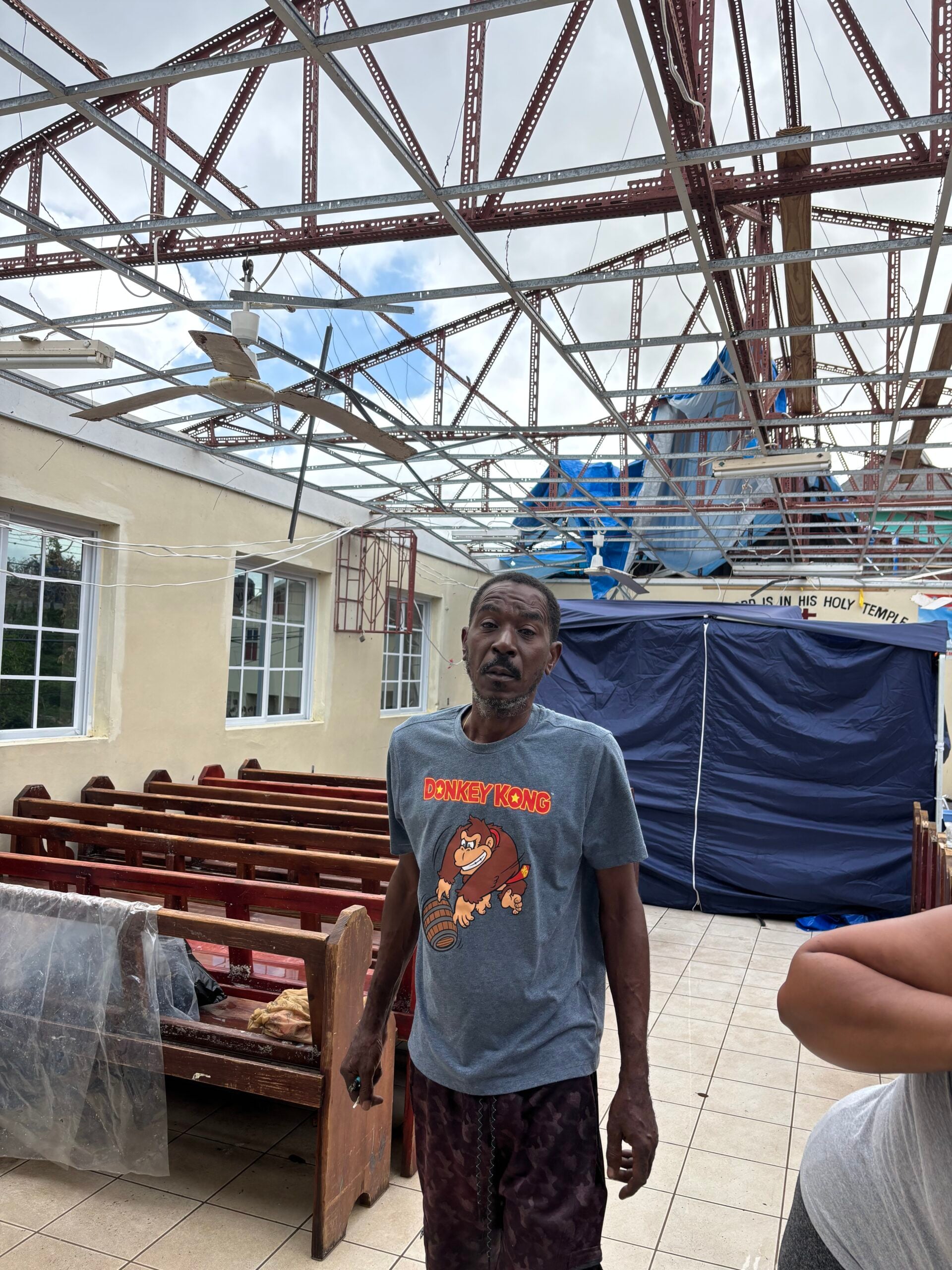
Even the Government’s own anniversary-period statements acknowledged the impatience. In an anniversary-period release, the Office of the Prime Minister recognised continuing hardship among people without secure homes and recorded the prime minister’s dissatisfaction with aspects of recovery, particularly the restoration of homes and roofs. Faster delivery has to produce somewhere people can live. It also has to take account of how they will make a living there.
In Parottee, the two questions are inseparable. The Observer’s October 28 report found residents rebuilding in the low-lying coastal community despite an official relocation plan to Luana. Boat-tour operator Ridge Harvey described fishing, tourism and family graves as reasons people wanted to stay. “We live off the sea, the pond, and tourism,” he said. Windell Daley told the newspaper he had received no financial help; he and his wife were willing to move to other land in Parottee, while his daughters wanted to remain where they had grown up. Even within a family, people were making different choices about where they could begin again.
Relocation asks people to weigh safety against the places where they know how to earn and where their family histories remain. A safer address has to work as a home within a life. Attachment to Parottee cannot settle the risk, but any lasting response has to understand it.
The strain also travels into classrooms. Ilene Cohall Bailey, a master teacher at Manning’s School in Savanna-la-Mar, was dealing with anger, loss and uncertainty while helping her pupils, according to UNICEF. Its September account, carrying a May 19 dateline, described her participation in Return to Happiness training earlier in the year. The sessions gave teachers space to recognise their own distress while learning how to support children.
“Through the laughter and the sharing, I realized I was not alone,” she said.
That relief belongs beside the accounts of physical rebuilding. The adults expected to restore routine have also lived through the storm. Their ability to care for children can depend on finding care and understanding themselves.
Practical learning has meanwhile required its own improvisation. The Gleaner reported in September that damaged books and tools at Muschett High in Trelawny had pushed industrial arts teaching towards theory and revision. At Herbert Morrison Technical High in St James, grade-12 student Tevel Richards faced missing tools needed for his mechanical technology school-based assessment. His parents supplied some, and he shared them with classmates so they could work on their assessments too.
At an October 22 education briefing reported by the Observer, junior education minister Rhoda Moy Crawford described shortages of skilled labour, material difficulties and contractor challenges. Officials also outlined stronger building standards. Children need those buildings to be safer, and they need suitable spaces and equipment while the work continues. Every term spent adapting places demands on teachers and families that a construction update cannot fully describe.
The tools passed from one pair of hands to another, putting his parents’ help to work beyond their own household.