

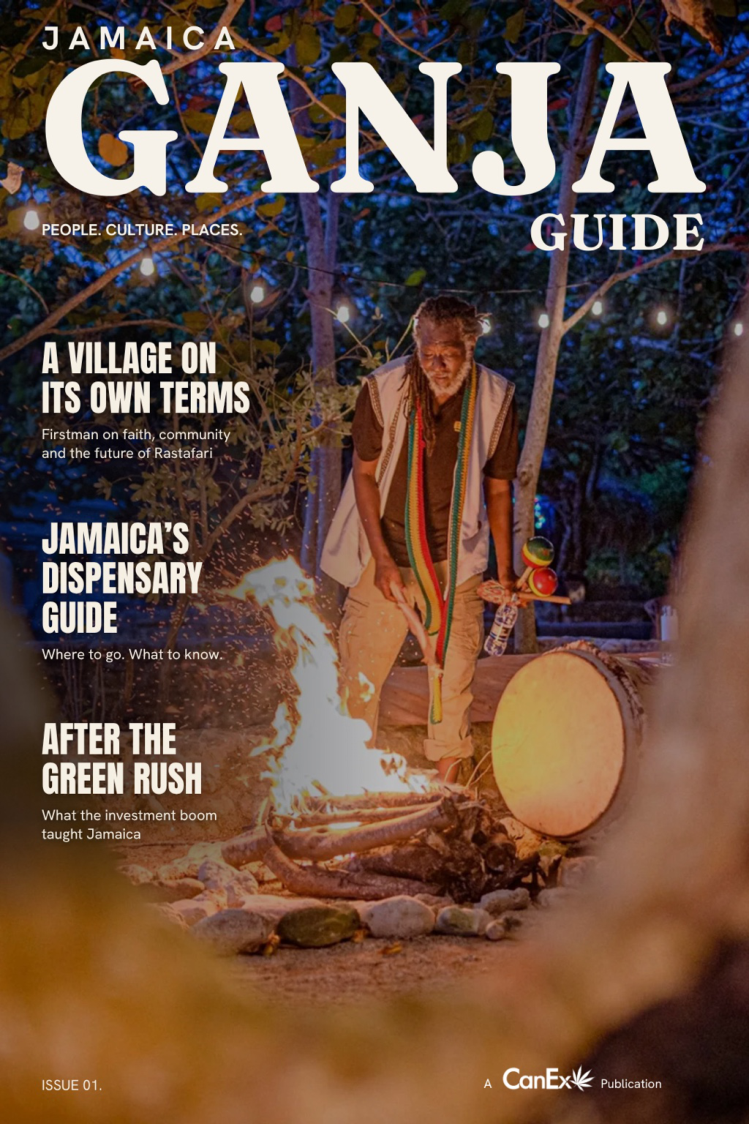
Freedom, faith, music and the work of building an industry. Issue 01 of CanEx’s Jamaica Ganja Guide brings the people behind the story into view.
By Douglas K. Gordon
In the Jamaica Ganja Guide, Denzil Williams, known as Wadada, describes one of the gains from reform in four words: “The benefit of freedom.”
Williams’s next words explain the weight he gives that answer: “Because freedom is very important.” His account also questions who has received the commercial rewards from a culture that Rastafari helped carry through years of stigma. Reading his answers together reveals both the value he places on freedom and the recognition he still wants to see.
That is a useful place to enter Issue 01 of the guide from CanEx. Jamaica’s ganja story contains people with different histories, beliefs and ambitions. Spend time with them and the familiar image of a leaf begins to give way to more substantial questions. Who carried this knowledge? Who gets heard? What does opportunity look like to someone whose livelihood or faith is part of the story?
The Jamaica Ganja Guide brings those questions into a publication that moves between cultural history, personal accounts, the regulated industry and the places where these conversations take shape. It is intended for people living in Jamaica, those coming home and visitors who want to understand more of the country they encounter.
Start with the people
Williams’s account also moves through relationships, music and his own Rastafari journey, giving reform a personal history that a legal timeline cannot supply.
At Rastafari Indigenous Village, Firstman approaches recognition through the life of a community. In the guide’s interview, he describes a space built around social, cultural and economic rights. Music is part of that life, along with family, responsibility to the earth and the practical work of sustaining a collective enterprise.
A visitor may first become curious through reggae or ganja. The Guide places that curiosity beside Firstman’s account of collective rights and responsibilities. The people living and working at the village have priorities that extend beyond a visit.
Read together, these voices ask the reader to listen before deciding what ganja means to Jamaica. A cultural symbol can travel a long way from the people who give it meaning. Here, those people explain their own priorities.
The business story has people in it too
The language changes in the industry pages, where capital, processing and regulation enter the discussion. The human questions remain.
The Guide’s “After the Green Rush”, drawing on Wayne Isaacs’s recollections, revisits the expectations that accompanied investment in Jamaica’s cannabis industry. In his account, administrative demands and banking difficulties help explain the distance between money announced and money available to put to work.
That distinction has consequences for anyone building a business. An impressive announcement does not, by itself, explain when a company can hire, build or pay its bills. The guide makes room for a more practical conversation about what an industry needs to endure.
Rory Liu takes the discussion towards what happens after cultivation. In “Beyond Flower”, his emphasis is on adaptability, processing, development and manufacturing. He describes the importance of a scale a business can sustain and the ability to change plans when circumstances require it.
The question of who participates runs through these accounts. Building a business requires more than an opportunity on paper: people need conditions in which they can put their work, knowledge and money to use.
Follow the music into the wider culture
The guide’s music pages put Peter Tosh’s Legalize It and Bob Marley and the Wailers’ Kaya into a listening conversation. Dub and dancehall take their place in the selection too.
The selection offers another way into the subject. Music carries argument, faith, pleasure and ordinary life. A listener who arrives through a familiar title can keep listening for the worlds surrounding it.
The wider publication also explores gardens, food, bathing heritage and the ways people make space in a day. Those subjects help keep wellness connected to everyday Jamaican life. Their cultural value does not depend on turning every tradition into a medical promise.
For a reader interested primarily in the industry, these pages broaden the view. For someone drawn by music or community, they provide routes into questions about work, regulation and ownership. The connections are part of the reason to read across the guide.
A directory within a larger story
The directory gives the publication a geographical dimension. Alongside its entries, the editorial pages supply history, different perspectives and the people whose concerns give the industry its wider context.
The value of the publication lies in being able to move between those forms of information. A directory organises names and places. An interview can change the questions a reader brings to them.
Begin with Wadada’s account of freedom, follow Firstman into the responsibilities of community, or read Isaacs and Liu on what it takes to build a business. Each opens a different part of the same Jamaican story.
Williams’s phrase is worth carrying into the rest of the edition. Freedom has meaning before it becomes an economic measure. What people can make of it, and whether their contribution receives recognition, remains a conversation worth having.
The Jamaica Ganja Guide website goes live on Monday, 9 November 2026. Visit CanEx Jamaica for the Guide and its wider programme.
Disclosure: I publish the guide through CanEx and have a commercial interest in Cookies Jamaica, its presenting sponsor, and Natural Mystic Wellness. The guide is produced by The Studio by OCEAN Style.