

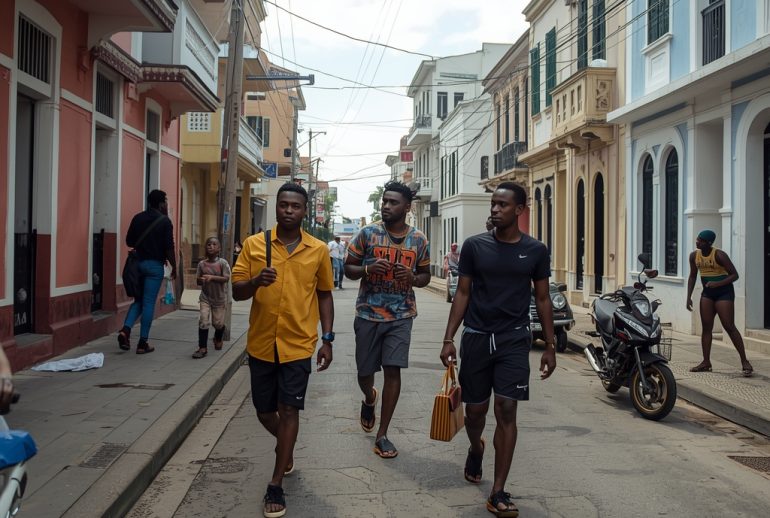
The Caribbean does not export culture in the conventional sense.
It exports tone.
Across music, fashion, language, food, and everyday ritual, the region’s influence arrives early, spreads widely, and is often credited late. What the world calls global culture routinely carries Caribbean DNA. Sometimes it is obvious. Often it is unacknowledged. It is rarely absent.
This influence does not come from scale or strategy. It comes from proximity to life itself. Caribbean culture is built to function under pressure. That is why it travels so well.
If global culture were mapped honestly, the Caribbean would not sit at the edge.
It would sit near the center.
Influence Without Permission
The Caribbean has never waited to be validated.
Its cultural exports did not move through institutions first. They moved through people.
Sound systems traveled before record deals. Language moved through migration before it was studied. Style circulated through streets and shorelines long before it reached runways. Food crossed borders in kitchens, not campaigns.
This is why Caribbean influence feels embedded rather than introduced. It does not announce itself. It integrates.
What spreads most easily is what works. Caribbean culture works because it was never ornamental. It was designed for survival, expression, and continuity.
Music as Architecture
Few regions have shaped global sound as completely.
From reggae and dub to soca, dancehall, reggaeton, and Afro-Caribbean rhythms embedded in pop, hip-hop, and electronic music, the Caribbean has provided structure as much as style. Basslines, syncopation, repetition, and space all reflect an understanding of how sound moves bodies and holds communities together.
Caribbean music is not built for passive listening. It is built for use.
That functional quality is why it keeps being sampled, reinterpreted, and absorbed. The world does not borrow Caribbean music for novelty. It borrows it for foundation.
Fashion as Attitude, Not Costume
Caribbean influence in fashion is often misread as color or ease.
The deeper contribution is posture.
Dress in the region has always balanced visibility and restraint. Clothing responds to climate, movement, and social proximity. It is expressive without being precious. Confident without excess.
This attitude appears repeatedly in global fashion cycles. Relaxed silhouettes. Emphasis on comfort. Intentional looseness. A rejection of rigidity framed as sophistication.
The Caribbean did not invent ease as an aesthetic. It lived it as a necessity. That authenticity continues to resonate.
Language That Travels Faster Than Policy
Caribbean language moves with unusual speed.
Phrases migrate. Cadence migrates. Tone migrates. What begins as dialect often becomes global slang within a generation. The influence shows up in music lyrics, street language, advertising, and digital culture.
This is not accidental. Caribbean speech is rhythmic, compressed, and emotionally precise. It communicates quickly. It carries humor, critique, and intimacy at once.
Language shaped under conditions of compression tends to be efficient. That efficiency makes it contagious.
Cultural Confidence Without Institutions
What makes Caribbean influence unusual is how little institutional support it required.
Much of what the world adopted emerged outside formal systems. No centralized funding. No unified export strategy. Influence moved through migration, sound, and repetition.
This created a culture that is self-validating. It does not seek approval. It continues regardless of recognition.
That independence is precisely why it remains powerful. Cultural forms that depend on endorsement fade when attention shifts. Cultural forms that depend on use endure.
Why the Influence Endures
Caribbean culture lasts because it is not performative.
It does not exist to be observed. It exists to be lived. Celebration, resistance, spirituality, humor, and intimacy are not aesthetic categories here. They are daily requirements.
Global culture continues to absorb Caribbean influence because modern life increasingly demands what the region has always practiced: resilience, rhythm, and relational intelligence.
What looks like style from the outside often functions as infrastructure from within.
Closing Reflection
The Caribbean is not influential because it is visible everywhere.
It is influential because it is necessary everywhere.
Its culture moves easily because it was never designed for spectacle. It was designed for continuity. That is why it survives translation. That is why it keeps reappearing.
The world may continue to credit late.
The tone has already been set.
FAQs
Q1: Why is Caribbean culture so globally influential?
Because it is built for daily life, not for display. Function travels faster than performance.
Q2: Which areas show the strongest Caribbean influence?
Music, language, fashion, and food carry the deepest and most consistent impact.
Q3: Is Caribbean influence intentional or organic?
Organic. It spreads through use, migration, and repetition, not strategy.
Q4: Why is Caribbean culture often credited late?
Because it integrates quietly before it is recognized publicly.
Q5: What sustains this influence over time?
Cultural confidence that does not depend on institutions or approval.