

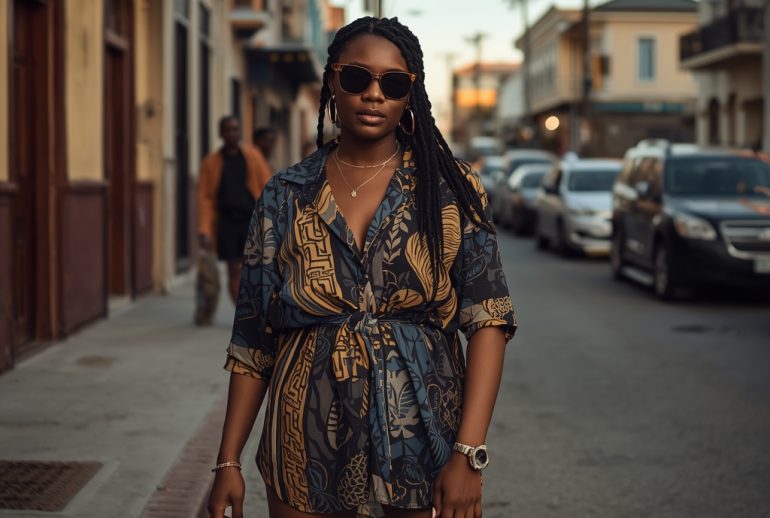
Caribbean style is not a trend.
It is a logic.
Shaped by heat, light, and proximity, it prioritizes movement, breathability, and ease. What global fashion now labels as resort, relaxed tailoring, or effortless elegance began as everyday intelligence. Clothes designed to function well before they were designed to be seen.
The diaspora carried this logic outward. In global cities, Caribbean style adapted without losing coherence. Island ease met urban precision. The result has quietly recalibrated how the world dresses.
Recognition is arriving late. The influence has been present all along.
Climate as Design Brief
Caribbean style begins with environment.
Heat dictates fabric choice. Light dictates color. Humidity dictates construction. Clothing must allow air to pass, bodies to move, and skin to breathe. There is little tolerance for stiffness or excess.
This practical foundation is what makes the style durable. It is not seasonal. It does not rely on novelty. It responds to conditions that do not change.
When global fashion rediscovered linen, cotton, relaxed silhouettes, and open structure, it framed them as aesthetic choices. In the Caribbean, they were always necessities.
Ease as Authority
What is often misread as casual is, in fact, controlled.
Caribbean dressing carries confidence without tension. Garments sit naturally on the body. Nothing appears strained or overworked. The result feels relaxed, but never careless.
This posture has increasingly shaped global taste. As fashion moves away from rigidity and spectacle, it borrows the Caribbean understanding that comfort and authority are not opposites.
Ease signals self-possession. The clothes do not work harder than the wearer.
Color Without Explanation
Caribbean style has never feared color.
Bright tones coexist with neutrals. Saturation appears without irony. Color is not used to provoke or decorate. It reflects environment, mood, and rhythm.
Global fashion cycles through phases of chromatic confidence, often presenting color as rebellion or novelty. In the Caribbean, color has always been practical. It holds up in sun. It reads clearly in motion. It carries emotion without commentary.
This fluency is difficult to imitate. It requires cultural comfort, not just palette selection.
The Diaspora Effect
Caribbean influence expanded through people, not runways.
Migration carried style into cities like London, New York, Toronto, and Paris. There, Caribbean dress codes absorbed sharper tailoring, urban pacing, and layered identities. The result was hybrid, but never diluted.
This exchange shaped streetwear, high fashion, and luxury casual alike. Designers drew from silhouettes, textures, and attitudes already present in the streets.
What appeared as innovation was often translation.
Resort Wear Reconsidered
The global category of resort wear reveals the gap between origin and interpretation.
In fashion, resort is often treated as an escape. In the Caribbean, it is daily life. Clothing does not switch modes based on vacation. It adapts to continuity.
This distinction matters. When ease is worn temporarily, it reads as indulgence. When it is worn consistently, it reads as standard.
Caribbean style sets standards. It does not create costumes.
Why the Influence Endures
Fashion trends rotate. Logic remains.
As global wardrobes prioritize longevity, versatility, and comfort, Caribbean principles become increasingly relevant. Not because they are exotic, but because they are effective.
The influence endures because it was never built to impress. It was built to work.
Closing Reflection
From Montego Bay to the Met, Caribbean style has moved quietly and confidently. It has shaped how the world dresses by solving problems fashion continues to face.
Climate. Movement. Identity.
The recognition may feel new.
The logic is not.