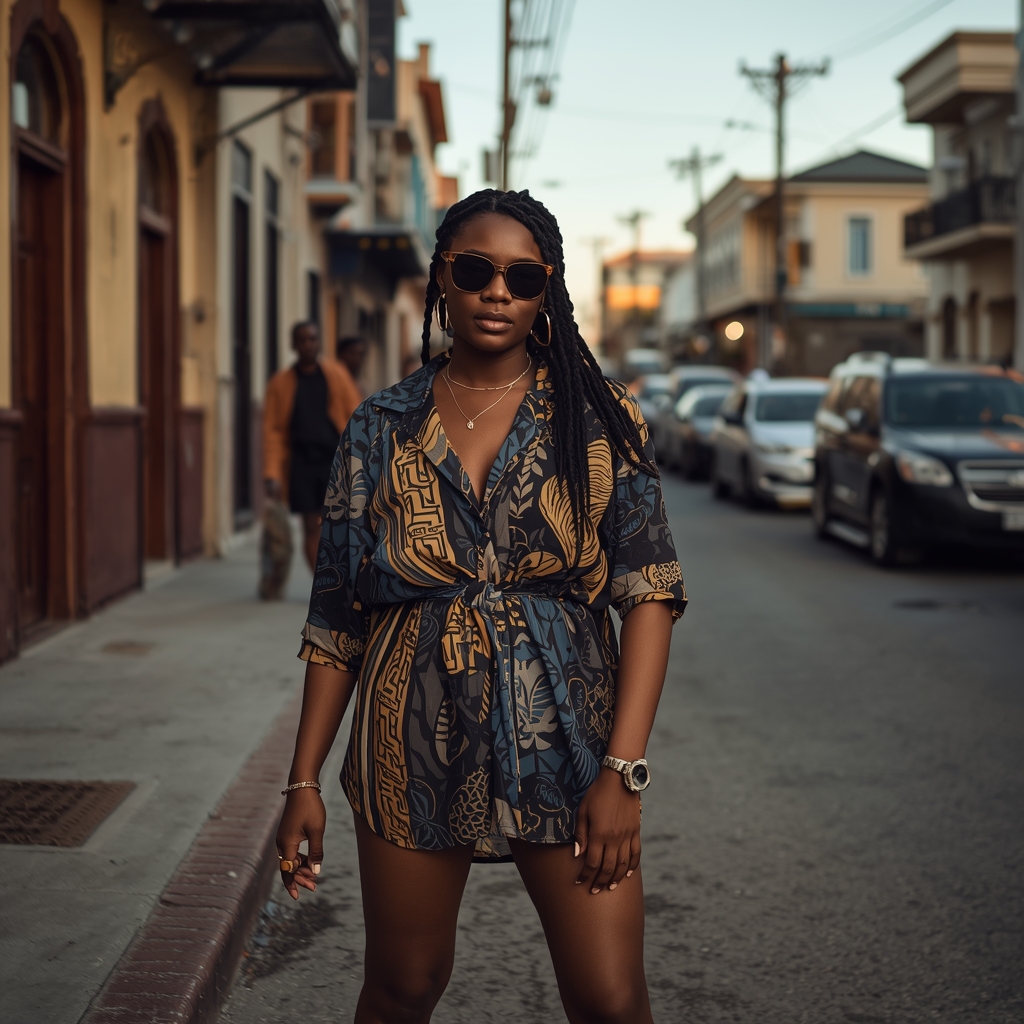
Day: January 21, 2026

  • OCEAN Style Returns: A New Lens on Caribbean Life, Culture & Power

    OCEAN Style Returns: A New Lens on Caribbean Life, Culture & Power

    OCEAN Style returns with intention.

    Not to announce itself. Not to reclaim attention. But to continue a conversation that never required interruption. The Caribbean’s global position has evolved, and the language around it must mature accordingly. This return is not a reset. It is a refinement.

    This is not a comeback. It is continuity.

    Culture as Power

    Caribbean culture has always functioned as power, even when it was framed as entertainment. Music, language, fashion, food, and ritual have shaped global behavior for decades, often without credit and rarely with context.

    OCEAN Style approaches culture not as output, but as infrastructure. Culture here is how communities organize meaning, negotiate identity, and influence the world quietly and persistently. It does not ask permission. It does not wait for validation.

    We are interested in how culture operates beneath the surface. How it travels. How it endures. How it sets standards long before they are named.

    Luxury as Experience, Not Display

    Luxury in the Caribbean has been misunderstood by volume.

    True luxury here has always been experiential: space, time, privacy, climate intelligence, and ease. It lives in proportion rather than excess. In environments that breathe. In service that feels warm but unperformed. In experiences that do not need documentation to be real.

    OCEAN Style treats luxury as a condition, not a category. We examine how refinement expresses itself when spectacle falls away and standards remain. When confidence replaces explanation.

    Creativity as Infrastructure

    Caribbean creativity is not ornamental. It is functional.

    Across design, art, hospitality, fashion, and media, creativity solves problems, builds economies, and shapes identity. It operates structurally, not theatrically. This is especially visible in regions where resourcefulness has always been necessary.

    We focus on creators, builders, and thinkers who work with intention. Those who understand that influence does not require noise, and that longevity depends on coherence, not reach.

    Lifestyle as Philosophy

    Lifestyle, as we approach it, is not aspiration. It is alignment.

    How people eat, move, rest, gather, and relate to place reveals a philosophy of living that is increasingly relevant to a world recalibrating its values. The Caribbean offers models of rhythm, balance, and presence that feel less like escape and more like instruction.

    OCEAN Style documents these ways of living without romanticizing them. We observe with respect. We write from within the room.

    A Clearer Lens Forward

    This return is guided by clarity.

    No hype.
    No urgency.
    No performance.

    OCEAN Style exists to document how power, taste, and culture behave when they are confident enough to remain quiet. The Caribbean deserves coverage that reflects its depth, its intelligence, and its influence—without dilution.

    This is not about being seen.

    It is about seeing clearly.

  • How the Caribbean Became the Blueprint for Modern Cool

    How the Caribbean Became the Blueprint for Modern Cool

    Caribbean cool is effortless because it is lived.

    It is not a trend, a hashtag, or a curated image. It is the rhythm of life itself: movement, color, sound, and interaction aligned naturally with climate, culture, and community. Ease reads as confidence. Presence is inherent, not performed.

    The global diaspora has amplified these sensibilities, translating them into cities worldwide. Yet the original remains quietly distinct. Caribbean cool returns again and again because it is real.

    Effortless Confidence

    Cool in the Caribbean is inseparable from comfort and context.

    People move through spaces with familiarity, not ceremony. Clothing, design, and movement are appropriate, climate-smart, and intuitive. This ease signals sophistication without proclamation. Unlike styles engineered for visibility, Caribbean cool relies on internal logic, not external validation.

    It is a confidence that does not require witnesses. In a world saturated with noise, it reads as rare, intentional, and lasting.

    Culture Present, Not Curated

    In the Caribbean, culture is ambient.

    Music flows through streets and homes. Food is made, shared, and eaten. Markets, gatherings, and public spaces operate according to an inherited rhythm. Style, artistry, and performance are natural extensions of life rather than products for consumption.

    This organic integration allows Caribbean cool to be durable and authentic. It is recognizable without needing to declare itself. Its impact grows silently, leaving a traceable influence in cities far beyond the region.

    Diaspora as Amplifier

    The Caribbean diaspora acts as both translator and amplifier.

    Island sensibilities are carried into global capitals—fashion, architecture, music, and food appear in New York, London, or Tokyo, often under new labels or vernacular. Yet the core logic—ease, proportion, rhythm—remains intact.

    Global adoption frequently renames the aesthetic, but the principles are unchanged. This is why Caribbean cool feels familiar yet always distinctive. Its origins are quietly embedded, shaping perception without overt visibility.

    Lived Experience as Influence

    Influence in this context is structural, not performative.

    Cool emerges from daily life, not marketing cycles. Communities, climate, and culture operate as infrastructure, producing forms and behaviors that are logical and reproducible yet never artificial. This logic informs design, movement, and style in global settings, often without acknowledgment.

    The result is resilience. Caribbean cool cannot be faked. It cannot be extracted superficially. It persists because it is embedded, lived, and inherited.

    Why It Endures

    Caribbean cool endures because it is authentic, adaptive, and context-driven.

    Unlike trends or styles designed to attract attention, it relies on intrinsic coherence. Its influence is felt quietly but consistently across global creative industries. The sophistication lies in its restraint, its responsiveness, and its grounding in lived experience.

    It returns, again and again, because it is real, not constructed.

    Closing Reflection

    The Caribbean has become a blueprint for modern cool because it demonstrates that authenticity, ease, and rhythm matter more than spectacle.

    Influence spreads not through force but through fidelity to culture, climate, and community. Caribbean cool is confidence lived fully, culture present naturally, and style uncontrived. In this quiet, it teaches the world that the most enduring sensibilities are those built from life itself—not performance.

  • The Rise of the Conscious Caribbean Brand

    The Rise of the Conscious Caribbean Brand

    Caribbean brands are becoming structurally conscious and globally legible.

    They no longer rely solely on narrative or marketing to define themselves. Instead, integrity is embedded in operations, design, and strategy. Transparency, cultural respect, and community-focused production are not optional—they are standards. Consciousness here is not performance. It is structure.

    Integrity as Strategy

    For the new Caribbean brand, integrity is measurable.

    Sourcing is transparent. Communities benefit tangibly from production. Labor is valued. Environmental impact is considered at every step. The brand’s choices communicate as loudly as its products, yet without spectacle.

    Global markets increasingly recognize this alignment. Consumers respond not to storytelling alone, but to structures that support ethics, sustainability, and social accountability. The Caribbean demonstrates that principled practice can be profitable without compromise.

    Design and Storytelling Aligned

    Design has evolved from decoration to articulation.

    Packaging, product form, and visual identity are precise, thoughtful, and culturally coherent. Storytelling is curated, but not performative—it communicates values through clarity, not dramatization. Every product becomes a signal of discipline, taste, and responsibility.

    These brands are legible globally because they trust intelligence. They assume that audiences can perceive alignment without explanation. Confidence is quiet, yet unmistakable.

    Cultural Respect as a Core Principle

    Conscious Caribbean brands operate with deference to origin.

    They integrate local knowledge, heritage, and materials without appropriation. Traditional crafts are honored and elevated. Recipes, techniques, and design practices are preserved in a modern context. Influence spreads outward, but meaning remains intact.

    This respect is not performative. It is structural. It shapes how the brand functions internally and externally. The world notices, even if subtly.

    Community-Based Production

    Communities are no longer just markets—they are infrastructure.

    Collaboration ensures that production supports local economies, artisans, and ecosystems. Knowledge transfer is embedded. Skills, jobs, and cultural capital are sustained across generations. The most conscious brands see the entire system, not just the product.

    This approach produces durability. It creates value that survives beyond trends, hype, or fleeting attention.

    Competing on Quality and Values

    Caribbean brands now compete on multiple dimensions simultaneously:

    • Quality: craftsmanship, functionality, and durability

    • Values: ethics, sustainability, and social impact

    The combination signals sophistication. It demonstrates that commercial success and conscience are not mutually exclusive. Brands that align these axes quietly influence global norms, raising expectations for what excellence looks like.

    Closing Reflection

    The rise of conscious Caribbean brands demonstrates that impact is structural, not performative.

    They operate from principles, not marketing cycles. Design, storytelling, sourcing, and production converge to create integrity that is visible in output and durable in effect. Influence is subtle, measured, and enduring.

    The Caribbean is teaching the world that true consciousness in business is built from the inside out—and that quiet, disciplined integrity often resonates farther than noise ever could.

  • Caribbean Design Is Having a Moment — Here’s Why It Matters

    Caribbean Design Is Having a Moment — Here’s Why It Matters

    Caribbean design is climate-smart by nature.

    Airflow, shade, durability, and indoor-outdoor living are not decorative choices—they are essential. Architecture and interiors in the region have evolved to respond to environment first, then form. Every building, space, and object carries lessons in logic, proportion, and adaptability.

    As global design increasingly prioritizes sustainability, context, and authenticity, Caribbean design resonates more strongly than ever. It is not a seasonal trend or style statement. It is a blueprint.

    Environmental Intelligence as Foundation

    Caribbean design begins with climate, not fashion.

    Buildings are oriented for cross-ventilation. Shading is integrated seamlessly. Materials endure sun, wind, and salt. Interiors extend naturally into the landscape. The result is structures that feel both comfortable and responsive.

    This intelligence allows spaces to function effortlessly, reducing energy dependence and improving comfort. It also creates an aesthetic that feels inevitable rather than imposed. Form follows function—and in this context, function is cultural, environmental, and human.

    Authenticity Through Adaptation

    What global audiences often call “tropical style” rarely captures this depth.

    Caribbean spaces are not simply decorated with palms, rattan, or bright colors. They optimize for climate and lifestyle, reflecting lived experience rather than visual shorthand. Open-air living, modular rooms, and weathered surfaces express knowledge accumulated over generations.

    Authenticity emerges not from ornamentation, but from alignment with place. This is why the work feels contemporary even when techniques are decades old. It is modern because it works.

    Sustainability Built In

    Long before sustainability became a design mantra, Caribbean architecture embodied it.

    Durable materials, passive cooling, and energy-conscious layouts are not trends—they are necessities. These principles reduce waste, enhance resilience, and improve livability. Modern designers, both in the region and internationally, increasingly recognize Caribbean projects as exemplars of intelligent, functional, and responsible design.

    Interiors That Respond

    Interiors follow the same principles.

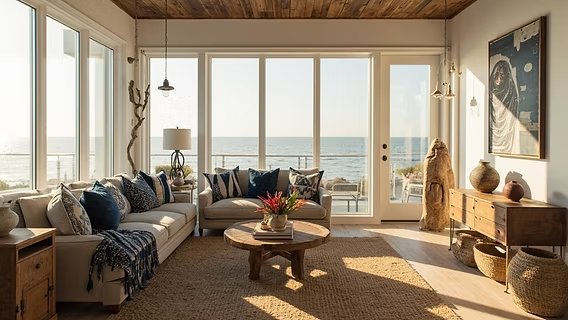
    Furniture, finishes, and layout respond to movement, light, and climate. Spaces are layered, breathable, and adaptable. Indoor-outdoor thresholds are seamless. Views are curated without feeling staged. Comfort is implicit; everything is placed with purpose.

    This approach contrasts sharply with interiors designed primarily for visual drama. Caribbean interiors feel alive because they are inhabited and tuned to the environment, not curated solely for display.

    A Blueprint, Not a Moment

    Caribbean design matters because it offers a framework for the future.

    The region demonstrates how environmental intelligence, cultural context, and practical needs can converge to create spaces that are sustainable, beautiful, and durable. Designers globally are beginning to look here not for motifs, but for methodology.

    It is a moment in recognition, yes—but the principles themselves are enduring. This is a design that will continue to teach, influence, and inspire long after trends pass.

    Closing Reflection

    Caribbean design is not fleeting or decorative.

    It is climate-smart, culturally rooted, and human-centered. Its influence reaches beyond region and trend, offering a model for spaces that feel effortless, enduring, and deeply aligned with their environment. In this quiet logic, Caribbean design has already set the standard.

  • The New Rules of Caribbean Luxury

    The New Rules of Caribbean Luxury

    Caribbean luxury is becoming quieter.

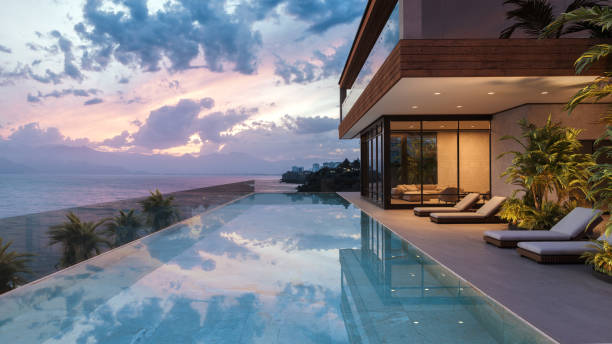
    It no longer announces itself through scale, logos, or performance. Instead, it operates through subtlety, intention, and alignment. Experience, privacy, and design intelligence have replaced spectacle as the measures of sophistication. The most discerning travelers now seek spaces that feel autonomous, service that feels warm yet precise, and environments that belong to their natural and cultural context.

    The new rule is simple: luxury should feel like freedom.

    Experience Over Exhibition

    Luxury today is defined by what is felt, not shown.

    Excess no longer signals refinement. Experiences are measured in quality, not volume. Whether a villa, boutique resort, or private sail, the emphasis is on moments that can be inhabited fully and without distraction. Discretion matters more than fanfare.

    Caribbean environments excel in this regard. Sunlight, ocean breeze, and natural rhythm provide a backdrop for experiences that are immersive rather than performative. Luxury exists in alignment with place, not against it.

    Privacy as Prestige

    Privacy has become the ultimate indicator of sophistication.

    Spaces are designed to allow movement, reflection, and presence without intrusion. Guests value environments that afford discretion, whether it is a secluded terrace, a quiet dining space, or service that anticipates without drawing attention. Privacy is no longer a commodity—it is a standard.

    In the Caribbean, this principle is natural. The landscape, climate, and culture already encourage distance and pause. Luxury that ignores this quietly feels foreign. Luxury that respects it feels instinctive.

    Design Intelligence as the New Statement

    Design intelligence replaces decoration.

    Architectural choices, materials, and spatial planning are measured, functional, and culturally attuned. Interiors respond to light, climate, and lifestyle. Furniture, texture, and color exist to enhance comfort and rhythm, not to impress.

    In this context, sophistication is evident without being declared. Spaces communicate coherence and refinement through logic and proportion, not logos or spectacle. Every decision signals discernment, even if it is unspoken.

    Service That Feels Warm, Not Performative

    Service is no longer defined by visibility or ceremony.

    The most accomplished hospitality now anticipates, responds, and disappears when not needed. Warmth is calibrated, gestures are measured, and interaction is discreet. This form of service enhances the environment rather than dominating it.

    In the Caribbean, staff often operate with instinctive knowledge of rhythm and expectation. They mirror the environment’s quiet confidence, making luxury feel effortless rather than curated for attention.

    Freedom as the Measure of Luxury

    Ultimately, the new rule of Caribbean luxury is freedom.

    It is the freedom to linger without agenda, to move without friction, and to exist without performance. Luxury is no longer about statement—it is about alignment: alignment with place, pace, and cultural rhythm. Those who understand this instinctively recognize its depth.

    The Caribbean has long embodied these principles. What feels modern is not new—it is a reassertion of standards that have always been present. The region demonstrates that the most sophisticated luxury is quiet, unassuming, and enduring.

    Closing Reflection

    Luxury is no longer about being noticed.

    It is about being in a space where every element—experience, privacy, design, service—supports presence and autonomy. The Caribbean teaches that refinement is measured in freedom, discretion, and alignment rather than spectacle. In this quiet, the new rules of luxury are already written.

  • Caribbean Taste-Makers Quietly Influencing Global Culture

    Caribbean Taste-Makers Quietly Influencing Global Culture

    Caribbean influence often travels through quiet operators: curators, producers, stylists, chefs, and connectors.

    They rarely occupy the spotlight. Their work is measured, deliberate, and relational. It does not announce itself, yet it shapes perception, markets, and cultural frameworks. In a noisy global environment, their restraint is strategic. It allows ideas to travel without losing nuance.

    Translating Identity Without Dilution

    Caribbean taste-makers act as intermediaries between local culture and global platforms.

    They translate identity into forms that are legible elsewhere while protecting meaning. Music, fashion, cuisine, and design are not simplified for consumption—they are reframed. Each choice preserves context, rhythm, and intent.

    This approach requires confidence. Influence is asserted quietly because authority in culture no longer depends on visibility. It depends on coherence.

    Curating with Discipline

    Curation in this context is invisible yet intentional.

    Chefs select ingredients that speak to heritage. Stylists pair fabrics and colors with cultural logic. Producers frame stories that carry depth without exposition. Each intervention is precise. Excess is removed. Ornamentation is questioned.

    Through this discipline, Caribbean culture travels further. It shapes what becomes globally recognizable without being diluted into stereotype or performance.

    Taste-Making as Infrastructure

    Taste-making is no longer a luxury—it is infrastructure.

    The work of Caribbean operators sustains cultural integrity across disciplines. It ensures that creative output, even when globalized, retains the logic, rhythm, and values of its origin. The influence is cumulative. One decision, one framing, one dish, or one track can ripple outward, guiding perception at scale.

    This infrastructure is subtle, but robust. It operates across networks, platforms, and geographies. It shapes not only what is consumed, but how it is understood.

    Restraint as Premium

    In a culture that prizes spectacle, restraint becomes a signal of sophistication.

    Global audiences are increasingly attuned to subtlety. Quiet operators benefit from this. The less is shown, the more discerning audiences notice. Caribbean taste-makers have long understood this principle. They operate with discretion, trusting that those capable of comprehension will recognize excellence without explanation.

    Closing Reflection

    Caribbean culture continues to shape the world quietly because its agents respect context and continuity.

    They do not perform for attention. They steward meaning, curate quality, and translate identity with fidelity. In doing so, they make Caribbean influence durable, sophisticated, and inevitable.

    Global culture may notice the impact slowly, but the work has already been done. Influence is embedded, not declared.

    The Caribbean teaches that true taste travels quietly—and that quiet influence often lasts longest.

  • Inside the Caribbean Wellness Renaissance

    Inside the Caribbean Wellness Renaissance

    Caribbean wellness is not a trend.
    It is a lived rhythm.

    Here, well-being is not packaged. It is embedded. Nature functions as infrastructure: sunlight, ocean air, biodiversity, and outdoor movement create conditions for restoration before a single word is spoken. Wellness is an environment, not a program.

    As burnout becomes global, the Caribbean’s advantage is authenticity. Restoration is not important here. It is native.

    Nature as Infrastructure

    Wellness begins with the world around you.

    Sunlight regulates the body’s rhythms. Ocean air carries minerals and clarity. Trails, gardens, and shorelines allow movement that recalibrates both energy and attention. In the Caribbean, health is embedded in the daily environment. It does not require intention beyond participation.

    Even subtle interactions—walking barefoot on sand, swimming in calm waters, breathing in coastal air—function as interventions. The body restores itself when the environment allows.

    Ritual and Knowledge Preserved

    Plant knowledge, traditional remedies, and culturally embedded rituals continue to inform daily life.

    Herbal and botanical practices are not exotic add-ons—they are part of a framework refined over generations. Seasonal foods, marine diets, and fermented ingredients create subtle but cumulative effects on well-being. Rituals mark time, balance energy, and foster community.

    These practices are now being integrated into experiences that meet higher standards of clarity and intention. Wellness in the Caribbean respects the body’s natural intelligence rather than imposing artificial narratives.

    Experiences With Higher Standards

    Today’s Caribbean wellness experiences combine cultural depth with precision.

    Retreats, spas, and guided programs operate on a principle of “less is more.” Interventions are not flashy or performative. They are measured. Staff, space, and schedules support uninterrupted presence. Quality is defined not by branding, but by alignment—between environment, practitioner, and guest.

    This approach makes wellness more effective. It is subtle, quiet, and cumulative. The results are felt, not displayed.

    The Advantage of Authenticity

    What sets Caribbean wellness apart is its rootedness.

    Other regions import frameworks, routines, and aesthetics. In the Caribbean, well-being emerges naturally from life itself. The environment, culture, and lifestyle have always supported restoration. There is no need to market or dramatize it. Its effectiveness is inherent.

    This authenticity is increasingly rare in a global wellness market saturated with hype. Here, the experience works because it is lived, not curated.

    Closing Reflection

    Caribbean wellness is not about spectacle.
    It is about alignment. Rhythm. Presence.

    The region demonstrates that restoration does not require novelty. It requires conditions. When the environment, culture, and daily life converge, wellness becomes inevitable. That is the Caribbean advantage—and it is quietly profound.

  • Why the World Is Moving to the Caribbean (and Not Just for the Weather)

    Why the World Is Moving to the Caribbean (and Not Just for the Weather)

    The new migration is philosophical.

    Remote work loosened geography. People no longer choose locations for proximity or status. They choose them for rhythm, community, and quality of life. The Caribbean offers something few places can: time as a luxury, culture as an environment, and a daily pace that supports health, creativity, and presence.

    For many, this is no escape. It is a deliberate choice about how life should feel.

    Time as a Luxury

    In the Caribbean, schedules are negotiable.

    Sunrise and tide mark the day, not alarms and traffic. Time is no longer a commodity to be managed. It is a medium in which life unfolds. People arriving from fast-paced cities find the absence of relentless structure striking. They realize that patience, pauses, and deliberate movement are not luxuries—they are standards.

    The region’s rhythm recalibrates expectations. What feels indulgent elsewhere is baseline here. Freedom becomes internalized.

    Culture as Environment

    Culture in the Caribbean is ambient.

    It is not something to observe. It is something to inhabit. Streets hum with music and conversation. Markets pulse with color, scent, and rhythm. Cuisine, art, and architecture exist in layers of memory and function.

    For newcomers, cultural immersion happens by osmosis. The environment itself sets the tone for how one moves, rests, and interacts. Integration does not require effort—it is absorbed.

    Community Beyond Proximity

    Community is both inherited and chosen.

    Connections form through shared spaces and shared rituals rather than obligation. Longstanding residents and newcomers alike are drawn into informal networks defined by collaboration, mutual respect, and presence. Professional and creative circles overlap seamlessly with social life.

    This is a type of connectivity that urban life elsewhere rarely achieves. Proximity alone does not suffice; what matters is alignment in pace and values.

    Health and Creativity Intertwined

    The Caribbean allows life to support the body and mind naturally.

    Fresh air, sun, and access to nourishing food are complemented by spaces for movement, reflection, and work. People report enhanced focus, creativity, and wellbeing. This is not about wellness trends or curated experiences—it is about conditions that facilitate life itself.

    Here, health is embedded. Creativity follows. Both are protected by the same environmental rhythms that guide daily existence.

    A Deliberate Choice

    This migration is philosophical because it reflects intention.

    It is not about luxury alone, nor prestige, nor escape. It is about defining life on one’s own terms. People come not to be seen, but to be fully present. They move to measure their days by quality, not noise.

    The Caribbean’s appeal is structural. It aligns geography, culture, and pace with human needs. That is why this trend is likely to endure beyond current mobility patterns or work arrangements.

    Closing Reflection

    The Caribbean is no longer only a backdrop for leisure.

    It is a blueprint for living. For those who choose to move here, the decision is less about a place and more about how life should feel. In this sense, the Caribbean is quietly, profoundly influential.

  • The Caribbean’s New Creative Class

    The Caribbean’s New Creative Class

    A new Caribbean creative class is emerging.
    Less celebrity-driven. More craft-driven.

    This generation is not chasing visibility. It is building systems. Work is multidisciplinary by necessity, culturally specific by conviction, and structurally ambitious by design. Creativity in the Caribbean is no longer framed as expression alone. It functions as infrastructure.

    This is not a moment.
    It is maturation.

    From Talent to Structure

    Caribbean creativity has long been recognized for talent.
    What is changing now is scale and intention.

    Designers, artists, architects, filmmakers, technologists, and cultural operators are no longer working only as individuals. They are building studios, platforms, collectives, and production models that last beyond personality.

    The focus has shifted from output to continuity. From recognition to resilience.

    Rooted, Not Replicated

    This creative class does not imitate global trends.
    It translates local reality into globally legible work.

    Climate, migration, language, rhythm, and history are not references. They are operating conditions. The work speaks clearly because it is specific. It does not flatten culture for export. It trusts that clarity travels.

    Global relevance is achieved through depth, not dilution.

    Multidisciplinary by Necessity

    In the Caribbean, creative roles have always overlapped.

    One person is often a strategist, maker, producer, and archivist at once. This is not inefficiency. It is adaptability. The new creative class has formalized this instinct into practice.

    Studios move fluidly across design, technology, storytelling, and commerce. Boundaries are porous. Ideas circulate faster. Solutions feel integrated rather than siloed.

    Creativity as Problem-Solving

    Creativity in the region has never been ornamental.

    It responds to constraint. Limited resources demand invention. Infrastructure gaps require improvisation. Identity must be articulated carefully.

    This has produced a creative class fluent in problem-solving. Work is expected to carry weight. To generate value. To shape how people live, move, and see themselves.

    Expression remains important. Utility is non-negotiable.

    Global Without Leaving

    Unlike earlier generations, this creative class does not need to exit to succeed.

    Technology, diaspora networks, and cultural fluency allow work to circulate globally while remaining locally grounded. Influence moves outward without requiring permanent displacement.

    The result is confidence. Not aspirational. Assured.

    Closing Reflection

    The new Caribbean creative class is not emerging into visibility.
    It is settling into position.

    Its power lies in structure, not spectacle. In continuity, not moments. Creativity here is no longer asking for permission to matter.

    It already does.

  • From Montego Bay to the Met: How Caribbean Style Shapes Global Fashion

    From Montego Bay to the Met: How Caribbean Style Shapes Global Fashion

    Caribbean style is not a trend.
    It is a logic.

    Shaped by heat, light, and proximity, it prioritizes movement, breathability, and ease. What global fashion now labels as resort, relaxed tailoring, or effortless elegance began as everyday intelligence. Clothes designed to function well before they were designed to be seen.

    The diaspora carried this logic outward. In global cities, Caribbean style adapted without losing coherence. Island ease met urban precision. The result has quietly recalibrated how the world dresses.

    Recognition is arriving late. The influence has been present all along.

    Climate as Design Brief

    Caribbean style begins with environment.

    Heat dictates fabric choice. Light dictates color. Humidity dictates construction. Clothing must allow air to pass, bodies to move, and skin to breathe. There is little tolerance for stiffness or excess.

    This practical foundation is what makes the style durable. It is not seasonal. It does not rely on novelty. It responds to conditions that do not change.

    When global fashion rediscovered linen, cotton, relaxed silhouettes, and open structure, it framed them as aesthetic choices. In the Caribbean, they were always necessities.

    Ease as Authority

    What is often misread as casual is, in fact, controlled.

    Caribbean dressing carries confidence without tension. Garments sit naturally on the body. Nothing appears strained or overworked. The result feels relaxed, but never careless.

    This posture has increasingly shaped global taste. As fashion moves away from rigidity and spectacle, it borrows the Caribbean understanding that comfort and authority are not opposites.

    Ease signals self-possession. The clothes do not work harder than the wearer.

    Color Without Explanation

    Caribbean style has never feared color.

    Bright tones coexist with neutrals. Saturation appears without irony. Color is not used to provoke or decorate. It reflects environment, mood, and rhythm.

    Global fashion cycles through phases of chromatic confidence, often presenting color as rebellion or novelty. In the Caribbean, color has always been practical. It holds up in sun. It reads clearly in motion. It carries emotion without commentary.

    This fluency is difficult to imitate. It requires cultural comfort, not just palette selection.

    The Diaspora Effect

    Caribbean influence expanded through people, not runways.

    Migration carried style into cities like London, New York, Toronto, and Paris. There, Caribbean dress codes absorbed sharper tailoring, urban pacing, and layered identities. The result was hybrid, but never diluted.

    This exchange shaped streetwear, high fashion, and luxury casual alike. Designers drew from silhouettes, textures, and attitudes already present in the streets.

    What appeared as innovation was often translation.

    Resort Wear Reconsidered

    The global category of resort wear reveals the gap between origin and interpretation.

    In fashion, resort is often treated as an escape. In the Caribbean, it is daily life. Clothing does not switch modes based on vacation. It adapts to continuity.

    This distinction matters. When ease is worn temporarily, it reads as indulgence. When it is worn consistently, it reads as standard.

    Caribbean style sets standards. It does not create costumes.

    Why the Influence Endures

    Fashion trends rotate. Logic remains.

    As global wardrobes prioritize longevity, versatility, and comfort, Caribbean principles become increasingly relevant. Not because they are exotic, but because they are effective.

    The influence endures because it was never built to impress. It was built to work.

    Closing Reflection

    From Montego Bay to the Met, Caribbean style has moved quietly and confidently. It has shaped how the world dresses by solving problems fashion continues to face.

    Climate. Movement. Identity.

    The recognition may feel new.
    The logic is not.