Tag: architecture

  • The New Rules of Caribbean Luxury

    The New Rules of Caribbean Luxury

    Caribbean luxury is becoming quieter.

    It no longer announces itself through scale, logos, or performance. Instead, it operates through subtlety, intention, and alignment. Experience, privacy, and design intelligence have replaced spectacle as the measures of sophistication. The most discerning travelers now seek spaces that feel autonomous, service that feels warm yet precise, and environments that belong to their natural and cultural context.

    The new rule is simple: luxury should feel like freedom.

    Experience Over Exhibition

    Luxury today is defined by what is felt, not shown.

    Excess no longer signals refinement. Experiences are measured in quality, not volume. Whether a villa, boutique resort, or private sail, the emphasis is on moments that can be inhabited fully and without distraction. Discretion matters more than fanfare.

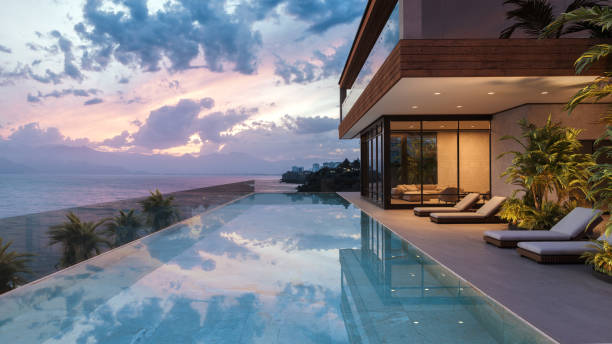
    Caribbean environments excel in this regard. Sunlight, ocean breeze, and natural rhythm provide a backdrop for experiences that are immersive rather than performative. Luxury exists in alignment with place, not against it.

    Privacy as Prestige

    Privacy has become the ultimate indicator of sophistication.

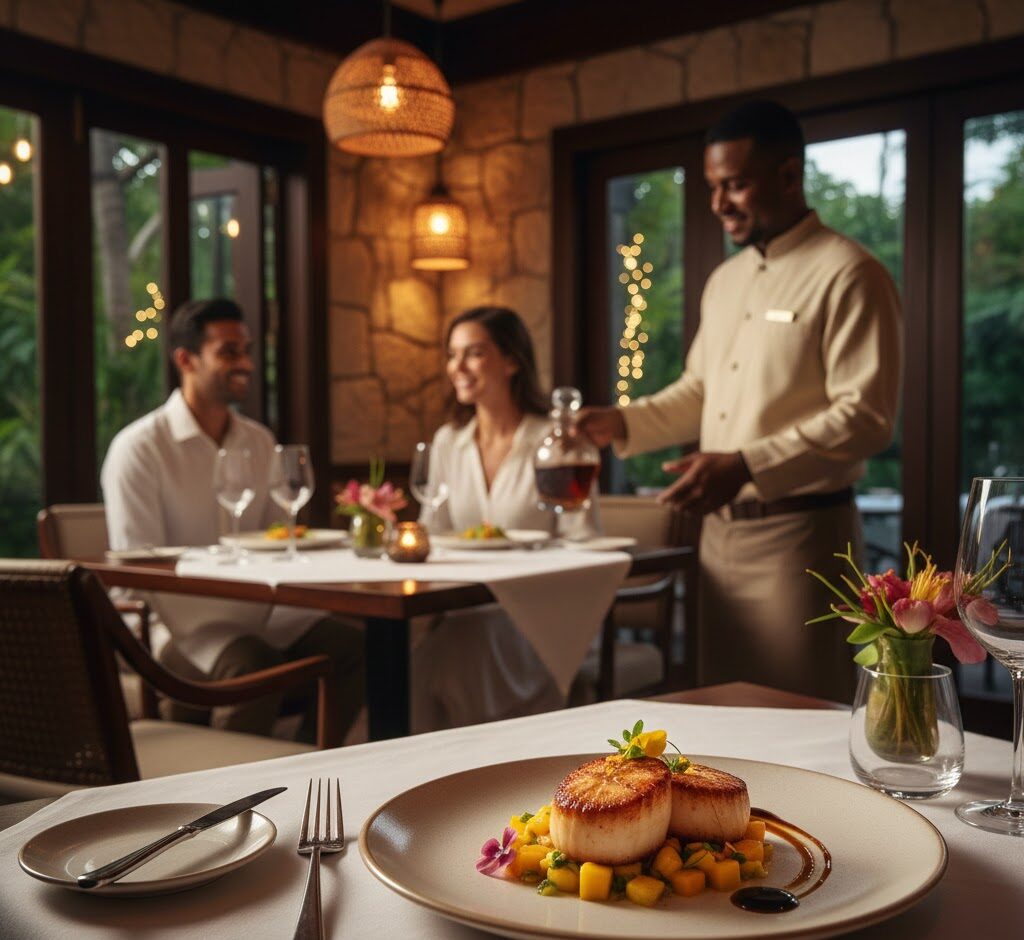
    Spaces are designed to allow movement, reflection, and presence without intrusion. Guests value environments that afford discretion, whether it is a secluded terrace, a quiet dining space, or service that anticipates without drawing attention. Privacy is no longer a commodity—it is a standard.

    In the Caribbean, this principle is natural. The landscape, climate, and culture already encourage distance and pause. Luxury that ignores this quietly feels foreign. Luxury that respects it feels instinctive.

    Design Intelligence as the New Statement

    Design intelligence replaces decoration.

    Architectural choices, materials, and spatial planning are measured, functional, and culturally attuned. Interiors respond to light, climate, and lifestyle. Furniture, texture, and color exist to enhance comfort and rhythm, not to impress.

    In this context, sophistication is evident without being declared. Spaces communicate coherence and refinement through logic and proportion, not logos or spectacle. Every decision signals discernment, even if it is unspoken.

    Service That Feels Warm, Not Performative

    Service is no longer defined by visibility or ceremony.

    The most accomplished hospitality now anticipates, responds, and disappears when not needed. Warmth is calibrated, gestures are measured, and interaction is discreet. This form of service enhances the environment rather than dominating it.

    In the Caribbean, staff often operate with instinctive knowledge of rhythm and expectation. They mirror the environment’s quiet confidence, making luxury feel effortless rather than curated for attention.

    Freedom as the Measure of Luxury

    Ultimately, the new rule of Caribbean luxury is freedom.

    It is the freedom to linger without agenda, to move without friction, and to exist without performance. Luxury is no longer about statement—it is about alignment: alignment with place, pace, and cultural rhythm. Those who understand this instinctively recognize its depth.

    The Caribbean has long embodied these principles. What feels modern is not new—it is a reassertion of standards that have always been present. The region demonstrates that the most sophisticated luxury is quiet, unassuming, and enduring.

    Closing Reflection

    Luxury is no longer about being noticed.

    It is about being in a space where every element—experience, privacy, design, service—supports presence and autonomy. The Caribbean teaches that refinement is measured in freedom, discretion, and alignment rather than spectacle. In this quiet, the new rules of luxury are already written.

  • Why the World Is Moving to the Caribbean (and Not Just for the Weather)

    Why the World Is Moving to the Caribbean (and Not Just for the Weather)

    The new migration is philosophical.

    Remote work loosened geography. People no longer choose locations for proximity or status. They choose them for rhythm, community, and quality of life. The Caribbean offers something few places can: time as a luxury, culture as an environment, and a daily pace that supports health, creativity, and presence.

    For many, this is no escape. It is a deliberate choice about how life should feel.

    Time as a Luxury

    In the Caribbean, schedules are negotiable.

    Sunrise and tide mark the day, not alarms and traffic. Time is no longer a commodity to be managed. It is a medium in which life unfolds. People arriving from fast-paced cities find the absence of relentless structure striking. They realize that patience, pauses, and deliberate movement are not luxuries—they are standards.

    The region’s rhythm recalibrates expectations. What feels indulgent elsewhere is baseline here. Freedom becomes internalized.

    Culture as Environment

    Culture in the Caribbean is ambient.

    It is not something to observe. It is something to inhabit. Streets hum with music and conversation. Markets pulse with color, scent, and rhythm. Cuisine, art, and architecture exist in layers of memory and function.

    For newcomers, cultural immersion happens by osmosis. The environment itself sets the tone for how one moves, rests, and interacts. Integration does not require effort—it is absorbed.

    Community Beyond Proximity

    Community is both inherited and chosen.

    Connections form through shared spaces and shared rituals rather than obligation. Longstanding residents and newcomers alike are drawn into informal networks defined by collaboration, mutual respect, and presence. Professional and creative circles overlap seamlessly with social life.

    This is a type of connectivity that urban life elsewhere rarely achieves. Proximity alone does not suffice; what matters is alignment in pace and values.

    Health and Creativity Intertwined

    The Caribbean allows life to support the body and mind naturally.

    Fresh air, sun, and access to nourishing food are complemented by spaces for movement, reflection, and work. People report enhanced focus, creativity, and wellbeing. This is not about wellness trends or curated experiences—it is about conditions that facilitate life itself.

    Here, health is embedded. Creativity follows. Both are protected by the same environmental rhythms that guide daily existence.

    A Deliberate Choice

    This migration is philosophical because it reflects intention.

    It is not about luxury alone, nor prestige, nor escape. It is about defining life on one’s own terms. People come not to be seen, but to be fully present. They move to measure their days by quality, not noise.

    The Caribbean’s appeal is structural. It aligns geography, culture, and pace with human needs. That is why this trend is likely to endure beyond current mobility patterns or work arrangements.

    Closing Reflection

    The Caribbean is no longer only a backdrop for leisure.

    It is a blueprint for living. For those who choose to move here, the decision is less about a place and more about how life should feel. In this sense, the Caribbean is quietly, profoundly influential.

  • The Caribbean’s New Creative Class

    The Caribbean’s New Creative Class

    A new Caribbean creative class is emerging.
    Less celebrity-driven. More craft-driven.

    This generation is not chasing visibility. It is building systems. Work is multidisciplinary by necessity, culturally specific by conviction, and structurally ambitious by design. Creativity in the Caribbean is no longer framed as expression alone. It functions as infrastructure.

    This is not a moment.
    It is maturation.

    From Talent to Structure

    Caribbean creativity has long been recognized for talent.
    What is changing now is scale and intention.

    Designers, artists, architects, filmmakers, technologists, and cultural operators are no longer working only as individuals. They are building studios, platforms, collectives, and production models that last beyond personality.

    The focus has shifted from output to continuity. From recognition to resilience.

    Rooted, Not Replicated

    This creative class does not imitate global trends.
    It translates local reality into globally legible work.

    Climate, migration, language, rhythm, and history are not references. They are operating conditions. The work speaks clearly because it is specific. It does not flatten culture for export. It trusts that clarity travels.

    Global relevance is achieved through depth, not dilution.

    Multidisciplinary by Necessity

    In the Caribbean, creative roles have always overlapped.

    One person is often a strategist, maker, producer, and archivist at once. This is not inefficiency. It is adaptability. The new creative class has formalized this instinct into practice.

    Studios move fluidly across design, technology, storytelling, and commerce. Boundaries are porous. Ideas circulate faster. Solutions feel integrated rather than siloed.

    Creativity as Problem-Solving

    Creativity in the region has never been ornamental.

    It responds to constraint. Limited resources demand invention. Infrastructure gaps require improvisation. Identity must be articulated carefully.

    This has produced a creative class fluent in problem-solving. Work is expected to carry weight. To generate value. To shape how people live, move, and see themselves.

    Expression remains important. Utility is non-negotiable.

    Global Without Leaving

    Unlike earlier generations, this creative class does not need to exit to succeed.

    Technology, diaspora networks, and cultural fluency allow work to circulate globally while remaining locally grounded. Influence moves outward without requiring permanent displacement.

    The result is confidence. Not aspirational. Assured.

    Closing Reflection

    The new Caribbean creative class is not emerging into visibility.
    It is settling into position.

    Its power lies in structure, not spectacle. In continuity, not moments. Creativity here is no longer asking for permission to matter.

    It already does.

  • From Rum to Restaurants: How Caribbean Hospitality Is Going Global

    From Rum to Restaurants: How Caribbean Hospitality Is Going Global

    Caribbean hospitality travels well because it is human.

    It does not rely on scripts or spectacle. It is grounded in rhythm, familiarity, and an intuitive understanding of how people want to be treated. As global hospitality recalibrates away from performance and toward atmosphere, the Caribbean finds itself less exported than recognized.

    What the world is adopting now is not new.
    It is simply ready.

    Hospitality as Relationship, Not Theater

    In the Caribbean, hospitality has never been transactional.

    Service emerges from proximity. From knowing how close to stand. When to speak. When to leave space. Warmth is offered without insistence. Care is present without narration.

    This is why Caribbean hospitality feels disarming in global contexts. It does not ask to be evaluated. It does not perform enthusiasm. It operates on attunement.

    As international hospitality grows more formalized, this relational intelligence feels increasingly rare.

    Rum Grows Up Without Losing Its Grounding

    Rum has always been more than a product.
    It is a social language.

    What is changing now is not its meaning but its positioning. Caribbean rum is entering a more premium global conversation without abandoning its cultural roots. Aging statements, terroir, and craft processes are being articulated with clarity rather than disguise.

    The maturation feels natural because rum was never casual in context. It was communal. Ceremonial. Integrated into daily life.

    The global market is catching up to what the region has always understood.

    Cuisine as Craft, Not Reinvention

    Caribbean cuisine is also being reframed, often incorrectly, as discovery.

    In reality, the elevation happening now is about articulation, not alteration. Techniques are refined. Sourcing is clarified. Presentation becomes more intentional. The core remains intact.

    Flavor is still primary. Memory still matters. Meals are still built to be shared.

    What global dining increasingly values—honesty, specificity, restraint—is already embedded in Caribbean food culture.

    Restaurants That Feel Lived In

    Caribbean hospitality does not aim for polish first.

    Spaces are meant to feel occupied rather than staged. Music is present but not curated for effect. Staff move with familiarity rather than formality. Time stretches.

    As restaurants around the world move away from rigid concepts and toward lived-in atmospheres, Caribbean sensibilities quietly shape the model.

    Comfort becomes sophistication.

    Atmosphere as the Real Export

    The Caribbean’s most influential export is not a menu, a bottle, or a service style.

    It is an atmosphere.

    The understanding that rhythm matters. That generosity cannot be rushed. That people feel most welcome when they are not managed too closely.

    Global hospitality is shifting toward exactly this. Less instruction. More intuition.

    What looks like innovation elsewhere has long been baseline here.

    Closing Reflection

    Caribbean hospitality is not scaling because it was not designed to.
    It is scaling because it aligns with what the world now needs.

    As hospitality moves away from performance and back toward presence, the Caribbean does not need to adapt. It only needs to continue.

    The warmth was always real.
    The rhythm was always there.

    FAQs

    Q1: Why does Caribbean hospitality translate globally?
    Because it is rooted in human connection, not scripts.

    Q2: How is rum evolving on the global stage?
    Through premium positioning that respects origin and craft.

    Q3: Is Caribbean cuisine being changed for global audiences?
    No. It is being articulated, not reinvented.

    Q4: What distinguishes Caribbean service style?
    Warmth without performance or intrusion.

    Q5: What is the region’s most influential hospitality export?
    Atmosphere shaped by rhythm, generosity, and ease.

  • 7 Places You Go When You Don’t Need to Be Seen

    7 Places You Go When You Don’t Need to Be Seen

    When visibility stops being currency, movement changes.
    You no longer choose places for what they say about you.
    You choose them for how they let you feel.

    These are not destinations.
    They are conditions.
    Places defined by energy rather than address.

    This is where you go when performance no longer matters.

    1. A Beach Without a Name

    Not undiscovered. Just unannounced.
    The shoreline is reached by instinct, not signage.
    Nothing asks for documentation, and nothing feels incomplete without it.

    2. A Hotel That Doesn’t Introduce Itself

    No story needs telling.
    The space assumes literacy in comfort and restraint.
    You are trusted to understand the tone without guidance.

    3. A Restaurant Where the Menu Is Short

    Choice has already been edited.
    You are not there to compare, only to receive.
    Confidence lives in what is not offered.

    4. A Garden Maintained by Habit, Not Design

    Nothing feels styled.
    Growth follows memory, not trends.
    You sit quietly and feel the environment regulate itself.

    5. A House With Open Windows

    Air moves freely.
    Sounds pass through without apology.
    Perfection is not preserved, and presence feels easier.

    6. A Morning Without a Schedule

    No structure imposed.
    Light becomes the only cue.
    Time stops negotiating and starts unfolding.

    7. A Place You Don’t Photograph

    Not because it lacks beauty.
    Because capturing it would reduce it.
    Some experiences lose value when translated.

    Closing Reflection

    These places do not reward attention.
    They reward discernment.

    When you no longer need to be seen, you begin to recognize how many environments were never meant to watch you at all.

    FAQs

    Q1: What connects all these places?
    They prioritize presence over performance.

    Q2: Are these places meant to be exclusive?
    No. They are selective by nature, not by policy.

    Q3: Why is visibility absent here?
    Because visibility is no longer the point.

    Q4: Is this about minimalism?
    No. It is about appropriateness, not reduction.

    Q5: What mindset do these places reflect?
    Confidence that does not require witnesses.