
OCEAN Style.

Day: November 13, 2026

  • 12 Caribbean Books to Add to Your Reading List

    12 Caribbean Books to Add to Your Reading List

    A reading list for journeys between islands, across generations and into the questions a holiday brochure cannot answer.

    Reading still life (illustrative). Photograph: Taylor Burnfield / Unsplash.

    There is no single Caribbean story. A Trinidadian household, a Haitian family divided by migration and an Antiguan writer confronting tourism do not offer interchangeable versions of island life. Read them together and the differences become the point.

    This selection moves between novels, memoir, history and an extended essay. These are starting points, not a ranking of the region’s writers or a list of new releases. Choose according to the kind of reading you want to do.

    1. Wide Sargasso Sea — Jean Rhys

    Inspired by Charlotte Brontë’s Jane Eyre, Rhys centres Antoinette’s life in the Caribbean. Her story makes questions of marriage and belonging impossible to separate from colonial society. Read it alongside Jane Eyre if you want to see what happens when a character pushed to the edge of one novel becomes the centre of another.

    2. A House for Mr Biswas — V. S. Naipaul

    In Trinidad, Mohun Biswas wants a house of his own. That apparently modest ambition carries the weight of his struggle for independence within a complicated family world. The novel earns its place here because domestic space becomes such a precise way of asking a larger question: what would it take to call a life your own?

    3. The Brief Wondrous Life of Oscar Wao — Junot Díaz

    The 2008 Pulitzer Prize winner follows a Dominican-American family and a young man in New Jersey who dreams of becoming a writer like Tolkien and finding love. Oscar’s hopes are caught in a family history shadowed by a curse. Choose it for the tension between the life someone longs to build and the past that refuses to leave him alone.

    4. A Small Place — Jamaica Kincaid

    Kincaid’s extended essay addresses Antigua, colonialism and the unequal relationship between the visitor and the place being visited. Its inclusion matters especially in a lifestyle magazine: pleasure in a destination does not relieve the traveller of paying attention. Pair it with your next Caribbean journey, rather than treating it as another reassuring travel recommendation.

    5. The Farming of Bones — Edwidge Danticat

    Danticat’s novel follows Amabelle against the violence directed at Haitians in the Dominican Republic in 1937. Love, displacement and memory give the historical setting a human scale.

    Edwidge Danticat seated in a red chair, speaking at the Library of Congress in 2019.
    Edwidge Danticat at the Library of Congress in September 2019. Her fiction and memoir both feature in this list. Photo: Shawn Miller / Library of Congress (CC0).

    6. Love After Love — Ingrid Persaud

    Betty Ramdin, her son Solo and their lodger Mr Chetan form an unconventional household in Trinidad. Secrets put that household under pressure. Solo leaves for New York after overhearing a secret; another revelation brings further consequences for the family. Read it for the complicated obligations that can sit inside love.

    7. How the García Girls Lost Their Accents — Julia Alvarez

    Four sisters move from the Dominican Republic to New York, negotiating language, family expectations and the demands of growing up in a new country. Alvarez gives the experience of migration several voices within one family. It belongs beside Oscar Wao and Clap When You Land without being reduced to the same story of displacement.

    8. Clap When You Land — Elizabeth Acevedo

    Camino in the Dominican Republic and Yahaira in New York discover the connection between them after their father dies in a plane crash. Written in verse, the novel lets two perspectives carry grief and family secrets. A useful entry point for a reader curious about verse fiction; its form does not make its subject matter slight.

    9. The Marvellous Equations of the Dread: A Novel in Bass Riddim — Marcia Douglas

    Douglas brings Jamaican history, music and a world beyond ordinary realism into a many-voiced novel. A reincarnated Bob Marley sleeps in a Kingston clock tower, while the living and the dead move through its pages. Choose this when you want a reading experience that unsettles the expectation of a neat, straight-line narrative.

    10. Brother, I’m Dying — Edwidge Danticat

    Danticat appears twice deliberately: this time in memoir rather than fiction. Her father and uncle are at the centre of a family story moving between Haiti and the United States. Read it beside The Farming of Bones for two different literary forms confronting separation and remembrance.

    11. The Black Jacobins — C. L. R. James

    James’s history of the Haitian Revolution places Toussaint Louverture and the struggle against slavery at its centre. First published in 1938, it deserves to be read as an influential historical argument, with attention to its own time and perspective. A strong choice for readers who want to pursue the history behind questions of freedom that recur elsewhere on this list.

    12. Crick Crack, Monkey — Merle Hodge

    Through Tee’s childhood in Trinidad, Hodge examines belonging, education and the pressures of cultural hierarchy. Its scale is intimate, but the stakes of learning which language, manners or family world will be valued are large. Put it beside Alvarez for a reading conversation about growing up between competing versions of who you should become.

    Where to begin

    For a short, challenging nonfiction read, start with A Small Place. For a family story, choose Love After Love or A House for Mr Biswas. For verse, begin with Clap When You Land; for history, The Black Jacobins.

    Then make the next choice different from the first. The reward of a Caribbean reading list is not arriving at one tidy definition of the region. It is finding another writer who makes that definition more difficult—and more interesting.
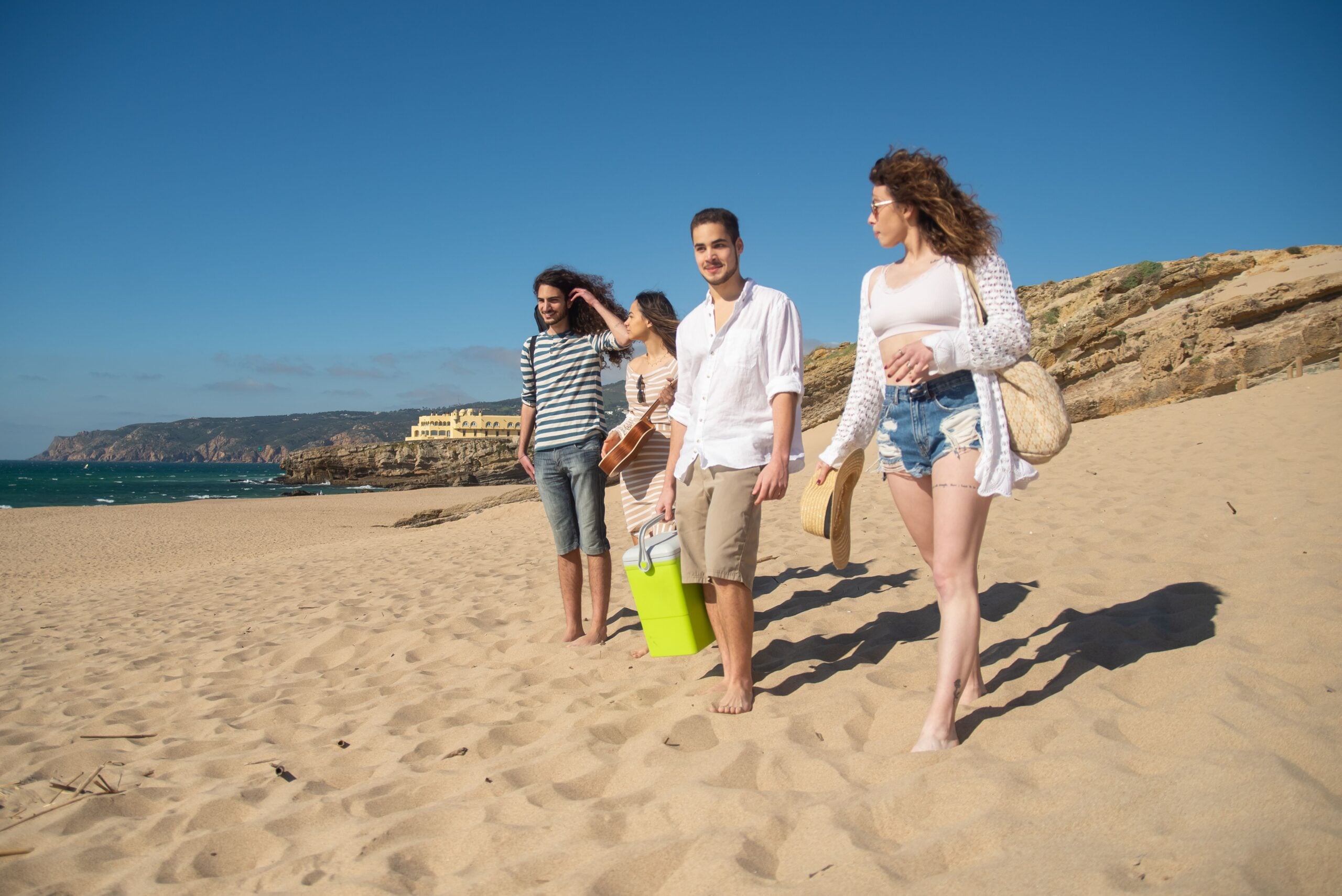

  • When the Group Chat Finally Books the Trip

    When the Group Chat Finally Books the Trip

    Illustrative group-travel photograph. Kampus Production / Pexels.

    The best shared Caribbean holiday leaves room for different budgets, different bedtimes and a little time apart. Have the awkward conversations before somebody pays the deposit.

    A villa with six bedrooms can still be the wrong house for six friends. Someone gets the room beside the kitchen. Someone discovers that “a few dinners out” means a restaurant reservation every night. The friend who wanted to read by the sea is being added to a sunrise excursion. These are decisions worth making before the luggage comes out.

    Getting the group chat to agree on dates deserves a small celebration. But the real achievement is booking a holiday that people can afford and enjoy without performing enthusiasm for every plan. A shared Caribbean trip needs some honest boundaries around money, space and time. Set those early and there is much more room for pleasure.

    Agree on the number before the view

    Start with what each person is comfortable spending on the whole trip. Ask privately if that makes an honest answer easier. A budget announced to the group can become a test of who is willing to keep up; nobody should have to explain their salary, savings or other commitments to earn a place on holiday.

    Build the shared plan around a ceiling everyone joining it has accepted. Include flights, checked bags, accommodation, transfers, food, planned activities and applicable taxes, fees and gratuities. Name the currency. Leave some room for the unplanned rather than committing every dollar before departure. If the numbers do not fit, shorten the stay, change dates or simplify the accommodation before asking someone to stretch.

    Keep upgrades optional. A spa treatment or a more expensive bottle need not become a group expense. Decide how restaurant bills will work before ordering, particularly where some people drink and others do not. Equal splitting is easy when everyone likes the arrangement. It is miserable when one person has to keep objecting.

    Choose a base that gives people choices

    A beautiful, secluded house asks a different commitment from everyone than rooms near the things they want to do. Before choosing it, price the journeys: airport to accommodation, accommodation to dinner, and the return after an evening out. Ask who will drive, who is comfortable doing so and what the alternative costs. A cheaper stay loses its appeal if every independent outing requires another expensive transfer.

    For friends arriving from different cities or countries, compare usable holiday time as well as airfares. Agree whether staggered arrivals need separate pickups and whether the first night should stay unplanned. Each traveller should also check the destination’s official entry requirements for their own documents and itinerary. For example, Jamaica’s Passport, Immigration and Citizenship Agency publishes visa requirements by nationality; one friend’s eligibility is no guarantee of another’s.

    A villa may suit people who want shared meals and a living room to return to. Hotel rooms can make it easier to have different schedules and different spending levels. Neither arrangement wins automatically. Ask how the group actually wants to spend an ordinary morning, then choose the place that allows it.

    Two separate beds with white bedding beside a window in a hotel room.
    Check the bed arrangement before anyone pays. Illustrative photograph. Trần Chính / Pexels.

    Allocate the rooms while everyone is still at home

    Count beds, bathrooms and doors that close. A listing’s sleeping capacity does not tell you whether adults will be sharing doubles, taking sofa beds or walking through someone else’s room. Get the floor plan or a clear written description, and ask about steps and other access needs before making a non-refundable commitment.

    Assign rooms before payment. If one has a terrace and its own bathroom while another is much smaller, agree whether the prices should differ. A solo traveller should know the cost of privacy rather than discover that the group has assumed they will share. Couples should know how the division between room costs and per-person expenses works.

    For a shared house, settle a few domestic details too: groceries, cooking, clearing up, quiet hours and visitors. Whoever finds the villa has not volunteered to run a small hotel. Divide the practical jobs so that the organiser gets a holiday as well.

    Make togetherness worth turning up for

    Choose a few things everyone genuinely wants: perhaps one long dinner, a beach afternoon and a particular excursion. Put those in the calendar, with the cost and commitment clear. Leave the rest open. The point of travelling together is to enjoy each other’s company, not to produce matching location histories.

    An optional activity needs to be genuinely optional. Let the early risers make their plan without recruiting the whole house. Let someone skip the boat trip without a public explanation. Before reserving an outing, ask about duration, transport, physical demands, accessibility, equipment and weather-related cancellation terms. A photograph tells you very little about whether the day will work for everybody.

    Time alone deserves the same courtesy as a dinner reservation. Agree a simple way to check in and arrange a safe return when people split up, without turning the chat into attendance monitoring. Leave room for a book, a nap or an afternoon with no useful outcome. People can come back to the table with something new to say.

    Make the booking match the agreement

    Before anyone pays, circulate one clear summary: dates, named travellers, room assignments, total shared cost, each person’s contribution, payment deadlines and cancellation terms. Separate confirmed bookings from ideas. Decide what happens if someone withdraws, including how any unrecoverable shared cost will be handled. A friendly agreement cannot override a hotel’s or rental company’s contract.

    Check who is taking the payment and who is responsible for the booking. The US Federal Trade Commission advises travellers to research the property and company and obtain cancellation and refund terms before paying. Treat pressure to send money immediately, or insistence on payment methods that are hard to recover, as a reason to stop and investigate.

    The Texas Department of Insurance offers useful US consumer guidance on reading insurance terms. Cancellation cover depends on the policy’s reasons and exclusions; medical and evacuation cover need their own attention. Check your own policy’s activities and destinations, and ask the insurer about anything unclear before purchase.

    Then close the spreadsheet. The best outcome is a group of friends who can relax because the expensive, awkward questions already have answers. You can disagree about where to have lunch without wondering whether the whole holiday was a mistake.

    Before you press Book

    Who pays if someone drops out? Options include the withdrawing traveller covering their agreed share of a non-refundable deposit, or everyone sharing that loss. Choose the arrangement and record it before booking; the supplier’s cancellation terms still apply.

    Does everyone have to join every activity? No. Keep paid outings opt-in before reservations are made, with clear arrangements for meeting up again.

    What should go in the group chat now? One agreed plan covering dates, spending ceiling, rooms, deposits and cancellations. Send that before another photograph of the pool.

    Explore more Caribbean travel stories from OCEAN Style.