


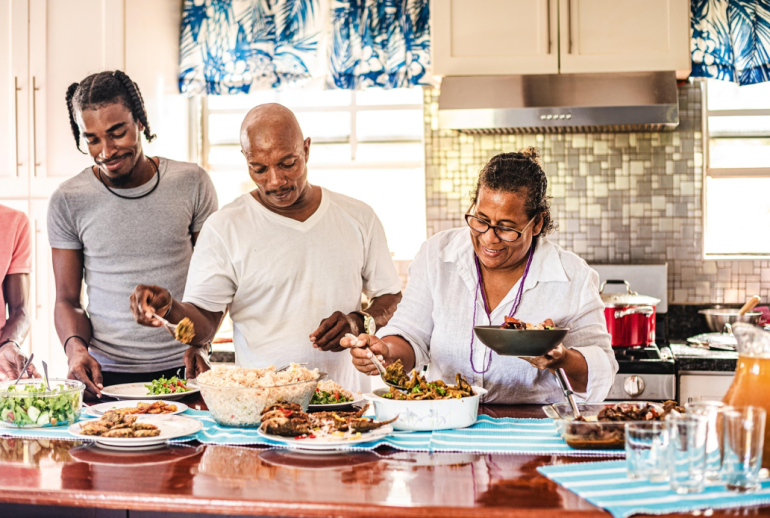
Jamaican Sunday dinner is less a fixed menu than a weekly negotiation over what belongs on the table, who makes it properly and whether anybody else has the right answer.
By Sunday morning, the argument may already have started.
Rice and peas or plain rice? Fried chicken or brown stew? Curry goat if there are enough people to eat it? And, perhaps most seriously, who is responsible for the macaroni and cheese?
The questions are familiar because Sunday dinner in Jamaica has never been only about food. It is a weekly ritual built around preparation, family, memory and the particular authority of the person standing over the pot.
There is no single Sunday dinner that every Jamaican household prepares. There is something more interesting instead: a shared idea of what Sunday dinner is supposed to feel like, expressed differently from kitchen to kitchen.
That is where the arguments begin.
Jamaican Sunday dinner is a ritual, not a recipe
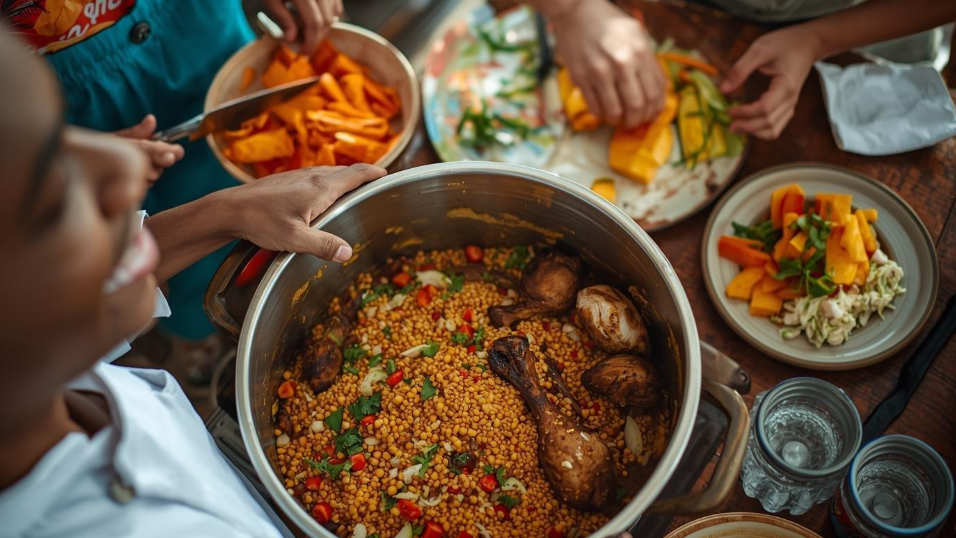
The meal traditionally sits at the end of a particular kind of Sunday. Church. Family. A slower afternoon. Food prepared early enough to be ready when everyone gets home.
In earlier generations, Sunday was a quieter day commercially, with shops often keeping shorter hours and households organizing the day around church and a home-cooked meal. The meal itself could be substantial without being elaborate: rice and peas, chicken, vegetables, plantain, and perhaps another meat if the household had the means and the appetite.
In rural Jamaica and in parts of Kingston, raising chickens for household use was common in earlier decades, with the Sunday bird prepared fried, curried or as brown stew depending on the family.
The details have changed. The ritual has been harder to dislodge.
There is no official Sunday dinner
This is where the family argument gets interesting.
Ask ten Jamaicans what belongs on a Sunday dinner plate and there will probably be considerable agreement about the general shape of the meal, followed quickly by disagreement about everything else.
Rice and peas is a strong contender. So is chicken. After that, the boundaries become less reliable.
The familiar spread often centers on rice and peas, chicken and a plantain side, with some households turning Sunday into a “two-meat” occasion with curry goat, oxtail or another meat added to the table.
Neither version is the definitive one. That is the point. The Jamaican Sunday dinner changes with parish, household, generation, budget and whoever happens to be cooking.
Who makes the rice and peas?
Every family has somebody who believes this question has already been settled.
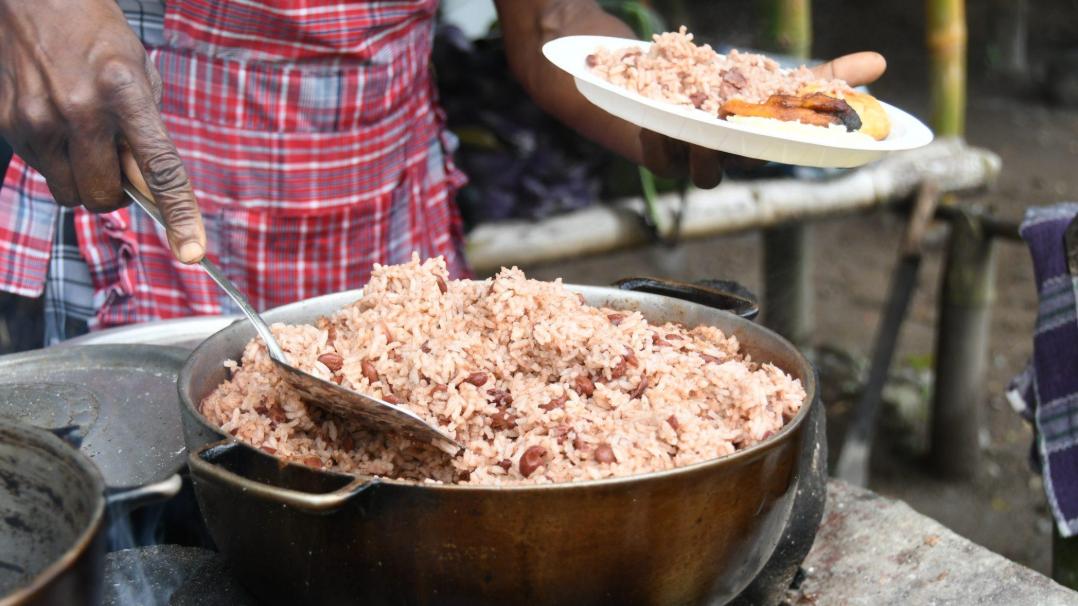
Rice and peas is one of the dishes that exposes the difference between a recipe and a tradition.
The argument might be about the peas. Kidney beans or gungo peas? It might be about the liquid. Coconut milk or no coconut milk? It might be about the seasoning. Scallion. Thyme. Pimento. Garlic. Pepper. Or it might simply be about texture. Some cooks want the grains separate. Others prefer a softer pot with the seasoning fully absorbed.
The disagreement can sound absurd to anyone outside the family. Inside it, the stakes are perfectly clear. The rice is being judged against memory. It has to taste like Sunday.
Then comes the question of the chicken
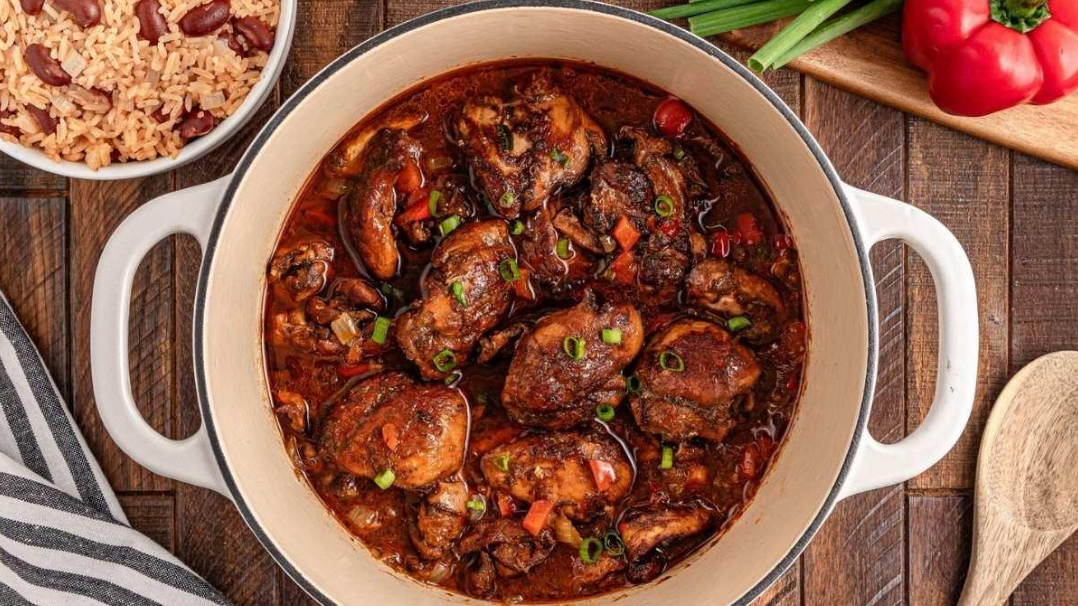
Chicken is not one dish in a Jamaican Sunday kitchen. It is a decision.
Fried chicken has its defenders. Brown stew has its own constituency. Curry chicken enters the conversation with the confidence of something that knows it has been invited before.
The choice can depend on time, ingredients, family preference and the person cooking. Fried, brown-stewed and curried chicken have all long been established household options, particularly when chicken was raised or bought specifically for the Sunday meal.
There is also the question of preparation. Was the chicken seasoned the night before? Was the gravy made separately? Should the pieces be browned first? How much browning is enough?
These are not questions that a family necessarily settles once. They are inherited arguments.
The second meat changes the entire afternoon
There are Sundays when chicken is enough. Then there are Sundays when somebody announces that there is also curry goat. Or oxtail.
The phrase “two-meat Sunday” captures the particular escalation. A regular Sunday meal becomes an occasion.
It is not necessarily about extravagance. Sometimes it is about having enough food for the people who are expected to arrive. And in Jamaica, the number of people expected at Sunday dinner has always been somewhat difficult to predict. A household of five can become twelve without anyone having formally issued an invitation.
The table expands faster than the recipe
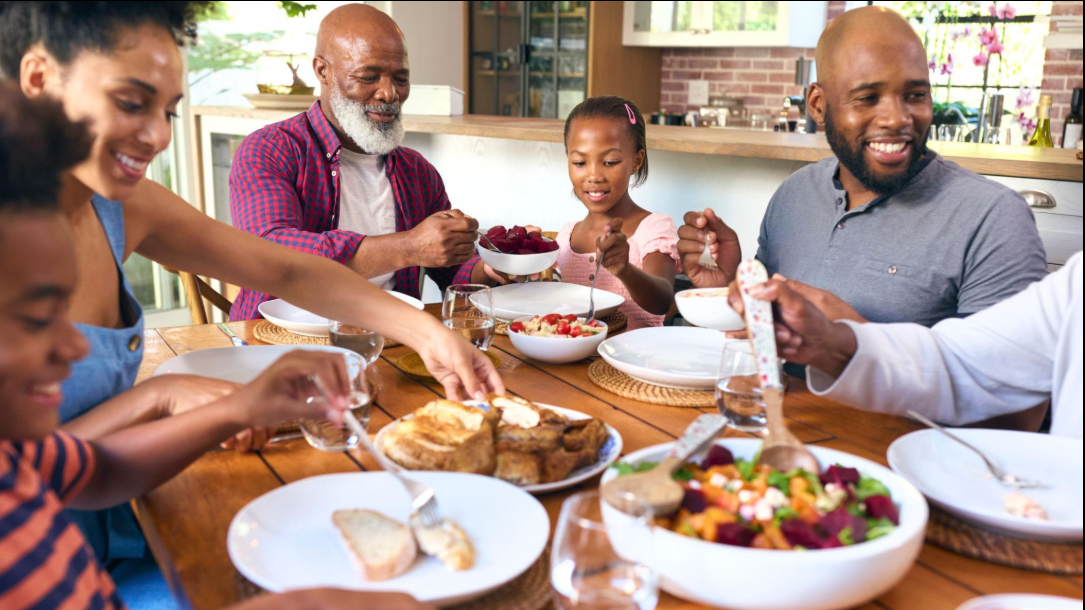
This may be one of the defining features of Jamaican Sunday dinner. Food has to stretch.
There is a familiar shape to this story in almost every Jamaican family: one pot of rice and peas, one pot of chicken, prepared before church, somehow feeding whoever turns up after. That ability to feed whoever arrives is its own form of cooking knowledge.
The cook looks at the pot and calculates. More rice? Another side? Slice more plantain? Make some gravy? There is rarely a spreadsheet. There is simply the understanding that Sunday dinner is not meant to end with one person being left without a plate.
Then someone criticises the gravy
This is where the friendly conflict becomes personal.
Too thick. Too thin. Too dark. Not enough seasoning. Too much seasoning. The cook says it is fine. Someone else says it needs another five minutes. Nobody asked for the opinion. The opinion arrives anyway.
This is not unique to Jamaica, of course. Families everywhere argue about food. But the Jamaican Sunday dinner gives those arguments a weekly stage.
Because the meal is repeated so often, everyone has a reference point. Everyone remembers how Auntie’s chicken tasted. Everyone knows which grandmother made the best rice. Everyone has eaten a version of macaroni and cheese that they consider correct. Memory becomes the judge.
Macaroni and cheese has entered the family court
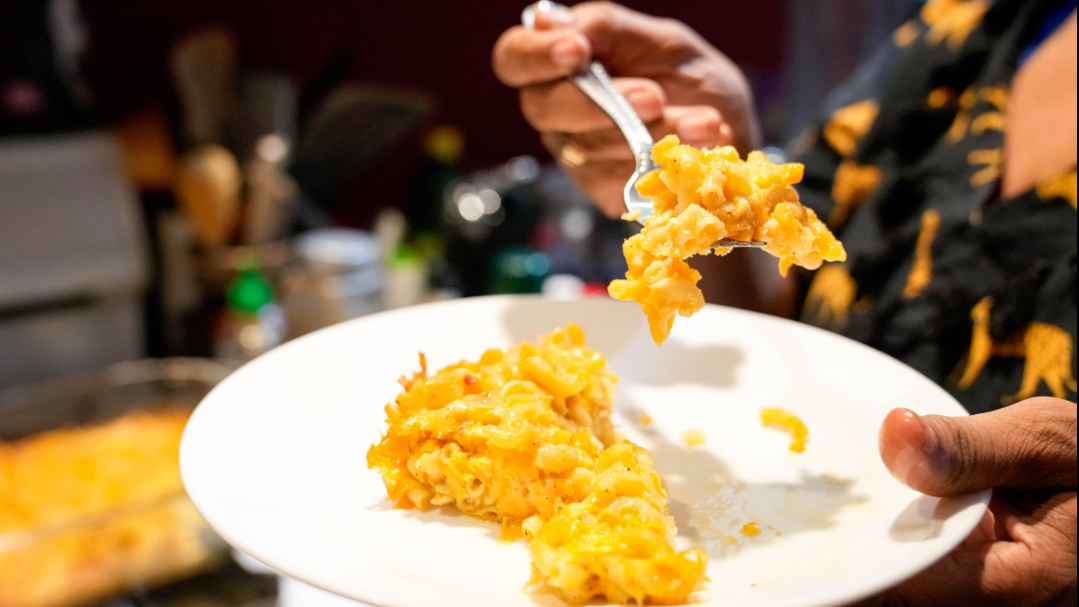
Macaroni and cheese is not necessarily the oldest element of the Jamaican Sunday table, but it has become firmly associated with the modern spread in many households.
And it is an especially dangerous dish to get wrong. Too dry. Too soft. Not cheesy enough. Too much cheese. The wrong cheese. The wrong topping. The family member who normally cooks the dish is suddenly unavailable, and someone else volunteers.
This is how Sunday dinner produces its most consequential disputes. Not because anyone dislikes the food. Because everyone thinks they know how it should be made.
The vegetables are not innocent either
Cabbage, callaloo, carrots, peas, mixed vegetables and other sides can occupy the same territory.
The argument is rarely about whether vegetables belong. It is about how they should be prepared. Steamed or sautéed? Soft or still firm? Seasoned heavily or left clean?
And then there is potato salad. Some families would consider it essential. Others can take it or leave it. That difference alone can tell you something about the household.
The plantain argument is quieter
Plantain tends to inspire less philosophical debate, but even here there are choices. Green or ripe? Fried or boiled? How dark should the edges be? How sweet is too sweet?
The plate may look settled to an outsider. It is not. The Jamaican Sunday dinner is a collection of small decisions, each one carrying the memory of other Sundays.
The person cooking has the final word
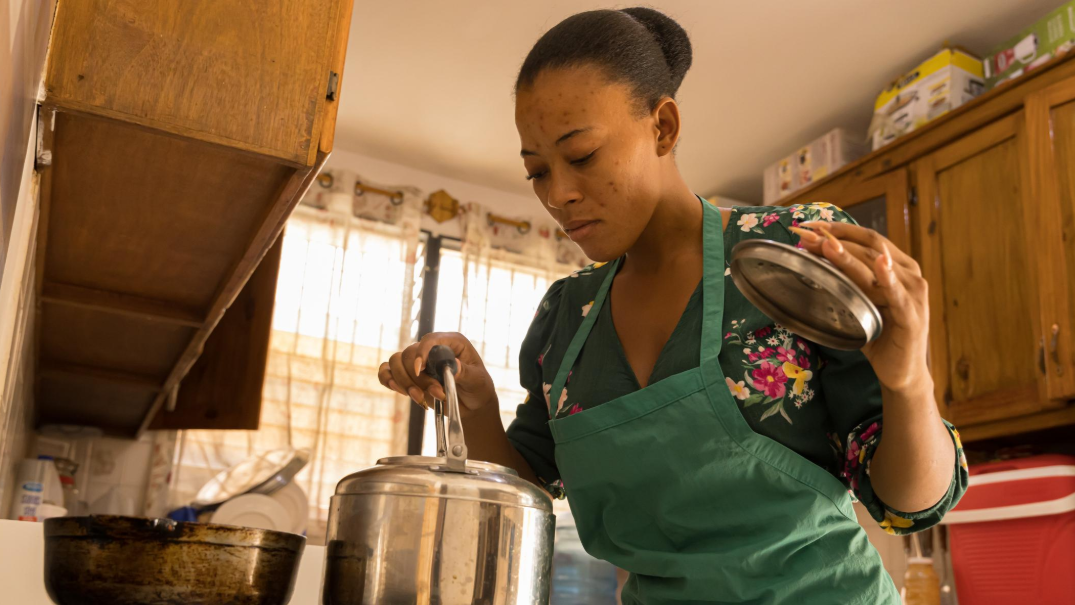
For all the arguments, there is usually an understood hierarchy. The person cooking gets the final word. This is one of the quiet rules of Jamaican home cooking.
Everyone can comment. Not everyone can take over the pot.
That authority is often built over years. The cook has made the meal enough times to know what the family expects. She knows how much rice disappears. She knows who does not eat pepper. She knows which child will refuse cabbage. She knows that the person who said they were not hungry will arrive when the food is served.
This is cooking as logistics, memory and instinct. It is also why family recipes are so difficult to standardise. The written recipe might tell you how much rice to use. The cook knows how many people are coming.
Sunday dinner has changed
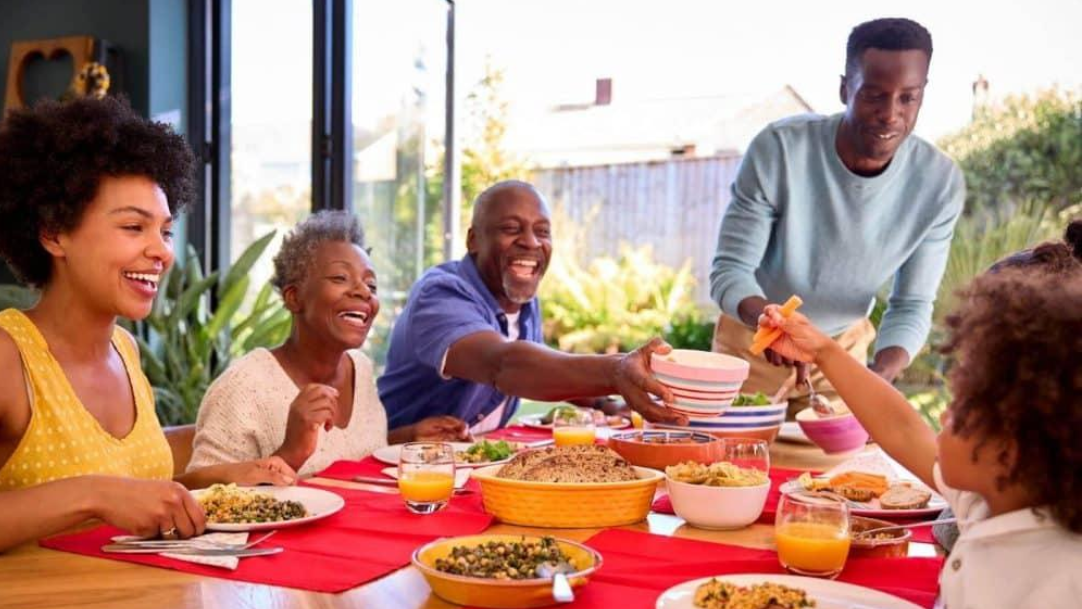
The ritual is not frozen in time. Modern Jamaican life has changed how families eat.
More people work on Sundays. Families are more dispersed. Prepared food is easier to buy. Refrigeration and supermarkets have changed how meat is sourced and stored. The old pattern of spending much of Sunday preparing a meal at home is not possible for everyone.
Changing work patterns and modern life have made it harder for some families to maintain the traditional Sunday cooking routine in full.
But the idea persists. Sometimes dinner is cooked at home. Sometimes someone brings food from elsewhere. Sometimes the family meets at a restaurant. Sometimes Sunday dinner happens on Saturday because everyone is working on Sunday. The ritual can move without disappearing.
The argument is part of the tradition
That may be the thing outsiders miss when they reduce Jamaican Sunday dinner to a list of dishes.
The food matters. But so does the conversation around it. Who makes the best rice? Who puts too much pepper in the chicken? Who insists on curry goat? Who still cooks everything from scratch? Who has abandoned the old way? Who learned the recipe from Granny? And, inevitably, who thinks their version is better?
The answers shift from family to family. There is no national committee deciding what counts. There does not need to be. Jamaican food has always made room for variation. The Sunday table simply gives that variation a regular appointment.
The argument is evidence that the tradition is still alive.
What makes a Jamaican Sunday dinner?
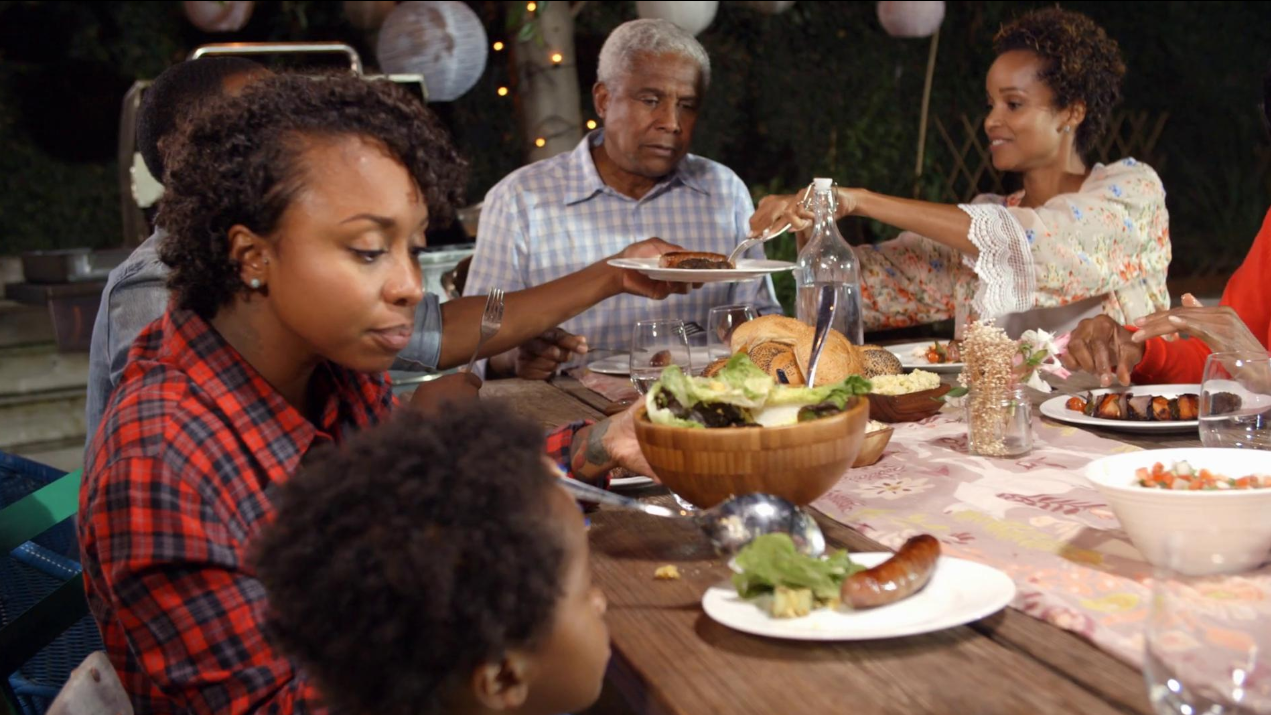
There is no single plate that can answer the question. A Jamaican Sunday dinner might be rice and peas with brown stew chicken. It might be fried chicken and vegetables. It might include curry goat, oxtail, plantain, macaroni and cheese or potato salad. It might be a simpler meal built around whatever the household has available.
What makes it Sunday dinner is not the exact menu. It is the gathering. It is the anticipation. It is the person in the kitchen who knows what everybody likes. It is the relative who arrives hungry. It is the plate that somehow becomes larger than expected. And it is the inevitable disagreement over whether the food was done properly.
The arguments will change. The table will change. The people around it will change. But as long as someone is standing over a pot on Sunday afternoon insisting that this is how it is supposed to be done, the ritual has not gone anywhere.
Frequently Asked Questions
What is a traditional Jamaican Sunday dinner?
There is no single fixed menu, but common dishes include rice and peas, chicken, vegetables and plantain. Some households also serve curry goat, oxtail, macaroni and cheese or other sides and meats. The exact combination varies by household and circumstance.
What time is Jamaican Sunday dinner usually eaten?
There is no universal time. Many households eat in the afternoon, often after church, though this varies with work, church schedules and family routines.
Why is Sunday dinner important in Jamaica?
Sunday dinner has traditionally provided a regular occasion for families to gather and eat together, a recurring ritual rather than simply another daily meal.
What meat is usually served for Jamaican Sunday dinner?
Chicken is a common choice, prepared fried, brown stew or curry. Some households add curry goat, oxtail or another meat, particularly for larger gatherings or “two-meat” Sundays.
Is rice and peas always part of Jamaican Sunday dinner?
Rice and peas is strongly associated with the traditional Jamaican Sunday table, but it is not an absolute requirement for every household or every Sunday.
Has Jamaican Sunday dinner changed?
Yes. Work schedules, changing family structures and the wider availability of prepared meals have altered how some households approach Sunday cooking. The tradition of gathering around a Sunday meal, however, remains present in many Jamaican families.