

On June 18, 2025, Jamaicans did something that would sound ridiculous if you described it without context.
They queued for hours for fried chicken.
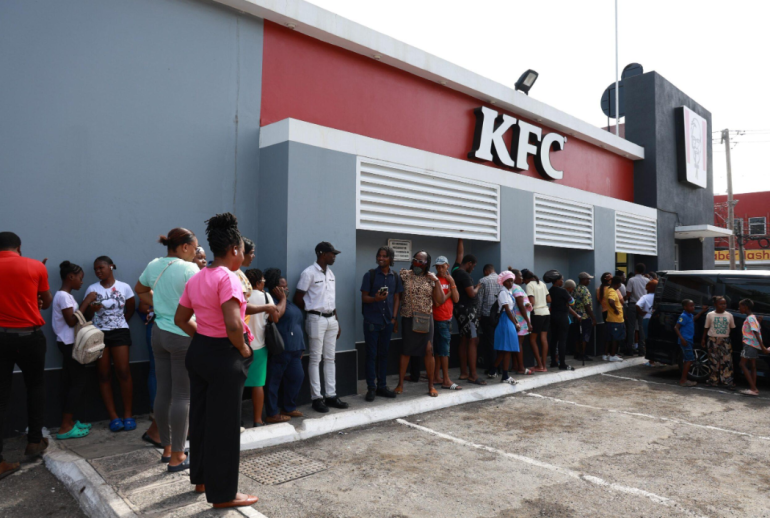
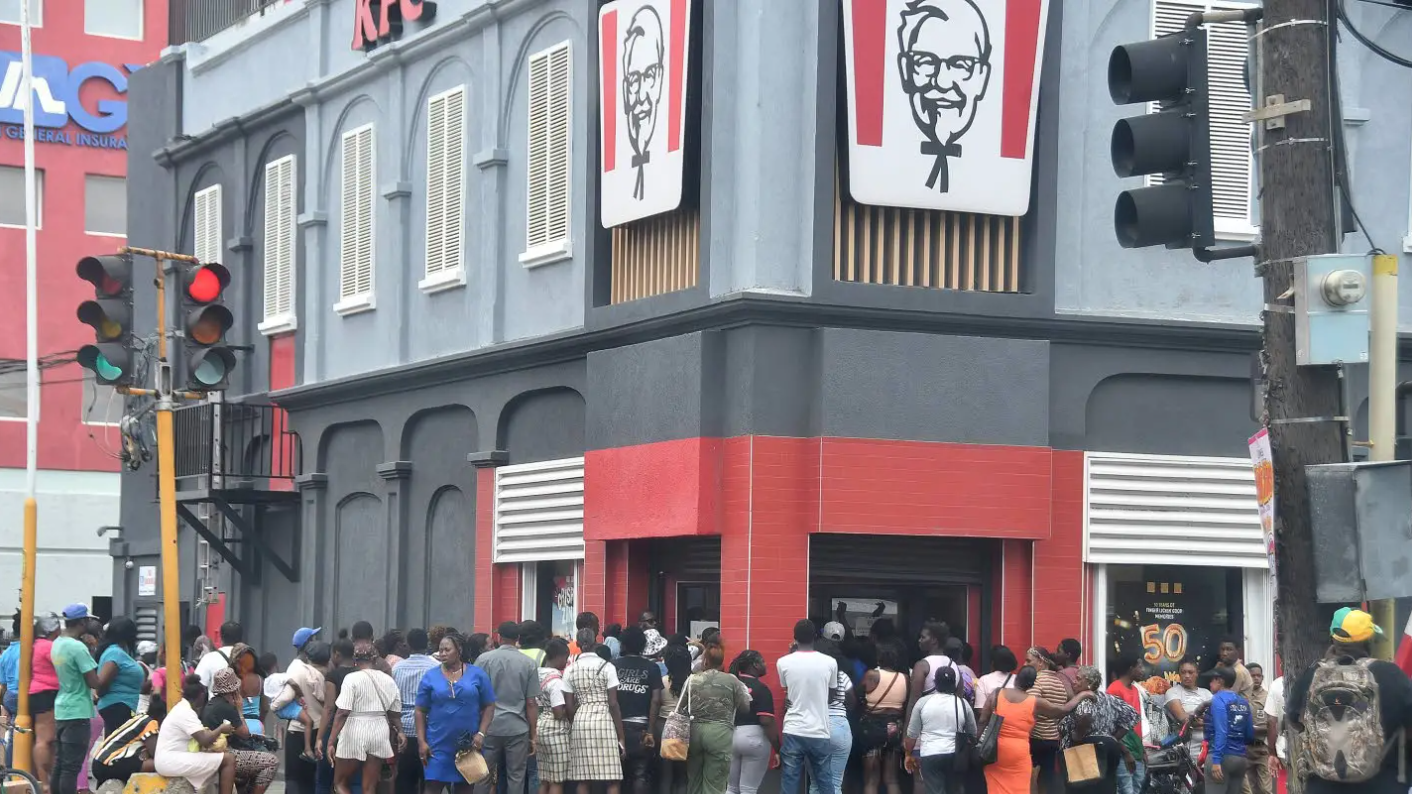
At some locations, lines began before opening. Cars backed up onto main roads. Families waited together. Social media filled with photographs and videos of crowds that looked more like concert audiences than customers waiting for lunch.
The reason was KFC Jamaica’s 50th anniversary promotion: buy a three-piece Big Deal and receive two additional pieces through the anniversary offer. The response was so large that Jamaican media treated it as a cultural event in its own right. (Jamaica Gleaner)
But the queues were not really the story.
They were evidence of something Jamaicans have known for years.
KFC is not just another fast-food chain in Jamaica.
It has become part of the country’s social vocabulary.
People joke about it. Families have KFC stories. Artists reference it. Children learn early that a box of KFC can be a reward. Adults who have travelled the world will argue that Jamaican KFC tastes better than KFC elsewhere.
And somewhere along the way, an American fast-food franchise became something that feels distinctly Jamaican.
So why KFC?
KFC arrived in Jamaica earlier than most people realise
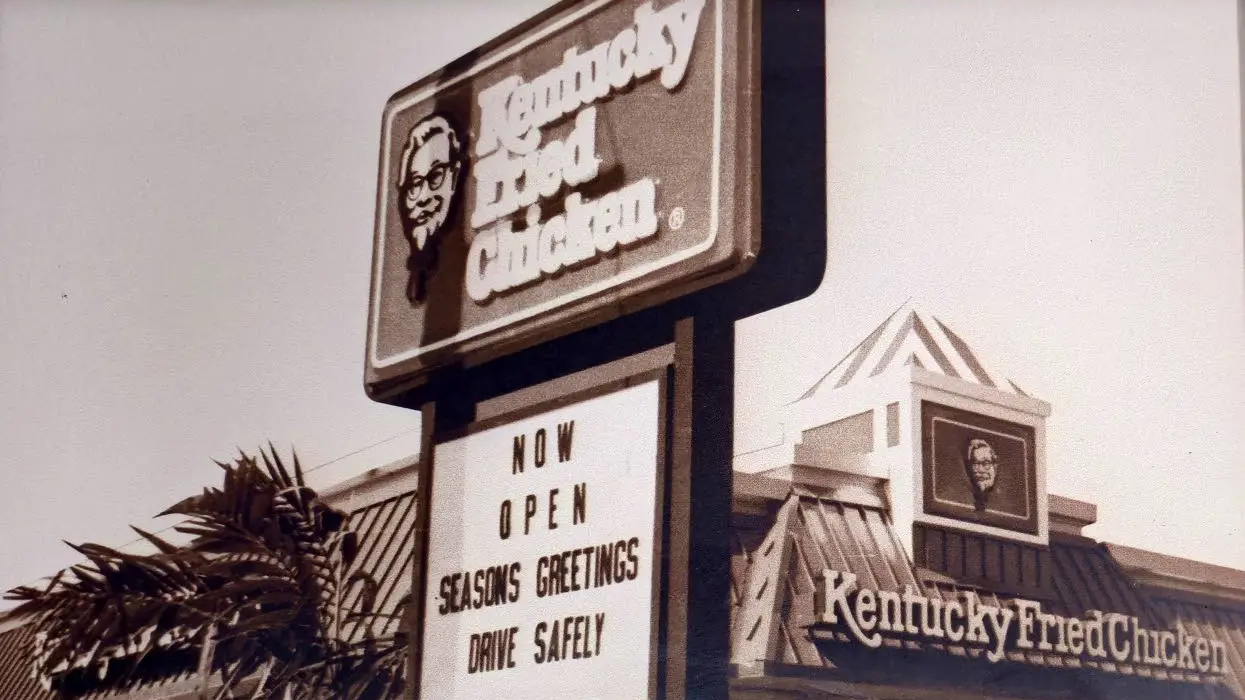
The Jamaican KFC story officially begins on June 18, 1975.
That was when the Myers family, operating under licence from Hueblein International, opened the first KFC restaurant at 170 Old Hope Road in Kingston 6. The restaurant was housed in a refurbished residential building and is credited with having Jamaica’s first drive-through. (KFC Jamaica)
But the story starts slightly earlier if you want to understand why the brand was not completely unfamiliar when that first restaurant opened.
Before Restaurants of Jamaica took over the franchise, there were already four Tops restaurants in Kingston selling KFC products. The Myers family eventually acquired those restaurants, refurbished them and brought them under the KFC name. The Cross Roads KFC is one of those former Tops locations. (Jamaica Observer)
That matters.
KFC did not arrive in Jamaica as an entirely foreign concept and immediately demand that Jamaicans change how they ate.
There was already a market.
There was already familiarity with the product.
And there was already an appetite for fried chicken.
The franchise simply built a much bigger machine around it.
Then Jamaica did something unusual with the brand
The international KFC formula stayed intact.
The Jamaican experience did not.
Restaurants of Jamaica says its restaurants use Jamaican-sourced ingredients apart from KFC’s proprietary seasoning. (KFC Jamaica)
More importantly, the franchise developed its own relationship with Jamaican consumers over five decades.
It expanded steadily.
It built restaurants in commercial centres.
It became part of Friday-night routines.
It became a family treat.
It became something you could pick up after school, after work, after church, after a football match or on the way home.
That kind of repetition matters.
A brand becomes culturally embedded not because people occasionally try it, but because it appears in enough ordinary moments that eventually nobody thinks of it as foreign.
The numbers tell part of the story
KFC Jamaica had 32 restaurants across 12 parishes by 2012. (Jamaica Observer)
It reached 39 restaurants by 2020. (Jamaica Gleaner)
The operator reported 40 restaurants across 11 parishes in January 2023. (KFC Jamaica)
By the 50th anniversary in 2025, Jamaican reporting put the number at 41 or 42, depending on the point in the anniversary period being reported. (Jamaica Observer)
And the expansion has continued.
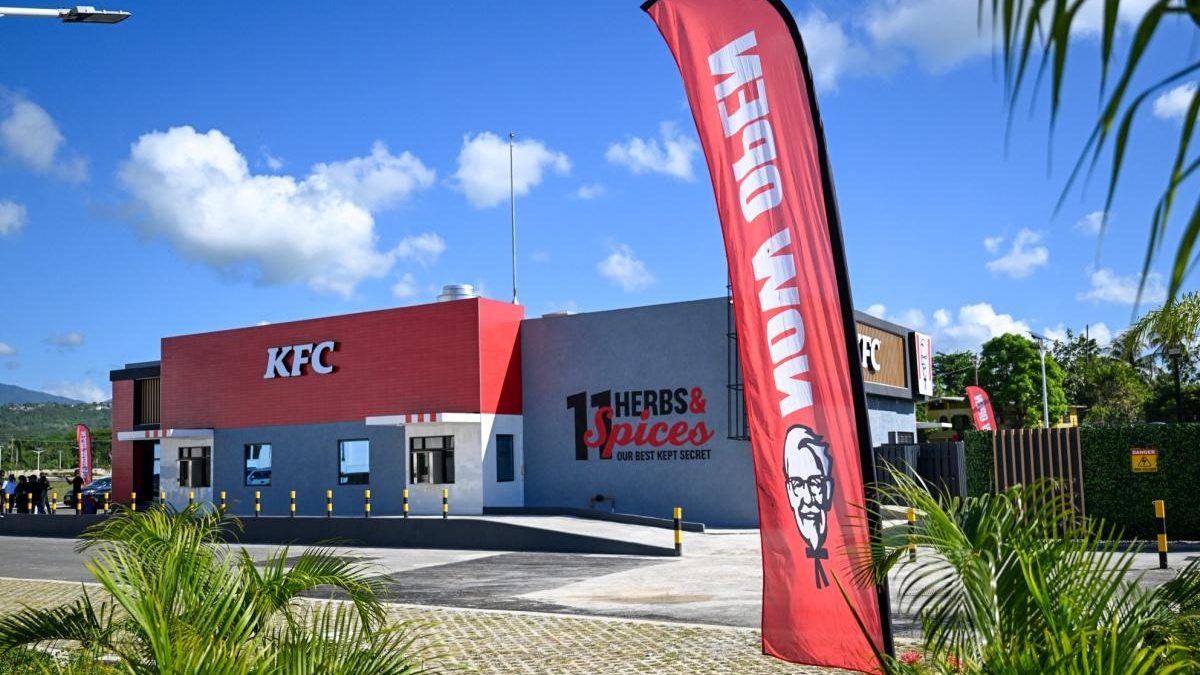
In January 2026, the opening of KFC Morant Bay brought the chain to 43 Jamaican restaurants. The Ministry of Industry, Investment and Commerce described the location as the 29th outlet outside Kingston and highlighted the $350 million investment behind it. (Ministry of Industry)
There is another KFC planned for the Constant Spring Road area of St Andrew for the first half of 2027. (Jamaica Observer)
That is not simply a restaurant chain maintaining a footprint.
It is a business continuing to invest in the assumption that Jamaicans will keep showing up.
So far, that assumption has been remarkably good.
The lines are part of the culture
Ask a Jamaican about KFC and the conversation can turn strangely personal.
Where was your first one?
Original or barbecue?
Breast or wing?
Spicy?
When did you first start going?
Did your mother buy it?
Did your father?
Did you get it after school?
Was KFC a special occasion?
Was there a particular branch?
A 2005 Jamaica Observer feature collected exactly these kinds of memories. People described childhood trips to Tops and later KFC, Friday-evening treats, discovering the Old Hope Road location and passing the habit down to their own children. (Jamaica Observer)
That is the part that a conventional market analysis misses.
KFC has accumulated memory.
A teenager buying chicken today may be participating in a ritual their parents established decades earlier.
That is difficult for a competitor to manufacture.
It crosses class in a way that is easy to underestimate
There is a temptation to explain KFC’s popularity through price.
That is only part of it.
The brand is accessible enough to reach a broad customer base, but it also carries enough cultural familiarity to work as a treat, a reward and a small occasion.
That gives it unusual range.
The 2025 anniversary crowds made this visible. Reports showed parents with babies, elderly customers, working people and large groups converging on the same restaurants. (Jamaica Gleaner)
We should be careful about turning photographs from one promotion into a rigorous demographic study. They do not prove that every social class consumes KFC at the same rate.
But they do demonstrate something harder to miss.
KFC has broad social reach.
It can be an ordinary meal.
It can be a reward for a child.
It can be something a family buys when nobody wants to cook.
It can be a nostalgic treat for somebody who grew up eating it.
It can also become a national joke.
That flexibility is part of its strength.
KFC became a reward before it became a ritual
There is a particular Jamaican childhood economy around food.
You behave.
You get something.
You pass an exam.
You get something.
You go somewhere special.
There might be KFC.
That relationship between KFC and reward appears in personal recollections and contemporary commentary. In 2025, dancehall artist Busy Signal described KFC as part of childhood special occasions and family milestones. (Jamaica Observer)
Once a food becomes associated with reward, it acquires emotional value beyond its ingredients.
The chicken is no longer just chicken.
It is Friday.
It is childhood.
It is somebody bringing home the box.
It is the moment your mother said yes.
That is difficult to compete against with a better menu.
Jamaica already loved fried chicken
This is perhaps the biggest reason the KFC story worked.
Jamaica did not need to be persuaded to love fried chicken.
Fried chicken was already comfortably inside Jamaican food culture.
The local tradition includes fried chicken from home kitchens, cookshops, roadside vendors and restaurants.
KFC offered something different.
It standardised the experience.
The seasoning was consistent.
The presentation was recognisable.
The restaurant was clean and predictable.
You could walk into a KFC in Kingston or another Jamaican town and know roughly what you were getting.
That consistency became part of the appeal.
A 2005 Jamaica Observer feature included consumers recalling the cleanliness, speed and freshness they associated with the Old Hope Road restaurant. (Jamaica Observer)
For a growing urban middle class and for families looking for a dependable treat, that mattered.
KFC was not replacing Jamaican fried chicken.
It was creating another category around it.
Then there is the taste argument
Every Jamaican who has eaten KFC abroad knows the conversation.
“It doesn’t taste the same.”
Sometimes it is followed by:
“Jamaica has the best KFC.”
There is no reliable basis for declaring Jamaican KFC objectively better than every other KFC market in the world.
But the belief itself is culturally significant.
The Jamaican KFC experience has developed its own identity, including menu items and flavour associations that customers treat as specifically local.
Barbecue chicken, for example, is repeatedly mentioned in Jamaican discussions of what makes the local experience distinctive. (Jamaica Observer)
The local operator also emphasises Jamaican-sourced ingredients apart from the proprietary seasoning. (KFC Jamaica)
So the interesting question is not whether Jamaica literally has the world’s best KFC.
It is why so many Jamaicans believe it.
And the answer may have less to do with blind loyalty than with localisation.
The brand has been in Jamaica for 50 years.
It has been cooked, served and experienced by generations of Jamaican workers.
It has been incorporated into Jamaican routines.
At some point, the question stops being whether KFC is Jamaican.
It simply becomes part of Jamaica.
KFC has also learned how to become local
This is where the history of Restaurants of Jamaica matters.
The local franchise was not simply an American corporation operating restaurants on the island.
The Myers family built the Jamaican operation over decades.
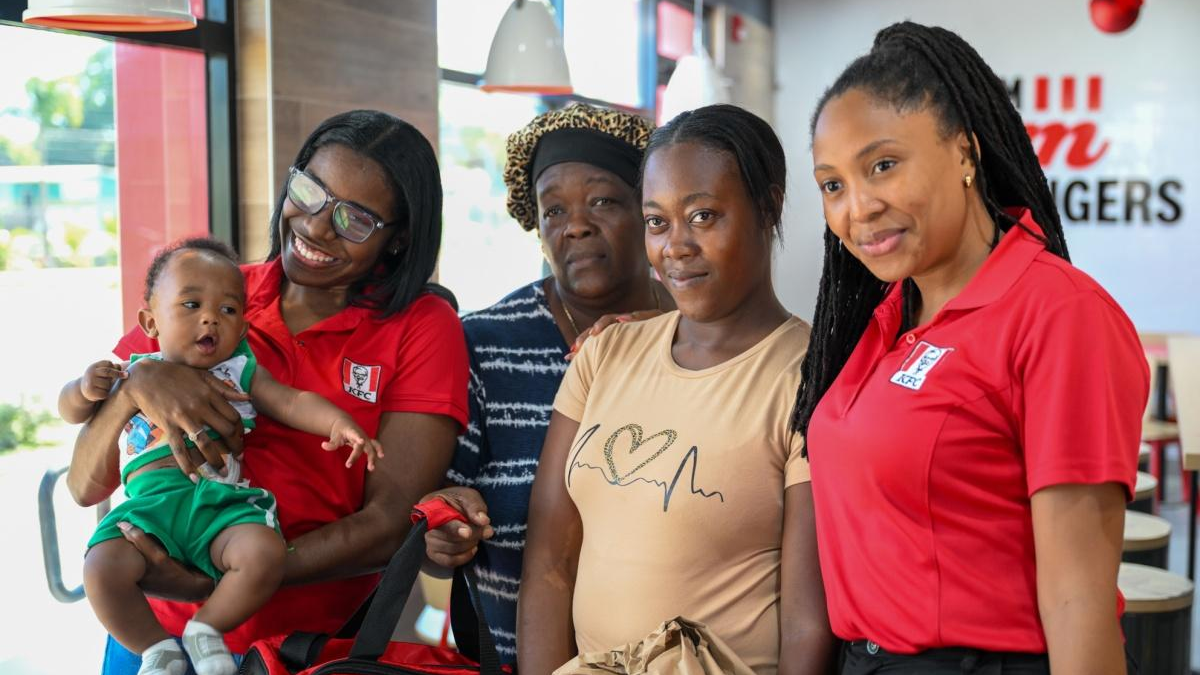
The company says it now employs about 2,500 people and has invested in community programmes, schools, sports and other national initiatives. (Jamaica Observer)
The Jamaican government has also publicly described KFC and Restaurants of Jamaica as contributors to employment, investment and community development. At the 2025 opening of the Black River restaurant, Prime Minister Andrew Holness described the brand as woven into Jamaican identity and pointed to its involvement in sports and community initiatives. (Office of the Prime Minister of Jamaica)
That does not make KFC a Jamaican-owned brand.
It does explain why the relationship can feel different from simply buying an imported product.
The company has local employees.
Local operators.
Local suppliers.
Local restaurants.
Local advertising.
Local memories.
Local jokes.
Local arguments.
And five decades of history.
The brand became part of Jamaican popular culture
You know a brand has crossed the line from commercial product to cultural object when people start making art about it.
In 2019, Jamaican recording artist Shalam released “Weh Di Bwoy Put Inna Chicken?”, a satirical song questioning the country’s loyalty to KFC.
Six years later, when the 50th-anniversary promotion sent customers flooding into KFC locations, the song came back with it.
Social-media users used clips of the track over videos of the queues.
The joke had become part of the evidence. (Jamaica Observer)
That is almost perfect Jamaican cultural behaviour.
If something is absurdly popular, somebody will make a song about it.
If the song is funny enough, the country will use it to explain itself.
Even the obsession is something Jamaicans argue about
The best thing about the KFC phenomenon is that Jamaicans are not unanimous about it.
Some people love it.
Some insist the chicken was better years ago.
Some prefer local fried chicken.
Some think the barbecue is the best thing on the menu.
Some think the entire phenomenon is ridiculous.
Some will tell you that KFC is practically the national dish.
One 2025 Gleaner letter even repeated the joke that KFC, rather than ackee and saltfish, had become the country’s “national dish.” That is obviously not an official designation. It is a measure of how deeply the brand has entered the national conversation. (Jamaica Gleaner)
And that distinction is important.
KFC is not Jamaica’s national dish.
It may, however, be one of Jamaica’s most successful foreign cultural imports.
The “Americanisation” explanation is too easy
There is a serious cultural argument here.
KFC is an American brand.
Fast food has been part of the wider American cultural influence on Jamaica, and research into nutrition and media in Jamaica has identified KFC as a particularly prominent fast-food advertiser. Scholars have also discussed the broader process of “remote acculturation”, through which American media, products and cultural influences affect Jamaican life without requiring physical migration. (PubMed Central (PMC))
But stopping there misses the more interesting part.
Jamaicans did not simply consume KFC because America told them to.
They made it their own.
They fitted it into family routines.
They created local memories around it.
They argued about the taste.
They made jokes about it.
They put it into songs.
They kept eating it for five decades.
Culture is not just what arrives.
It is what people do with what arrives.
The real secret may be consistency
KFC’s 11 herbs and spices get most of the attention.
But the deeper competitive advantage may be much less mysterious.
It has been there.
For fifty years.
The first generation remembers it.
Their children remember it.
Their grandchildren know it.
A Jamaican can leave the island, live abroad for years and still have an opinion about Jamaican KFC.
That is brand equity in its most powerful form.
Restaurants of Jamaica’s own history says the company deliberately focused from the beginning on quality and affordability, and the Jamaica Observer has reported that those priorities helped build generational loyalty. (Jamaica Observer)
Taste gets you back the first time.
Memory can get you back for decades.
Why the queues keep happening
So, what actually explains the obsession?
Probably not one thing.
It is the combination.
Familiarity. KFC has been part of Jamaican life since 1975.
Accessibility. The chain has expanded far beyond Kingston and continues to open locations across the island.
Consistency. Customers know what they are going to get.
Localisation. The Jamaican operation has its own ingredients, menu associations, marketing and cultural history.
Reward. KFC became associated with treats, milestones and family occasions.
Memory. People inherit the habit.
Identity. The brand has accumulated Jamaican references that did not exist when it first arrived.
Scarcity and excitement. Promotions can turn an ordinary purchase into an event, as the 2025 anniversary crowds demonstrated.
And then there is the simplest explanation of all.
Jamaicans like fried chicken.
Very much.
Maybe the question is backwards
We keep asking what KFC did to Jamaica.
After 50 years, perhaps the more interesting question is what Jamaica did to KFC.
It took a global fast-food formula and made it part of local life.
It gave the brand family memories.
It gave it Jamaican arguments.
It gave it dancehall jokes.
It gave it a local franchise story.
It gave it generations of employees and customers.
It gave it a place in national conversation that cannot be explained by advertising alone.
That is why the lines are so fascinating.
When hundreds of people wait outside a KFC for hours, they are not necessarily demonstrating that fried chicken is irresistible.
They are demonstrating what happens when a commercial product becomes part of a culture’s memory.
The chicken is only the beginning.
The real product is familiarity.
And Jamaica has had 50 years to get very familiar with it.
Frequently Asked Questions
When did KFC first open in Jamaica?
The first official KFC restaurant operated by Restaurants of Jamaica opened on June 18, 1975, at 170 Old Hope Road in Kingston 6. The Myers family opened the restaurant under licence from Hueblein International. (KFC Jamaica)
Who owns KFC Jamaica?
KFC Jamaica is operated locally by Restaurants of Jamaica (ROJ), which holds the KFC franchise licence from Yum!, the international franchisor. The Jamaican operation was established by the Myers family in 1975. (KFC Jamaica)
Why is KFC so popular in Jamaica?
There is no single documented explanation. Its five-decade presence, broad islandwide footprint, consistent product, localised operation, affordability, family traditions and strong association with rewards and special occasions have all contributed to its cultural position.
Does Jamaican KFC taste different?
The experience is locally distinctive, but there is no objective basis for saying Jamaican KFC tastes better than every other KFC market. Restaurants of Jamaica says its restaurants use Jamaican-sourced ingredients apart from KFC’s proprietary seasoning, while local menu and flavour preferences have developed their own identity. (KFC Jamaica)
How many KFC restaurants are there in Jamaica?
The number changes as new restaurants open. The Jamaican government reported 43 KFC restaurants following the opening of the Morant Bay location in January 2026. (Ministry of Industry)
Is KFC a Jamaican company?
KFC is an international American brand. Its Jamaican franchise is operated locally by Restaurants of Jamaica, which was established by the Myers family in 1975. The distinction matters, but so does the fact that the local operation has become deeply embedded in Jamaican economic and cultural life. (KFC Jamaica)
What was the 2025 KFC Jamaica anniversary promotion?
For KFC Jamaica’s 50th anniversary, the company offered customers two additional pieces of chicken with the purchase of a qualifying three-piece Big Deal. The promotion generated exceptionally long queues and significant social-media attention across Jamaica. (Jamaica Gleaner)
Is KFC Jamaica’s national dish?
No. Jamaica has no official designation making KFC its national dish. The phrase is a cultural joke that illustrates the brand’s extraordinary popularity. Ackee and saltfish remains Jamaica’s officially recognised national dish.