


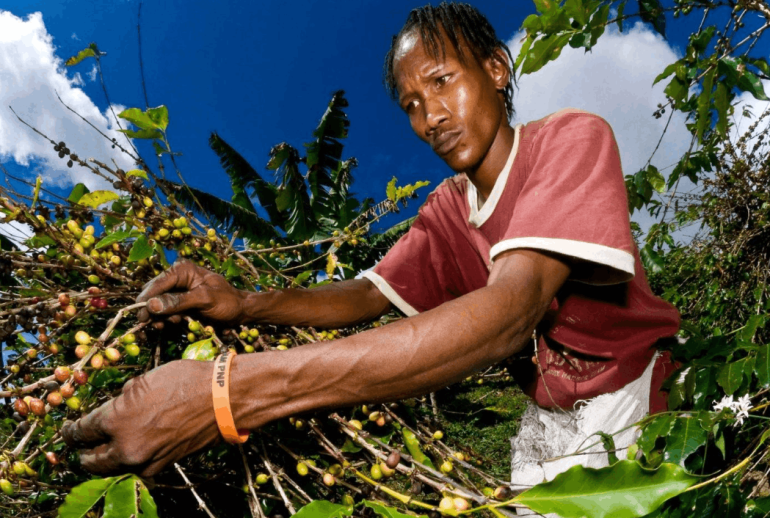
Blue Mountain coffee commands extraordinary prices around the world. But for the farmers growing it, the economics can look very different.
On the shelves of specialty coffee shops, Blue Mountain coffee carries a price that makes people stop and look twice.
The name alone has become shorthand for rarity, quality and Jamaican provenance. Japan has built a particularly strong market for it, and licensed buyers and exporters around the world continue to trade on the value of the Jamaica Blue Mountain name. (Jacra)
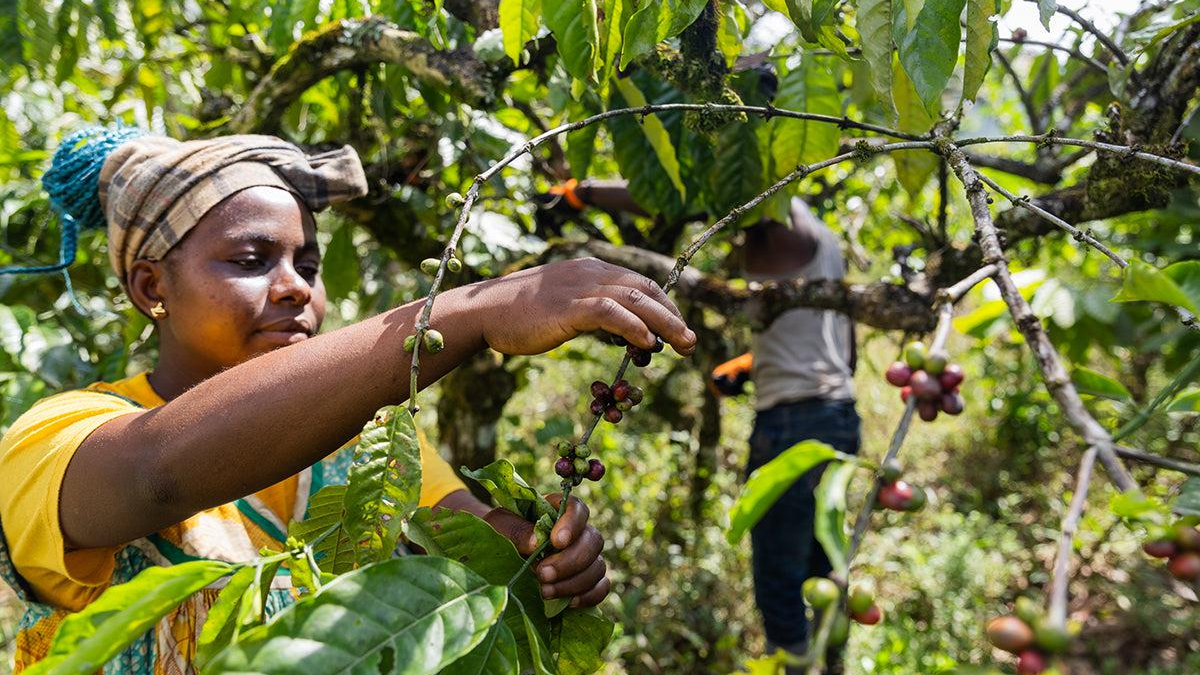
But go back up into the mountains, to the farms where the coffee begins, and the economics become considerably less glamorous.
Jamaica’s coffee farmers have spent years warning that the price they receive does not always make the crop easy to sustain. In 2017, farmers told the government they were receiving about J$6,000 per box and said the price did not cover their input costs. (Ministry of Agriculture and Fisheries)
The numbers have changed since then. The underlying question has not.
If Blue Mountain coffee is valuable enough to command a premium around the world, how much of that value actually reaches the person growing it?
That is the uncomfortable question behind Jamaica’s most famous coffee.
The name is worth money
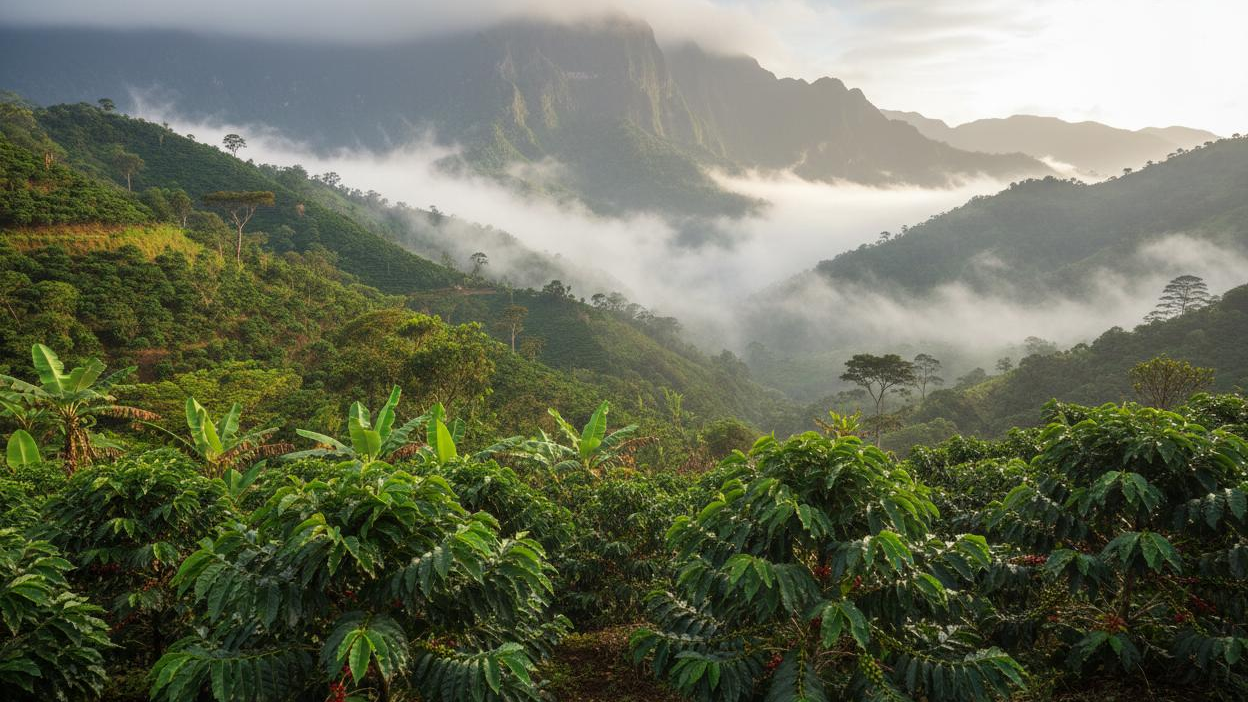
First, it is important to understand what is actually being sold.
“Jamaica Blue Mountain” is not simply a poetic description for Jamaican coffee grown somewhere in the hills.
The Jamaica Agricultural Commodities Regulatory Authority, JACRA, regulates the coffee sector, while its subsidiary Coffee Marks Limited owns the Jamaica Blue Mountain® certification trademark and licenses its use. (Jacra)
Coffee grown in the Blue Mountain area spans parts of St. Thomas, St. Andrew and Portland. Jamaica also produces premium High Mountain coffee outside the Blue Mountain area, which is a separate designation. (Jacra)
That geographical and regulatory distinction is part of the product’s value.
So is scarcity.
Jamaica is not a giant coffee-producing country. JACRA describes Arabica Typica as the dominant variety in the Jamaican industry and notes that it is prized for cup quality but is not a particularly heavy producer. (Jacra)
The result is a coffee with a powerful combination of attributes: recognised origin, limited production, established reputation and a global market willing to pay for all four.
But premium does not mean simple
Here is where the story gets complicated.
The price a consumer pays for a finished bag of premium coffee is not the same thing as the price paid to the farmer for coffee cherries.
Between the farm and the final cup are harvesting, processing, grading, certification, transportation, financing, roasting, packaging, marketing, distribution, retail and, in export markets, importers and other intermediaries.
Every stage adds cost.
Some stages also add value.
That distinction matters.
It would be misleading to look at the retail price of a bag of Blue Mountain coffee and assume the difference between that price and a farmer’s payment is simply someone else’s profit.
But it would be equally misleading to assume that the farmer automatically benefits whenever the consumer price rises.
The supply chain is where the real economic story lives.
Jamaica has been having this conversation for years
The tension is not new.
In 2017, Blue Mountain coffee farmers protested over what they considered inadequate prices. The Ministry of Agriculture recorded their complaint that J$6,000 per box was insufficient to cover their input costs. Buyers and exporters, meanwhile, were explaining that prices for the crop year were being determined in consultation with Japanese importers, who purchased a large share of Jamaica’s coffee. (Ministry of Agriculture and Fisheries)
That is a revealing detail.
The farmer grows the crop.
But the price does not exist in isolation on the farm.
It is shaped by buyers, exporters, overseas demand, production conditions and the broader structure of the market.
The same tension surfaced again in 2023, when Agriculture Minister Floyd Green said the government wanted to ensure coffee farmers received a fair price for their beans and linked farmer returns directly to the long-term sustainability of the sector. (Ministry of Agriculture and Fisheries)
This is not an argument that farmers receive no premium.
It is an argument that the existence of a premium product does not automatically guarantee a sustainable farm business.
Growing coffee in the Blue Mountains is not cheap
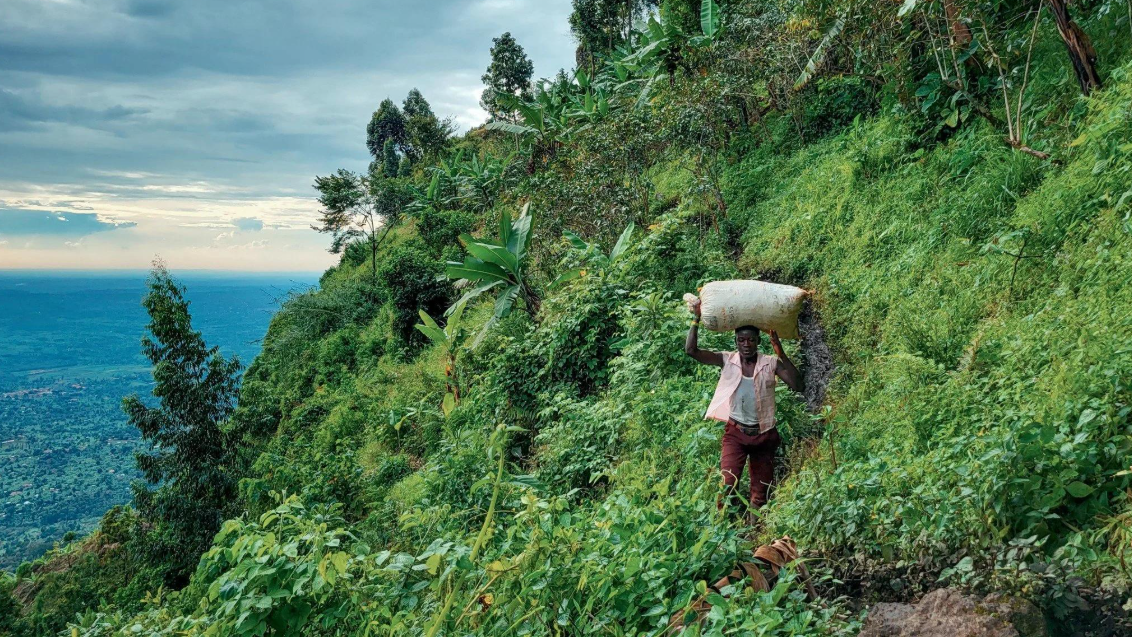
The romance of the Blue Mountains can obscure what farming there actually involves.
The terrain that contributes to the coffee’s distinctive growing environment also makes farming difficult.
The government has identified ageing farms and farmers, harsher climate conditions, rising agricultural input costs and inadequate farm roads among the challenges facing the sector. (Ministry of Agriculture and Fisheries)
Then there are pests, plant disease, weather damage and praedial larceny.
JACRA has described all of these as pressures on coffee farmers and has had to provide farmers with seedlings, fertiliser and crop-protection inputs to help restore production. (Jacra)
After Hurricane Melissa, the government committed substantial additional resources to rehabilitation of the coffee sector. In April 2026, the Ministry of Agriculture said J$132 million had been spent on rehabilitation, with much of the support directed to the Blue Mountain region. (Ministry of Agriculture and Fisheries)
That tells you something important.
A crop can be globally prestigious and still require significant public support to remain viable at farm level.
The farmers are carrying the risk
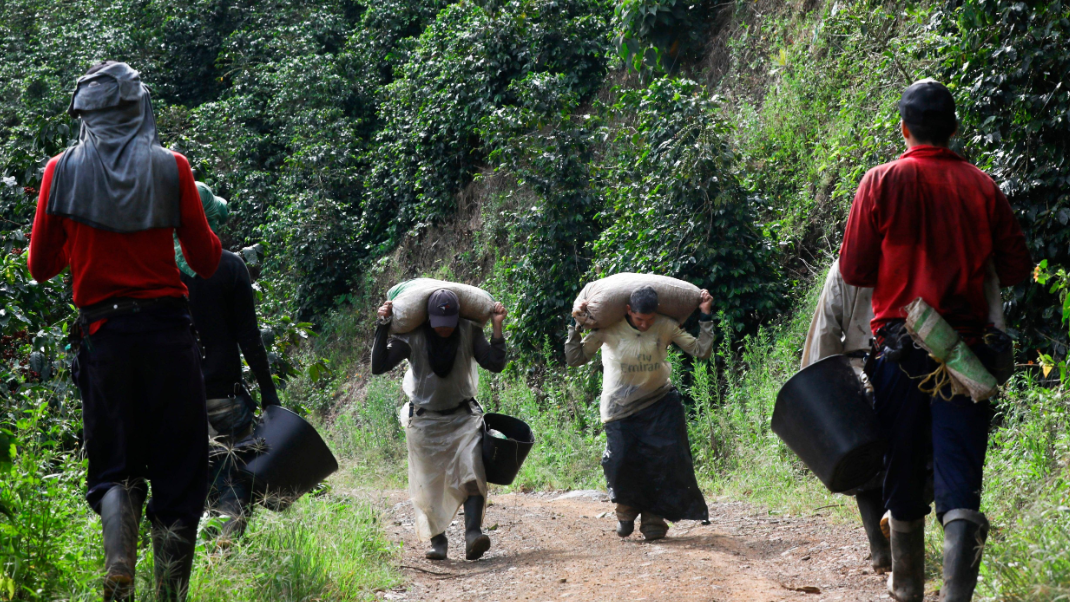
Coffee is not a factory product.
If a processor has a bad month, production can be adjusted.
A farmer cannot simply decide not to have a harvest.
Trees take years to establish.
Weather does what it wants.
Pests do not care about export contracts.
Roads can become impassable.
Fertiliser and other inputs cost money before the farmer knows exactly what the eventual crop will bring.
And the farmer’s income depends on what happens after all of that work.
That makes the economics particularly unforgiving for small growers.
JACRA’s recent interventions specifically target thousands of farmers across the Blue Mountain region with planting material and agricultural inputs, reflecting the scale of the production challenge. (Jacra)
So who actually benefits from the Blue Mountain premium?
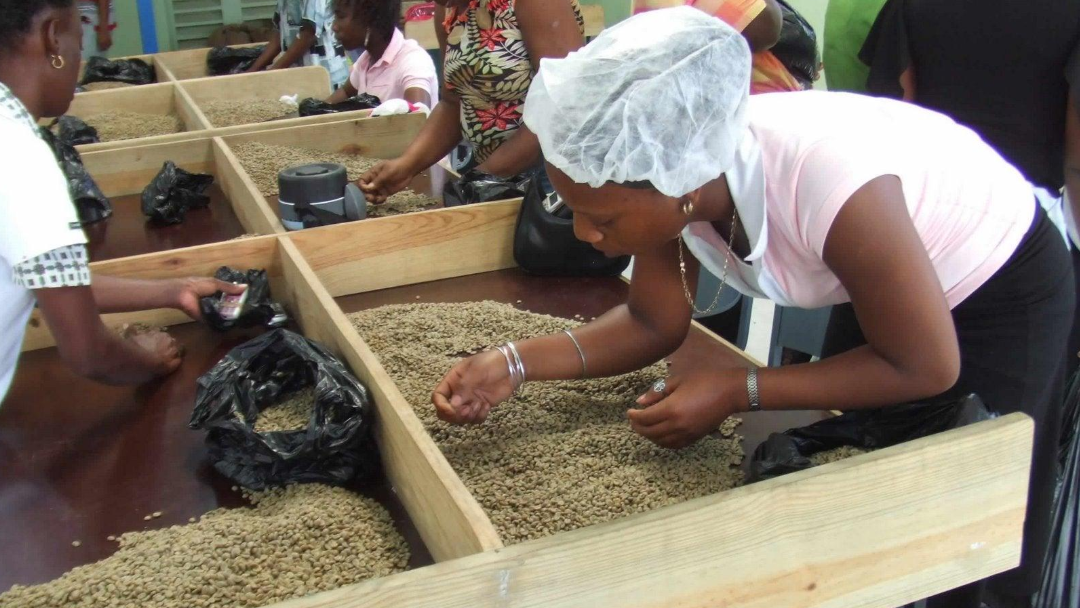
There is no honest one-line answer.
Farmers benefit from producing a crop that has a recognised premium market.
Processors and dealers add value by handling, grading and preparing the coffee.
Exporters connect Jamaican coffee to overseas buyers.
Importers and distributors move it into foreign markets.
Roasters transform green beans into the product consumers recognise.
Retailers sell the final product.
The Jamaican state also has an interest in protecting the certification and reputation that support the entire chain.
The question is not whether these roles deserve to exist.
They do.
The question is whether the distribution of value and risk across that chain is sustainable.
That is harder to answer because the public record does not provide a simple, current percentage showing exactly how much of every consumer dollar reaches a Blue Mountain farmer.
Any article claiming otherwise without a specific supply-chain study is pretending to know more than it does.
The export market creates opportunity and vulnerability
Japan is central to the story.
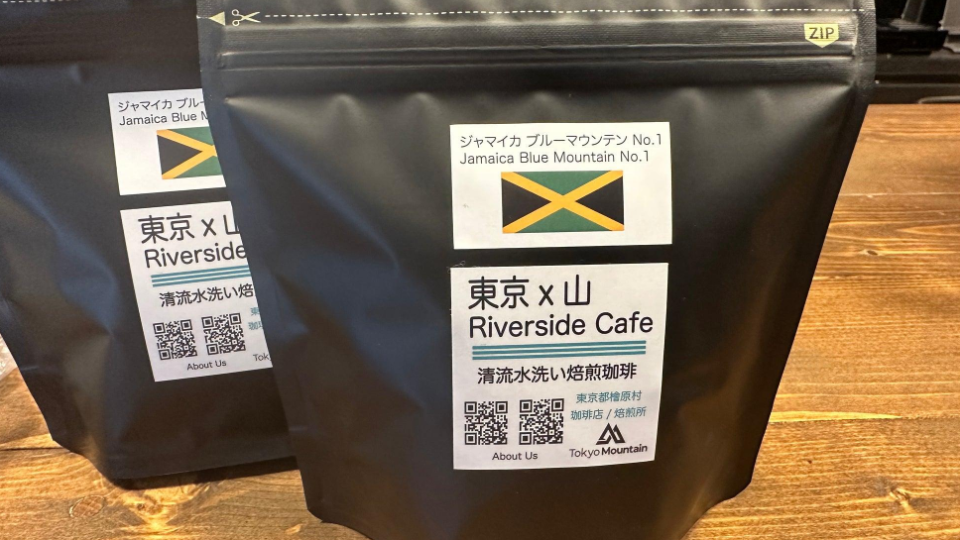
The Jamaican government has repeatedly identified Japan as an important market for Blue Mountain coffee. In 2017, officials said Japanese firms purchased the bulk of the local commodity, while JACRA continues to list Japanese companies among licensed users and importers of the Jamaica Blue Mountain trademark. (Ministry of Agriculture and Fisheries)
That demand helped build the international reputation of Jamaican coffee.
But dependence on a major market also creates exposure.
If demand changes, if consumer preferences move, if economic conditions weaken or if buyers become more price-sensitive, Jamaican producers feel the effects.
The answer is not necessarily to walk away from the Japanese market.
It is to build more routes to market and more ways for Jamaican producers to capture value.
The opportunity may be in doing more than growing beans
This is where the conversation becomes more interesting.
A coffee farmer does not necessarily have to make all of their money from selling raw or processed coffee.
JACRA has been encouraging farmers to explore coffee by-products, including coffee scrubs, soap, candles and lotions. (Jacra)
There is also room for more local processing, direct-to-consumer sales, tourism experiences and other forms of value addition.
That does not mean every farmer should suddenly become a roaster, retailer and tourism operator.
It means the coffee economy does not have to end when the beans leave the farm.
The more stages of the value chain that Jamaican businesses can participate in, the greater the potential for economic value to remain in Jamaica.
That is an opportunity worth taking seriously.
Quality is part of the problem too
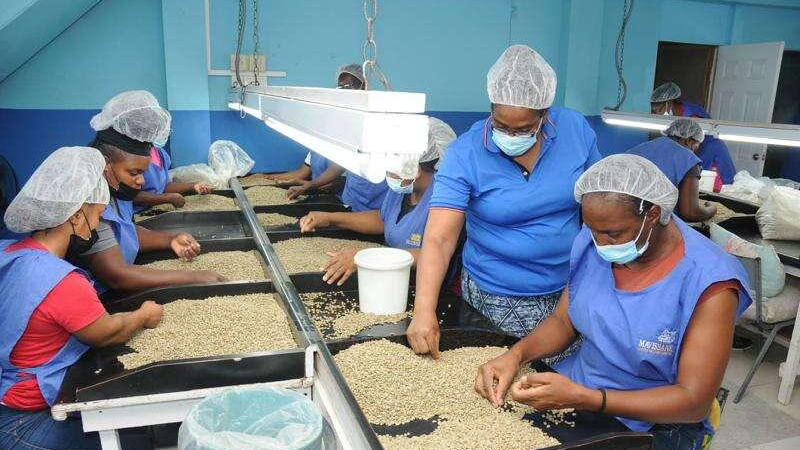
There is an uncomfortable counterargument that cannot be ignored.
Premium pricing depends on premium quality.
If quality becomes inconsistent, the reputation that supports the premium becomes harder to defend.
JACRA has explicitly warned about this problem. The authority has noted that inconsistent quality has opened space for lower-quality coffee brands in markets such as Japan, where they can sell for a fraction of the price of Jamaican Blue Mountain coffee. (Jacra)
That creates a difficult balancing act.
Farmers need better returns to justify investment in their farms.
But the industry also needs farmers to invest in the practices that maintain quality.
If the economics do not support the investment, quality can suffer.
If quality suffers, the premium becomes harder to sustain.
That is not a farmer failure.
It is a value-chain problem.
The Blue Mountain name cannot farm itself
This may be the central point.
Jamaica has built one of the world’s most recognisable coffee brands around a very specific place.
But a geographical reputation is only as durable as the farms producing the thing that carries the name.
If farmers cannot make a sustainable living from the crop, younger generations have less reason to take over.
If farms age without adequate replanting, productivity suffers.
If infrastructure deteriorates, costs rise.
If climate pressures intensify, the risk increases.
And if the people doing the hardest part of the work cannot capture enough value, eventually the premium becomes a marketing story detached from the economic reality that created it.
That is a dangerous place for any agricultural brand to end up.
The future is not just about selling more coffee
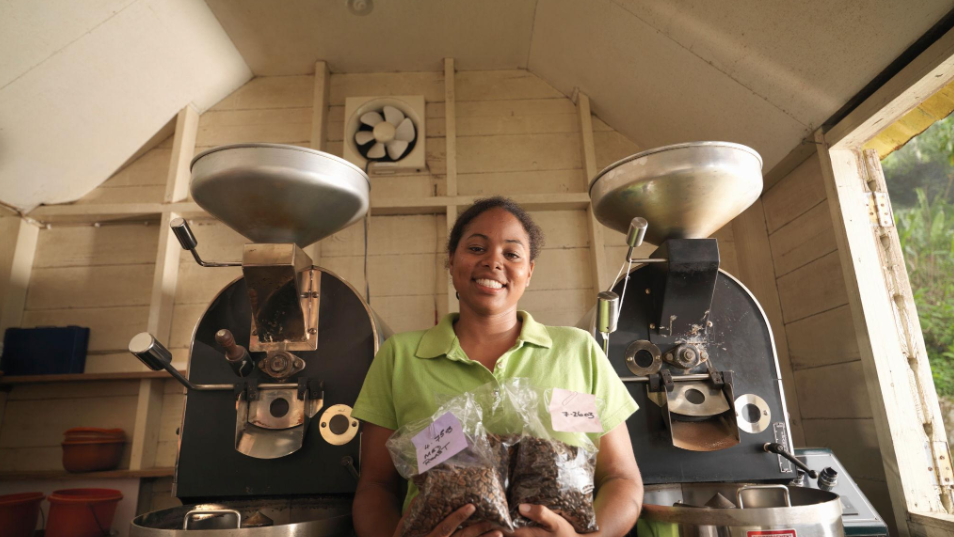
Jamaica’s stated ambition is to increase production.
In 2023, the Ministry reported national coffee production of 288,196 boxes and set an objective of reaching 450,000 boxes over the following three to five years. (Ministry of Agriculture and Fisheries)
More production can help.
But volume alone is not the answer.
If Jamaica produces more coffee without improving farmer economics, the country could simply be scaling the wrong part of the problem.
The better ambition is more sophisticated:
Produce better coffee.
Pay farmers sustainably.
Protect the Blue Mountain designation.
Build more Jamaican-owned value around the crop.
Diversify markets without destroying the premium.
And make sure the people who have carried this crop through generations are not the only people in the value chain who cannot afford the thing they helped make valuable.
The cup tells only half the story
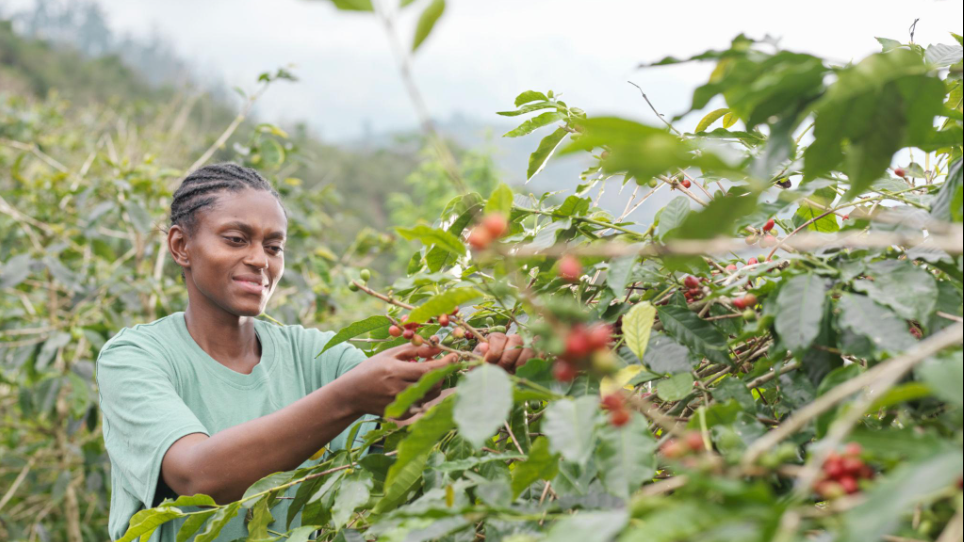
The next time someone puts a very expensive cup of Blue Mountain coffee in front of you, the price tells you something.
It tells you that the world has decided this coffee is special.
It tells you that Jamaica has successfully built a premium agricultural brand around geography, quality and scarcity.
But it does not tell you how the money travelled to get there.
For that, you have to follow the coffee backwards.
Past the roaster.
Past the exporter.
Past the processor.
Past the dealer.
Back into the mountains.
Back to the farmer.
Because the real test of Jamaica’s Blue Mountain legacy is not whether the world will continue paying a premium for it.
It is whether the people growing it can afford to keep doing so.
Frequently Asked Questions
Why is Blue Mountain coffee so expensive?
Jamaica Blue Mountain coffee benefits from its recognised geographical origin, limited production, established reputation and quality. The Jamaica Blue Mountain name is also protected through a certification trademark administered within Jamaica’s regulatory framework. (Jacra)
Do Jamaican coffee farmers receive the full premium paid for Blue Mountain coffee?
No. The retail price of coffee is distributed across multiple stages of the supply chain, including processing, exporting, importing, roasting, distribution and retail. There is no single current public figure that establishes what percentage of every retail sale reaches the farmer.
Why have Blue Mountain coffee farmers complained about prices?
Farmers have repeatedly raised concerns about whether the prices they receive adequately cover production costs. In 2017, farmers reported receiving J$6,000 per box and said that amount could not cover their input costs. (Ministry of Agriculture and Fisheries)
Where is Jamaica Blue Mountain coffee grown?
The Blue Mountain coffee area includes parts of St. Thomas, St. Andrew and Portland. Jamaica also produces High Mountain coffee in other areas, which is a separate category. (Jacra)
Who regulates Blue Mountain coffee in Jamaica?
The Jamaica Agricultural Commodities Regulatory Authority, or JACRA, is responsible for regulating and standardising Jamaica’s agricultural commodities sector, including coffee. Its subsidiary Coffee Marks Limited owns the Jamaica Blue Mountain certification trademark. (Jacra)
Is Blue Mountain coffee mainly exported to Japan?
Japan has historically been a major market for Jamaican Blue Mountain coffee, and the Jamaican government has identified Japanese firms as major purchasers of the local commodity. Current JACRA records also show Japanese companies among licensed Jamaica Blue Mountain trademark users and importers. (Ministry of Agriculture and Fisheries)
Is Jamaica producing enough Blue Mountain coffee?
Production has faced significant challenges from ageing farms, climate conditions, agricultural costs, pests and infrastructure. The government has been investing in replanting and rehabilitation while pursuing higher production targets. (Ministry of Agriculture and Fisheries)