


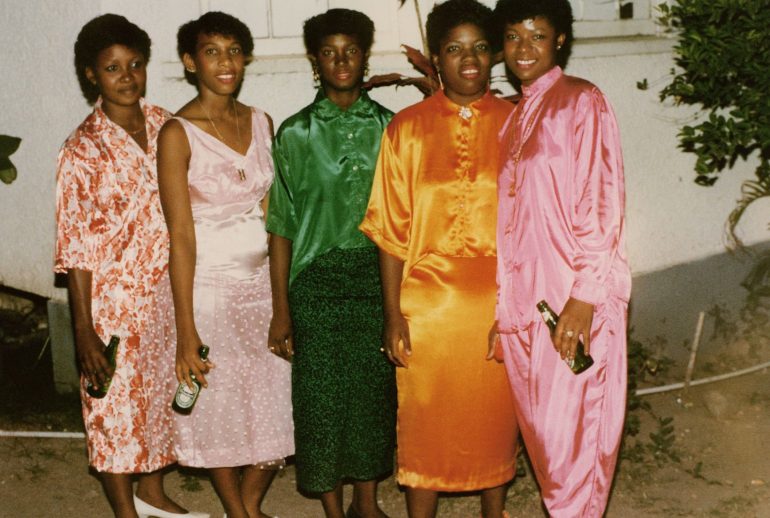
Before fashion editors started calling it “bold,” “maximalist” or “street luxury,” Kingston already knew what it looked like.
A mesh marina pulled tight against the body. Gold chains stacked across the chest. Oversized colour. Custom tailoring. Rhinestones. Leather. Denim. Hair that could not be ignored. A woman arriving at the dance dressed not simply to look good, but to make an entrance.
Dancehall understood something fashion eventually learned to sell back to the world: clothes are not just worn. They are performed.
That is why the influence of Jamaican dancehall fashion reaches further than a handful of Jamaican designers or musicians. Its visual language has travelled through hip-hop, music videos, streetwear, club culture and international fashion. Researchers have described dancehall as one of Jamaica’s most influential cultural exports, with its impact extending into international fashion as well as music, film and dance. (Nova Southeastern University)
The more interesting question is not whether Jamaican style influenced fashion.
It did.
The question is how a culture built in Kingston’s dance spaces became part of the vocabulary of global fashion, while the people who created much of that vocabulary were often left out of the official story.
Dancehall was a runway before it was a fashion reference
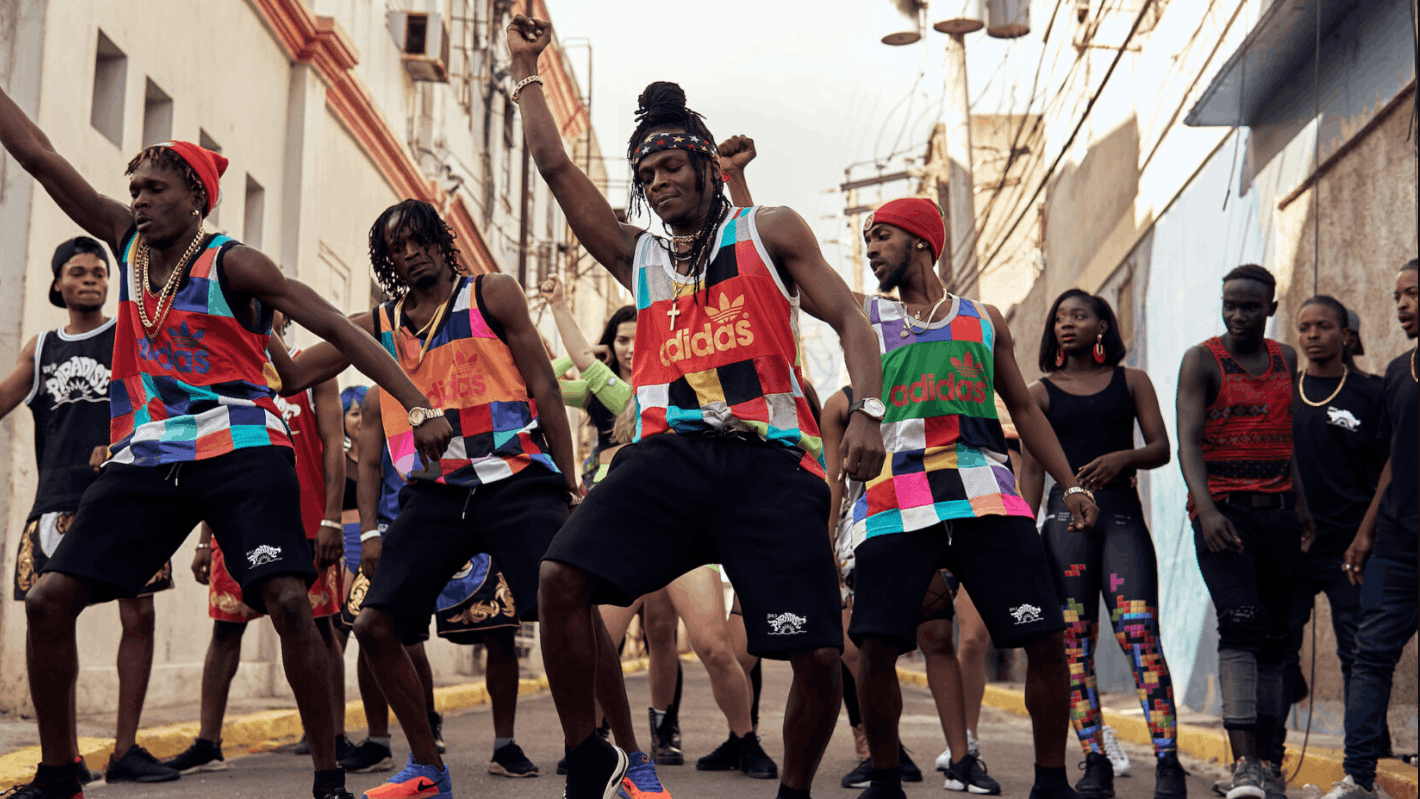
A dance was never just somewhere to hear music.
You had to arrive looking the part.
That made dancehall a participatory fashion environment long before social media turned everyday dressing into content. The audience was part of the spectacle. Clothing communicated confidence, sexuality, status, aspiration and individuality.
And because people were dressing for movement, heat, nightlife and public attention, the rules were different from those of conventional formalwear.
The look could be exaggerated.
The colours could be loud.
The jewellery could be excessive.
The silhouette could be revealing.
The outfit could be completely custom.
What mattered was whether you could carry it.
Academic work on Jamaican dancehall culture has described fashion as a site where global influences were absorbed, remixed and then returned to the wider world in altered form. (ResearchGate)
That is an important distinction.
Dancehall did not develop in isolation from international fashion. Jamaicans were consuming global images and products too.
But they were not simply copying them.
They were making something else.
The Jamaican street style that luxury eventually recognised
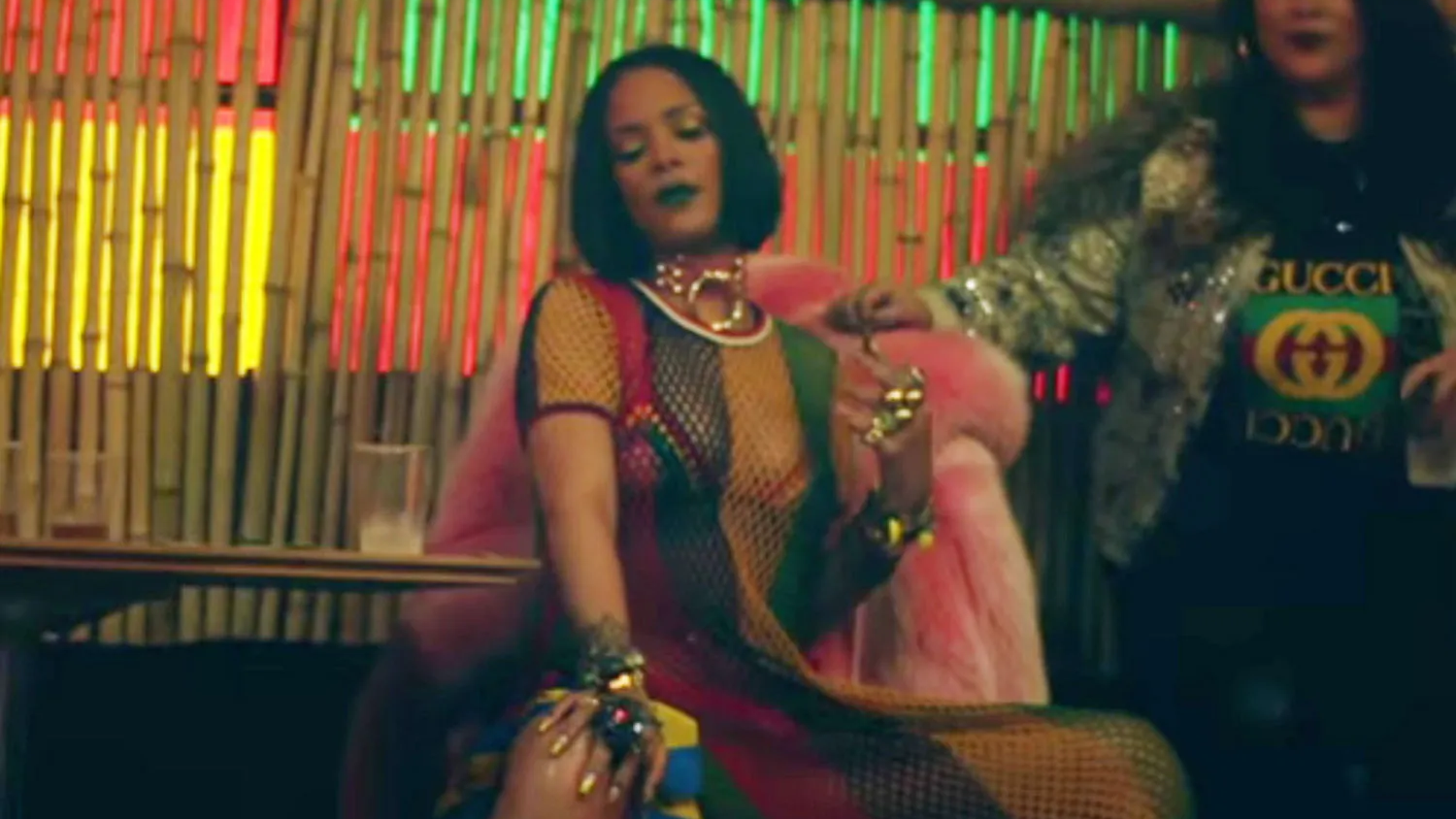
Some of the most recognisable elements of dancehall style emerged from that process of adaptation.
The mesh marina, for example, became far more than an undershirt. In the 1990s it could be brightly coloured, worn close to the body and paired with heavy gold jewellery, oversized jackets and other deliberately attention-grabbing pieces.
Jamaican fashion coverage has documented the distinctive combination of mesh marinas, gold chains and colourful clothing associated with dancehall’s classic male style. It has also traced similarities between those Jamaican looks and elements appearing in collections by luxury houses including Versace and Burberry Prorsum. (Jamaica Observer)
That does not mean Versace or Burberry simply copied dancehall.
Fashion rarely moves in such a clean line.
It means the visual conversation was real.
A style that had become ordinary, desirable and competitive in Kingston’s dance culture was also becoming legible to international fashion.
And once luxury fashion adopts a visual language, the world tends to give it a different name.
Shabba Ranks understood the power of the image
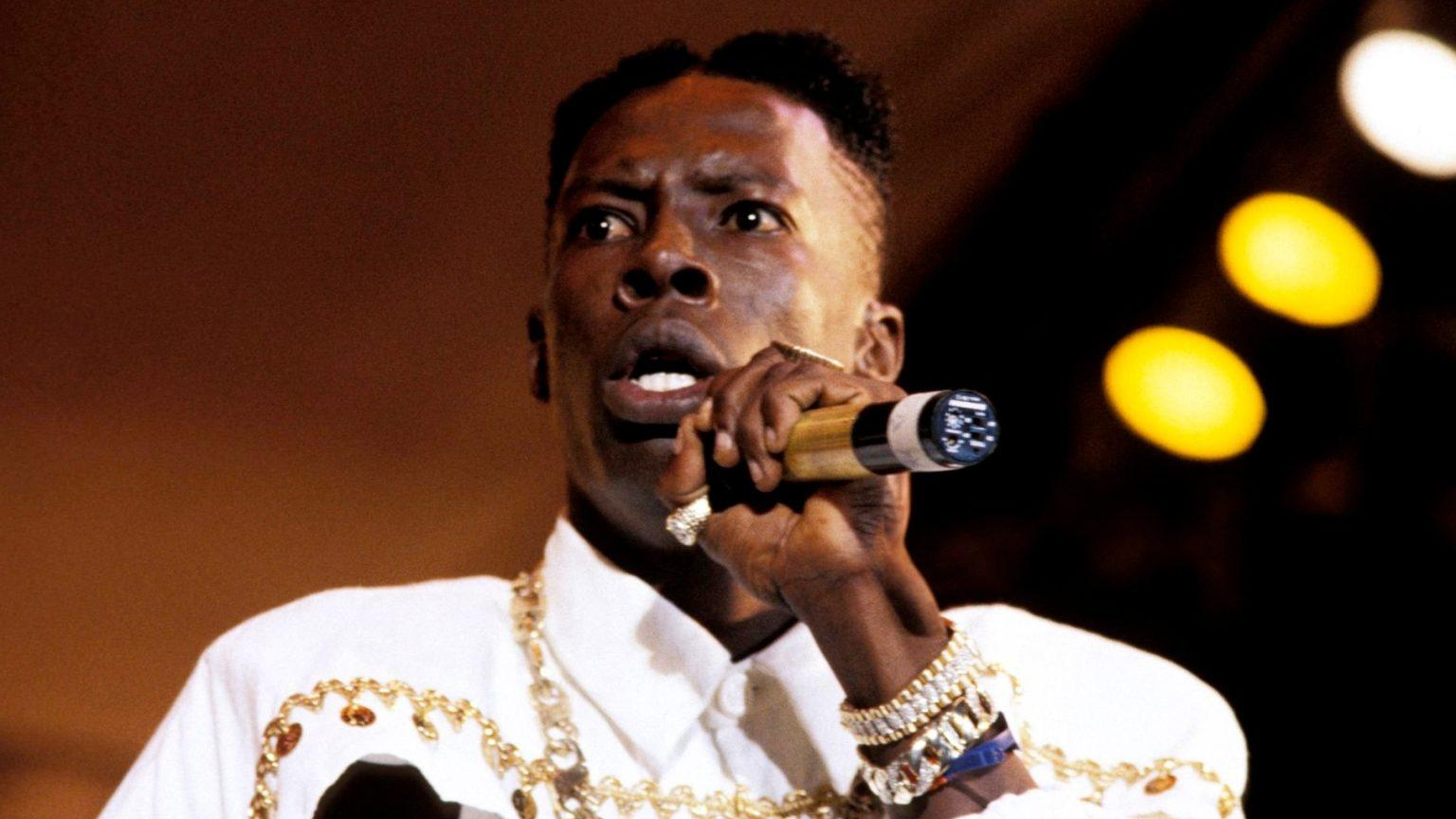
If dancehall fashion needed a global ambassador, Shabba Ranks was one of the most important.
His music travelled internationally. So did his clothes.
In the early 1990s, dancehall’s fashion became increasingly visible alongside its music, and Jamaican designer Earl “Biggy” Turner became closely associated with the flamboyant custom looks worn by Shabba and other major artists. Jamaican reporting has described Biggy as a key dancehall designer whose work helped establish the genre’s larger-than-life image. (donotcallmeafashionista.blogspot.com)
This matters because the clothes were not incidental to Shabba’s international identity.
They were part of it.
A dancehall artist did not simply arrive on a foreign stage as a Jamaican musician. He arrived as a visual proposition.
That helped create a model that became increasingly familiar in global popular culture: the artist as fashion character.
Today, that sounds obvious.
It was not always.
The ghetto tailor was part of the fashion system
There is another part of this story that gets lost when dancehall fashion is described only through famous artists.
The designers mattered.
The seamstresses mattered.
The local tailors mattered.
Dancehall’s visual culture depended heavily on people who could take an idea and turn it into a garment quickly, locally and often uniquely.
Earl “Biggy” Turner is one of the clearest examples. His work grew from Kingston’s urban fashion environment rather than a European fashion school, and his designs became associated with some of dancehall’s biggest stars. (Jamaica Observer)
That system produced something luxury fashion has always understood the value of: exclusivity.
But dancehall produced it differently.
You did not necessarily need a global fashion house to have something nobody else had.
You needed a good tailor.
And an idea.
Dancehall women changed the conversation too
Any history of dancehall fashion that focuses only on men misses half the story.
Women in dancehall developed an equally powerful visual vocabulary.
Body-conscious clothing.
High heels.
Colour.
Hair.
Nails.
Makeup.
Jewellery.
Custom pieces.
The dancehall queen became one of the culture’s most recognisable visual figures, and the broader fashion culture around women in dancehall helped establish an aesthetic in which the body itself became part of the styling.
That influence was not simply about revealing clothing.
It was about control of attention.
A woman could decide exactly how much visual space she wanted to occupy.
That idea has travelled extensively through music videos, pop performance and contemporary fashion.
And again, the important point is not that Jamaica invented every element individually.
It did not.
The power was in the combination.
Dancehall put them together in a particular way.
Fashion was “extra” before “extra” became the point
One of dancehall’s greatest contributions to global style may have been its comfort with excess.
More jewellery.
More colour.
More texture.
More hair.
More shine.
More personality.
The classic dancehall look could be deliberately over the top because being noticed was not a problem to solve.
It was the objective.
This is especially visible in the 1990s, when flamboyant colour, customised clothing and heavy jewellery became central to the visual identity of dancehall. Contemporary Jamaican reporting from the period describes dancehall fashion as something people used to make a public statement and distinguish themselves from one another. (Jamaica Gleaner)
Global fashion has repeatedly returned to this idea.
Maximalism.
Logomania.
Body-conscious silhouettes.
Statement jewellery.
Hyper-styled beauty.
Nightlife dressing.
These trends have many sources.
But Kingston had been experimenting with the underlying attitude for decades.
The luxury house changes the meaning of the look
This is where the story gets uncomfortable.
A fashion idea can have one meaning when it appears in a Kingston dance and another when it appears on a Milan runway.
The garment has not necessarily changed.
Its social value has.
Academic research into Jamaican dancehall fashion has described precisely this cycle: global styles enter Jamaican culture, are remixed and given new meaning, and elements of dancehall style can then be absorbed into international high fashion, where the same aesthetic acquires new prestige. (ResearchGate)
That is not unique to Jamaica.
It is a recurring pattern in fashion.
But dancehall offers an unusually clear example because its style was so visually distinctive.
The mesh marina does not become more inventive because a luxury designer notices it.
The gold chain does not become more expressive because it appears in an editorial.
The dancehall community had already done the creative work.
The fashion industry simply gave some of those ideas a new platform.
When Versace and Burberry started looking familiar
There are moments when the influence becomes particularly difficult to ignore.
In 2014, the Jamaica Observer examined the relationship between classic dancehall menswear and contemporary luxury collections, identifying similarities between Jamaican elements such as the mesh marina, gold jewellery and saturated colour and collections from Versace and Burberry Prorsum. (Jamaica Observer)
That article is useful because it captures something that is often missing from retrospective fashion histories.
The Jamaican audience recognised the visual relationship immediately.
For them, these were not abstract runway references.
They were familiar clothes.
Familiar proportions.
Familiar attitudes.
Familiar colour.
The difference was context.
A Kingston dance can make an outfit famous inside a community.
A Milan runway can make the same visual language visible to the world.
Dancehall’s influence did not stop in Jamaica
The influence travelled through the Jamaican diaspora and through music.
Dancehall’s relationship with hip-hop was particularly important.
Jamaican artists moved internationally.
American artists absorbed Jamaican sounds and imagery.
British club culture developed its own relationship with Caribbean music.
Fashion moved alongside all of it.
A 2021 survey of Jamaican fashion trends highlighted the international reach of dancehall-associated details, including the mesh marina and the visual influence of Shabba Ranks. It also noted how elements of Jamaican styling appeared in the work and imagery of global artists. (DancehallMag)
The process was not linear.
Jamaica influenced New York.
New York influenced Kingston.
London influenced Kingston.
Kingston remixed London.
The diaspora brought it somewhere else.
A designer saw it.
An artist wore it.
A photographer documented it.
A brand commercialised it.
Then the trend came back home looking slightly different.
That circular exchange is part of what makes Jamaican fashion history so interesting.
You can see the legacy in today’s Jamaican designers
The influence is not only historical.
It is still producing designers.
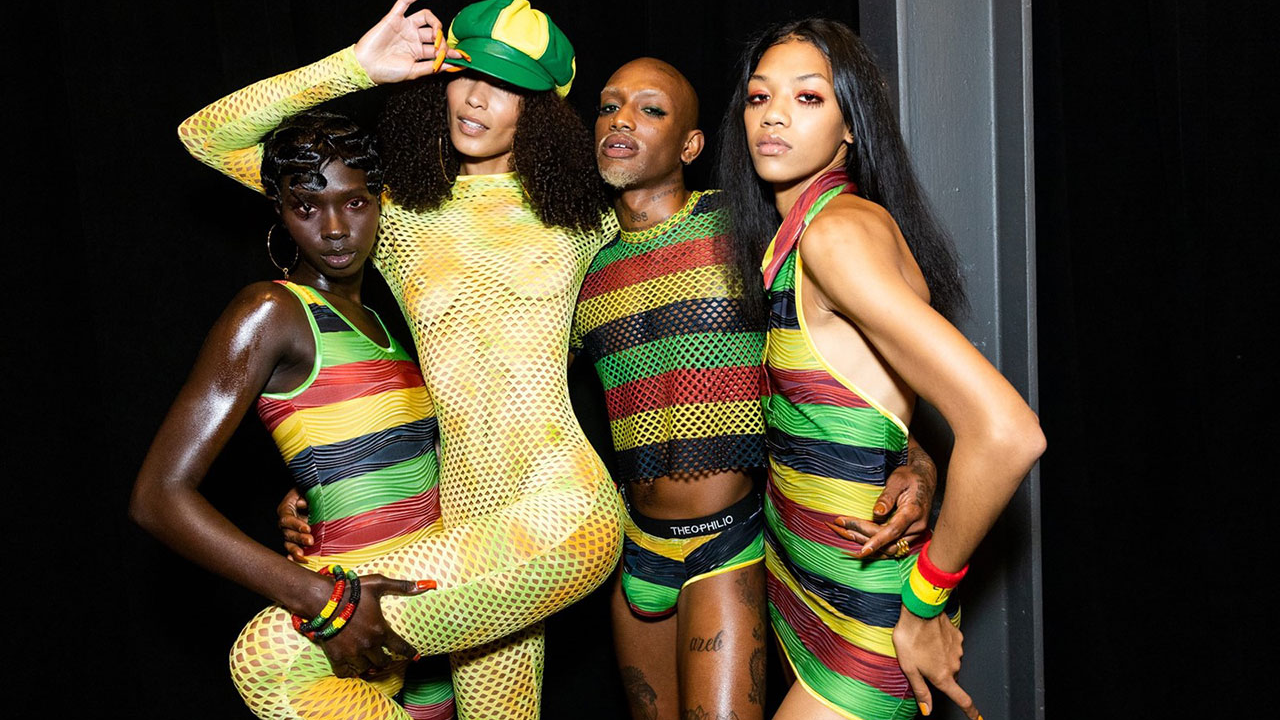
Edvin Thompson’s Theophilio is one example. The Kingston-born designer has built Jamaican heritage, colour, silhouettes and cultural references directly into a New York fashion practice. Teen Vogue described the label’s aesthetic as “dancehall chic,” while SSENSE has placed Thompson alongside a wider generation of Jamaican and Jamaican-descended designers reshaping the international fashion conversation. (Teen Vogue)
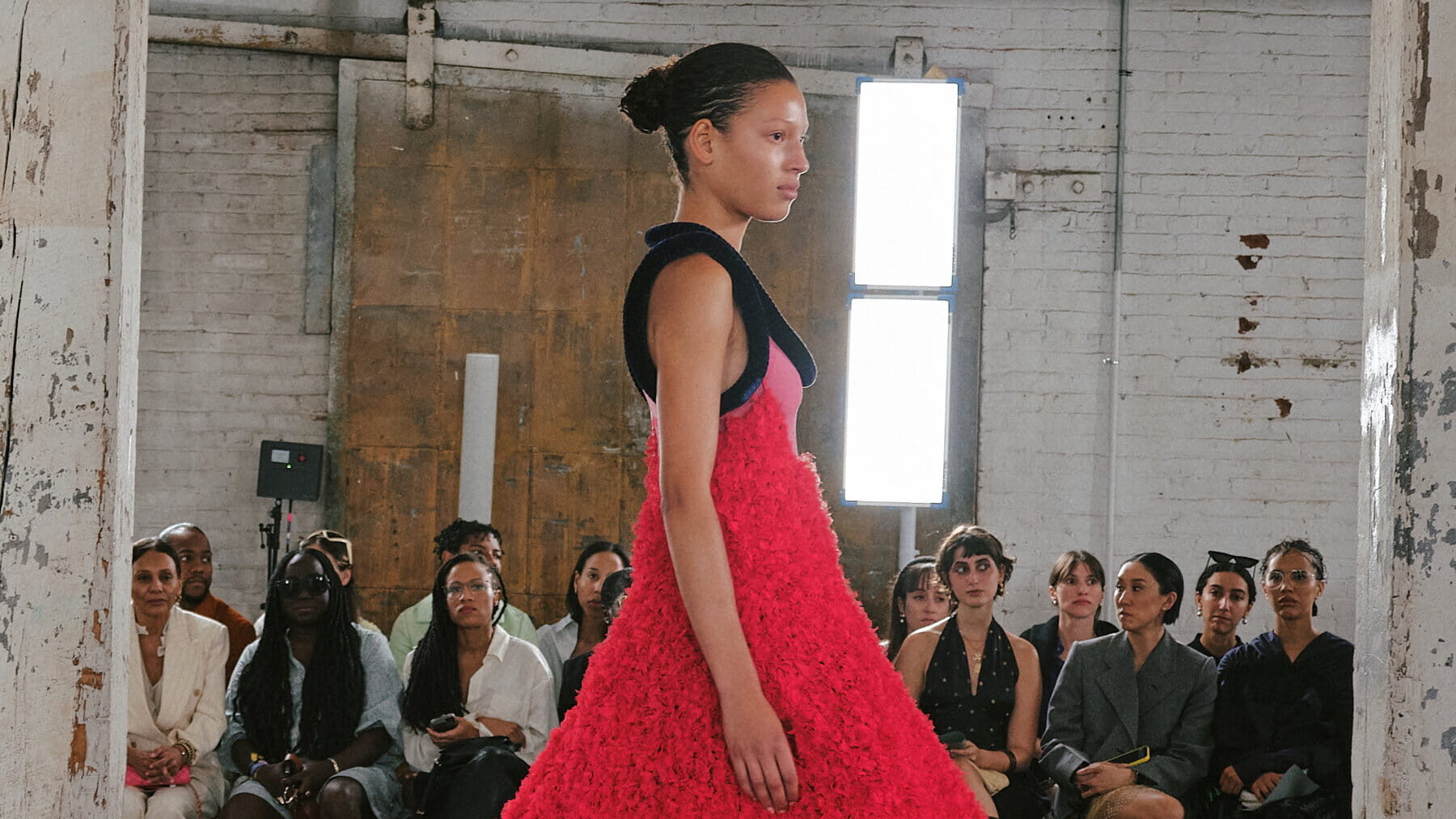
Rachel Scott’s Diotima offers another route.
Her work draws on Jamaican heritage and her upbringing in Kingston, including visual memories of mesh marinas, Clarks and dancehall culture. Vogue has documented how those references inform her work and how Jamaican craftsmanship, particularly crochet, has become part of the label’s identity. (Vogue)
This is an important evolution.
The story is no longer only about Jamaica inspiring somebody else’s collection.
Jamaican designers are increasingly entering the room themselves.
The fashion industry is finally having the Jamaica conversation
That shift is visible in fashion media too.
SSENSE has written about the expanding international presence of Jamaican designers including Martine Rose, Grace Wales Bonner, Theophilio, Diotima, Stanley Raffington and Jawara Alleyne. (SSENSE)
Vogue has likewise highlighted the current Jamaican fashion ecosystem and its relationship to global designers and brands. (Vogue)
The interesting thing is that this new generation is not simply reproducing a nostalgic version of dancehall.
They are doing something more sophisticated.
They are treating Jamaica as source material, lived experience and design methodology.
The difference matters.
The old pattern was:
Jamaica creates. The world borrows.
The emerging pattern is:
Jamaican designers create. The world has to engage.
That is a much more interesting future.
The credit problem is part of the story
There is a reason this article needs to be more than a celebration of Jamaican influence.
Fashion has a long history of stripping ideas from their original social context and giving them new prestige somewhere else.
Dancehall is particularly vulnerable to this because its visual language has often been dismissed when worn by the people who created it.
The same combination of mesh, body-conscious silhouettes, dramatic accessories, colour and nightlife styling can be read as excessive or “ghetto” in one context and editorially sophisticated in another.
That does not mean every international designer who uses a similar element is appropriating dancehall.
Influences overlap.
Fashion is built on borrowing.
But attribution still matters.
If a visual language has a history, knowing that history changes how we understand the look.
And if Jamaican designers and communities helped develop it, they should not disappear from the story when the aesthetic becomes valuable elsewhere.
Dancehall did not invent fashion’s appetite for Jamaica
There is another important distinction.
Jamaican influence on global fashion predates dancehall.
The island’s music, Rastafari, ska, reggae, Caribbean identity and broader Black Atlantic culture have all shaped international style.
John Galliano’s well-known Dior Rasta collection is part of that larger history. Contemporary fashion coverage has also traced a much longer relationship between global fashion and Jamaican cultural references. (SSENSE)
So dancehall should not be presented as the single source of every Jamaican influence in fashion.
Its contribution is different.
It took the Jamaican instinct for style, performance and cultural self-definition and made it intensely urban, visual and immediate.
It turned the dance into a runway.
And then the runway started looking back.
So, did dancehall change global fashion?
Yes, but not in the simplistic sense that one Jamaican genre invented modern fashion.
Fashion does not work that way.
Dancehall changed the global fashion conversation by demonstrating the power of a particular combination:
street style + performance + sexuality + customisation + excess + confidence + cultural identity.
It showed that fashion could be generated outside the traditional centres of fashion authority.
It showed that a community could establish its own visual rules.
It showed that an outfit could be a performance before anyone called it one.
And it showed that street culture could generate ideas sophisticated enough to travel into luxury fashion.
Perhaps the most important part is what happened when those ideas travelled.
The world did not suddenly teach Kingston how to dress.
Kingston had already figured that out.
The world simply got better at noticing.
Frequently Asked Questions
What is dancehall fashion?
Dancehall fashion is the distinctive style culture that developed around Jamaica’s dancehall scene. It encompasses clothing, tailoring, footwear, jewellery, hair, beauty and overall presentation. It is closely tied to performance, identity, status and visibility.
What is the influence of dancehall fashion?
Dancehall fashion has influenced international street style, music performance, clubwear and elements of luxury fashion. Its visual language has travelled through Jamaican artists, the diaspora, popular music and fashion media. Academic research has identified international fashion as one area in which dancehall’s broader cultural influence is visible. (Nova Southeastern University)
How did Jamaican dancehall influence luxury fashion?
The relationship is complex rather than a simple story of direct copying. Jamaican dancehall developed distinctive combinations of mesh, colour, jewellery, body-conscious silhouettes and customised clothing, and Jamaican fashion coverage has documented similarities between those styles and elements appearing in collections by luxury houses including Versace and Burberry Prorsum. (Jamaica Observer)
Who is Earl “Biggy” Turner?
Earl “Biggy” Turner is a Jamaican fashion designer closely associated with dancehall. He became particularly prominent for creating flamboyant custom designs for major Jamaican artists, including Shabba Ranks, and helped establish the visual language of dancehall fashion internationally. (Jamaica Observer)
Why is Shabba Ranks important to dancehall fashion?
Shabba Ranks helped carry Jamaican dancehall’s music and visual culture onto international stages in the early 1990s. His flamboyant custom clothing, particularly designs associated with Earl “Biggy” Turner, made fashion part of his international artist identity. (donotcallmeafashionista.blogspot.com)
What is a mesh marina?
A mesh marina is a Jamaican sleeveless mesh garment that became strongly associated with dancehall style, particularly in the 1990s. It was often worn close to the body and paired with jewellery and other statement pieces. (Jamaica Observer)
Which Jamaican designers are influencing global fashion today?
Contemporary Jamaican and Jamaican-descended designers working internationally include Edvin Thompson of Theophilio, Rachel Scott of Diotima, Martine Rose, Grace Wales Bonner, Stanley Raffington and Jawara Alleyne. Their work reflects different relationships with Jamaican identity, culture and design. (SSENSE)