


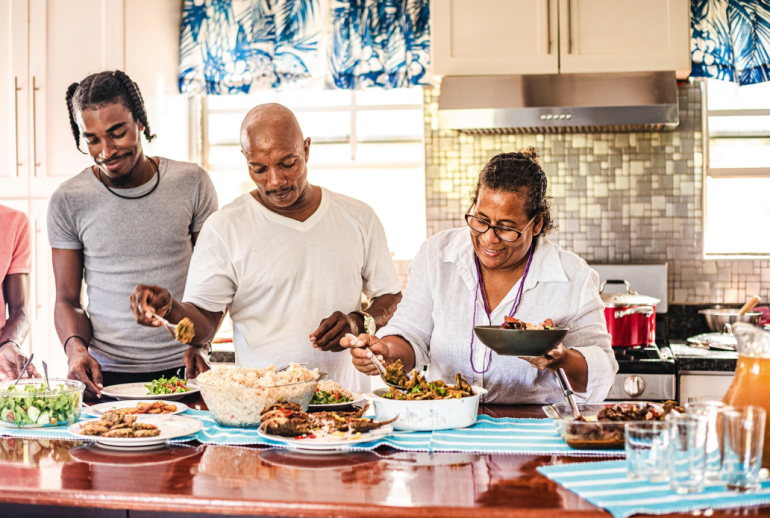
Rice and peas, the chicken question, somebody else's opinion about the gravy. The pleasure of the Sunday table is in the food, the company and the particular way a household makes it its own.
By Sunday morning, the argument may already have started.
Rice and peas or plain rice? Fried chicken or brown stew? Curry goat if there are enough people to eat it? And who, exactly, is responsible for the macaroni and cheese?
These are the sort of questions that make a meal personal. A dish arrives carrying more than its ingredients: the memory of another kitchen, a cook's preferred method, the version somebody grew up believing was correct.
Sunday dinner gives those loyalties a regular appointment. There is no single menu that can stand in for every Jamaican household. The interesting part is how much character a family can put into a familiar plate.
Start with the rice and peas
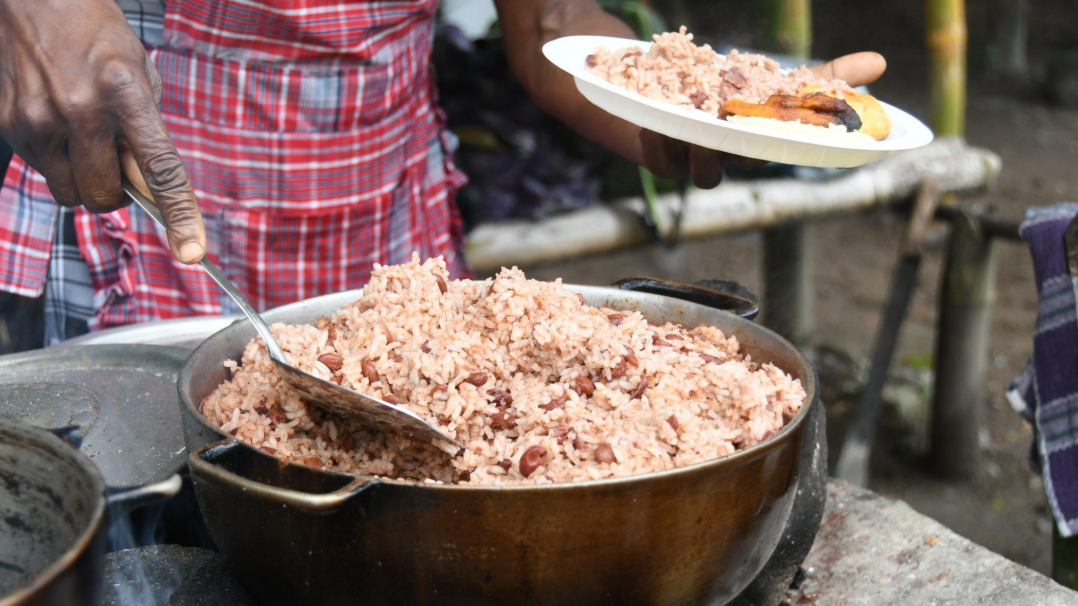
For a dish so closely associated with Sunday, rice and peas leaves plenty of room for a point of view.
In a 2016 recipe published on Jamaicans.com, chef Noel Cunningham put that association plainly: “Rice and peas is a classic Sunday dish for us in Jamaica.”
His recipe uses gungo, or pigeon peas, with coconut milk, thyme, green onions and a whole Scotch bonnet. Grace Kitchens' rice-and-peas recipe uses red kidney beans, also with coconut milk, escallion, thyme and a whole pepper. These are two published approaches, not rival decrees about what every kitchen must do.
That distinction matters. Someone may be defending the peas, someone else the seasoning, and a third person the texture. What sounds like a disagreement about rice can be a disagreement about memory.
The rice is being judged against other Sundays.
There is no need to reproduce a chef's recipe from memory or guess at proportions. If you are trying a different version, use the linked recipe in full. If you are trying to preserve your family's version, ask the person who makes it to show you. Watch the small decisions as carefully as the ingredients.
Chicken is a decision
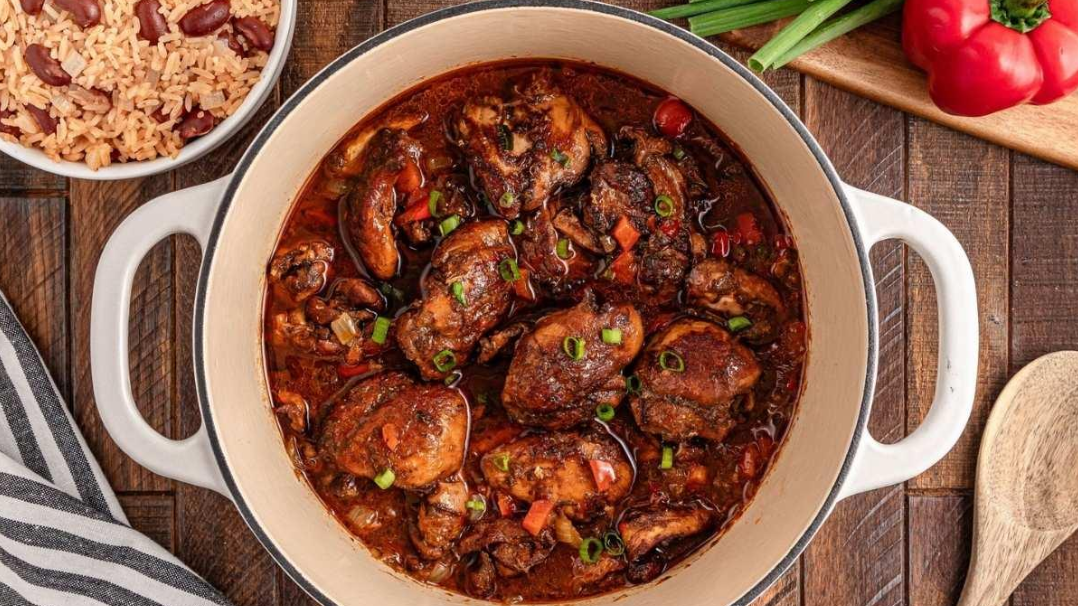
Fried chicken has its defenders. Brown stew has its own constituency. Curry chicken enters the conversation with the confidence of something that has been invited before.
Choosing between them changes the meal's texture and the work in the kitchen. So does adding curry goat, oxtail or another main dish. An extra pot may be welcome for a gathering; it does not have to become a test of whether the host has done enough.
The same freedom applies to the sides. Plantain, cabbage, callaloo, carrots, potato salad or macaroni and cheese can each have a place, depending on the menu and the people eating. There is no obligation to assemble all of them.
A table with fewer dishes can still feel generous. A family member bringing a finished side can be more useful than arriving with a detailed critique of the gravy.
Give the cook their due
The person at the stove is doing more than following a recipe.
There are portions to judge, preferences to remember, dishes to finish at different times and a kitchen that will eventually need putting back together. Those jobs remain even when the cooking looks effortless.
That is worth remembering before announcing that the rice needs another five minutes.
Everyone can comment. Not everyone can take over the pot.
The affectionate argument belongs to the charm of this story, but it should not make the work invisible. Nor should a Sunday tradition require one person, or one generation, to carry the whole afternoon.
Ask what would actually help. Bring the dish you agreed to bring. Learn the method rather than waiting to inherit a recipe nobody has written down. And stay long enough to do something with the plates.
Keep the disagreement about the gravy
There is a difference between enjoying a familiar family debate and making the table an uncomfortable place to sit.
Research offers useful context here without supplying a rulebook for dinner. A 2018 study by Cagla Giray and Gail M. Ferguson examined questionnaires from 330 adolescents and their mothers, recruited through three Kingston high schools. The researchers considered the atmosphere and priority given to shared meals, as well as how often they happened.
It was a self-reported, cross-sectional study, not a national survey of Sunday menus or proof that a particular dinner causes better health. Its attention to conversation and atmosphere is nevertheless a useful reminder: the experience of sharing a meal deserves as much care as the plate.
A debate about how dark the gravy should be can remain a debate about gravy. Nobody needs to defend their appetite, their budget or their place in the family.
Five things worth settling before the pot goes on
For anyone hosting, these are practical editorial suggestions rather than rules about an “authentic” Jamaican table.
1. Who is eating? Agree a realistic number, including anyone bringing children or another guest. Ask about dietary needs instead of guessing.
2. What is the centre of the meal? Choose the dish that matters most to this gathering, then build around it. Extra dishes are a choice, not an entrance requirement.
3. Who is responsible for what? Give the rice, main dish and any contributed sides an owner. “I'll bring something” is less helpful than knowing what is coming.
4. When are we sitting down? Say what time you mean. A shared meal is easier to arrange when the cook and the guests are planning for the same afternoon.
5. Who is helping afterwards? Include clearing and washing up in the invitation to contribute. The meal should not end with everybody leaving one person in the kitchen.
There is still plenty left to disagree about. These decisions simply make room for enjoying it.
A tradition with room to move
Not every household has Sunday free. Not every gathering is large, and not everyone wants meat at the centre of the plate. A smaller meal, a contributed dish or a different day need not be treated as a failure to keep faith with the family.
For a Jamaican household living elsewhere, the practical choices may be different again: which ingredients are available, whose kitchen has room and which relatives can make the journey. Those are circumstances to work with, not evidence that somebody has forgotten how Sunday should feel.
The ritual is most convincing when the people at the table can recognise themselves in it.
Rice and peas may be the starting point. The chicken may still be under discussion. Somebody may have strong views about the macaroni and cheese.
Let them have their views. Then pass the food.