


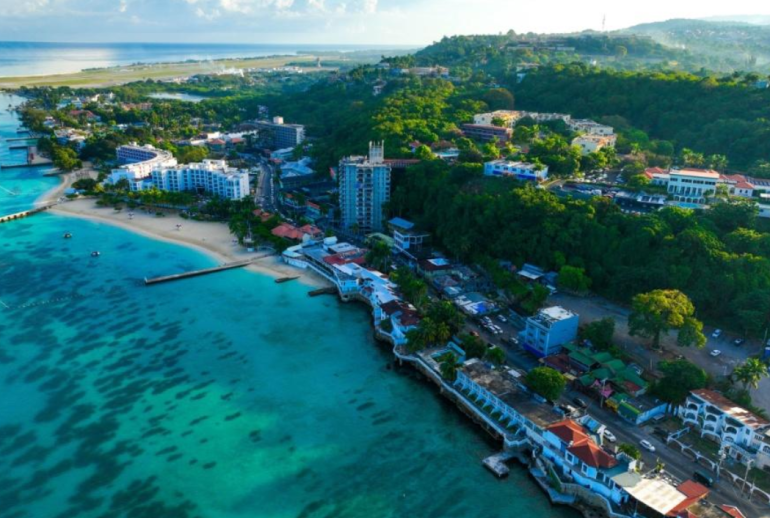
Montego Bay has spent much of the past year doing two things that cities usually prefer to do separately.
Repairing what was damaged.
Planning what comes next.
Hurricane Melissa crossed western Jamaica on October 28, 2025 as a Category 5 storm. According to the National Hurricane Center’s final Tropical Cyclone Report, it was the strongest hurricane on record to make landfall in Jamaica, tied for the strongest Atlantic landfall ever measured by sustained wind speed. Hotels closed. Flights were disrupted. Tourism capacity across western Jamaica contracted sharply.
The scale of that contraction is documented. Jamaica’s own filings to the United States Securities and Exchange Commission state that Melissa took approximately 6,200 rooms out of circulation by the end of 2025, damaging major hotels across Montego Bay, Negril, Ocho Rios, and the south coast.
The recovery has been substantial.
It is not complete.
At the same time, billions of dollars in planned hotel investment continue to place Montego Bay and Jamaica’s north coast at the centre of another tourism-development cycle.
That is what makes the city worth watching now.
Montego Bay is not simply recovering.
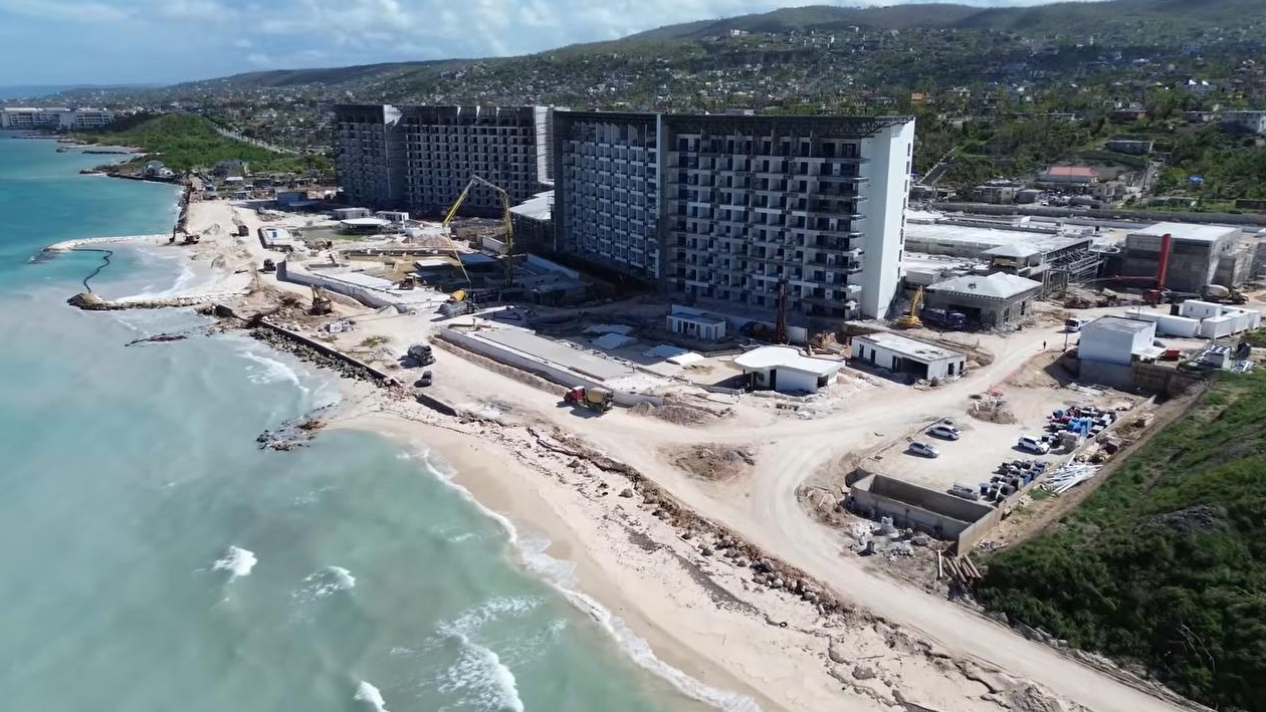
It is rebuilding while decisions about its next version are already being made.
The Recovery Is Visible
By April 2026, Tourism Minister Edmund Bartlett said Jamaica had recovered more than 80 percent of its pre-Melissa visitor-arrival levels.
Hotels were reopening.
Attractions were returning.
Flights were being restored.
By the end of May, Jamaica had received just over one million stopover visitors and approximately 664,000 cruise passengers.
But the recovery numbers require context.
Only around 70 percent of the country’s tourism inventory had returned by that point.
At Sangster International Airport, passenger traffic during the first half of 2026 remained 26.7 percent below the same period a year earlier.
Those figures describe a tourism industry moving back toward normal rather than one that has already arrived there.
That distinction matters in Montego Bay.
The city’s airport is Jamaica’s principal gateway for much of the north-coast resort corridor. When western hotel capacity falls, Sangster feels it.
When the rooms return, the airport will feel that too.
Then There Is What Jamaica Is Building
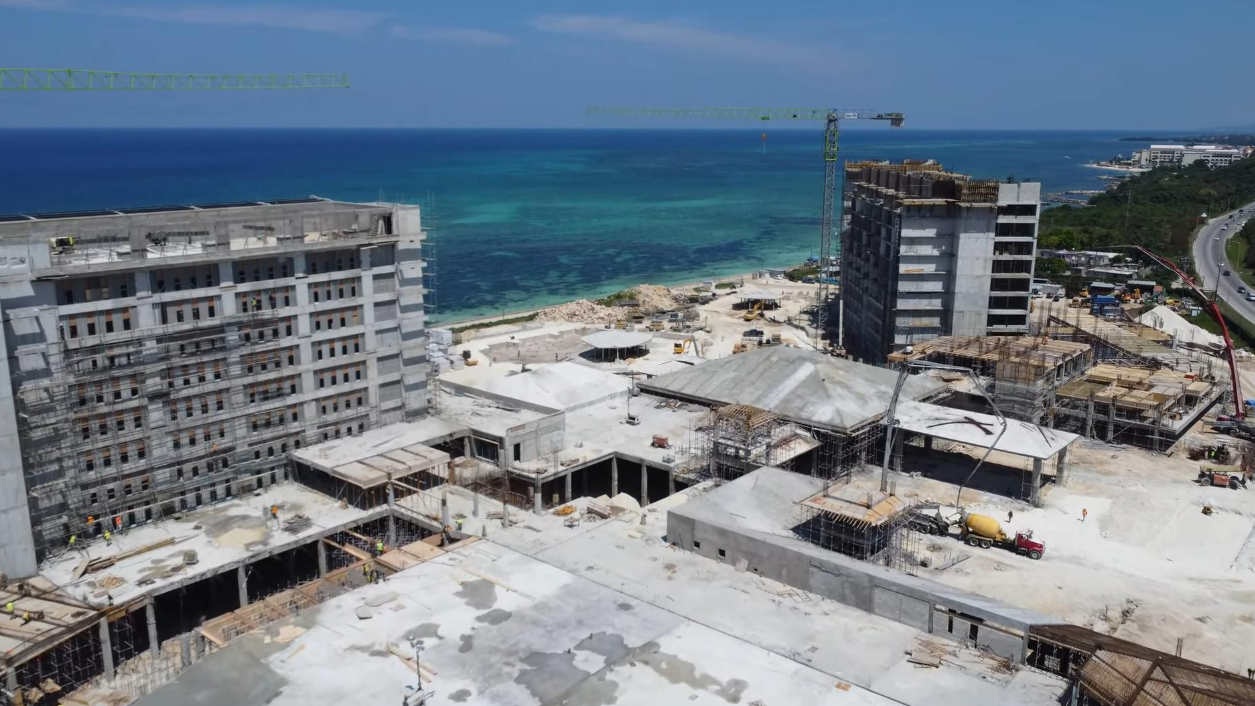
Recovery is only half of the current story.
Jamaica entered the second half of 2026 with a hotel-development pipeline valued at more than US$4.2 billion, facilitated through JAMPRO, the government’s investment promotion agency.
Government filings put the expected new room count at 8,943 across 13 major projects, alongside an estimated 25,705 jobs.
Not all of those rooms belong to Montego Bay.
But several of the projects shaping the pipeline sit in or around the western tourism corridor.
The Palace Company’s Moon Palace Phase 2 development is among the largest, carrying an investment of approximately US$700 million and plans for 1,350 rooms.
It is worth being precise about where that project actually stands. According to the government’s own filings, Moon Palace Phase 2 is currently going through the approval process, with resort design and building plans not yet finalised. An announced project of that scale is significant. It is not the same thing as a project under construction.
Sandals has committed approximately US$200 million to reinvestment across several Jamaican resorts, including properties in Montego Bay.
Harmony Cove, a US$1 billion integrated resort in Trelawny with a planned 1,600 rooms, has received provisional approval to begin ground works, with some infrastructure works underway.
Grand Palladium Phase II, valued at US$569 million, sits within the same pipeline.
Other large developments and expansions continue through different stages of planning, approval and construction across the north coast.
This is not a city waiting for recovery to finish before thinking about growth.
The two processes are overlapping.
Not Everything Is Moving at the Same Speed
That overlap should not be mistaken for uninterrupted momentum.
Reporting on Jamaica’s hotel pipeline in July 2026 indicated that approximately 10 percent of planned development had experienced delays, including a Marriott-branded property in Trelawny.
Montego Bay has its own version of that. Seven Hyatt-operated resorts around the city, closed since the storm, moved their expected reopening from late 2026 into early 2027.
Some properties damaged by Melissa returned quickly.
Others took longer.
Some new projects are under construction.
Others remain in approval or development stages.
The distinction is easy to lose when every announcement is described as part of the same boom.
Montego Bay’s current moment is more complicated than that.
Investment is moving.
Recovery is moving.
Neither is moving evenly.
The Airport Will Tell Part of the Story
Sangster International Airport sits at the centre of what happens next.
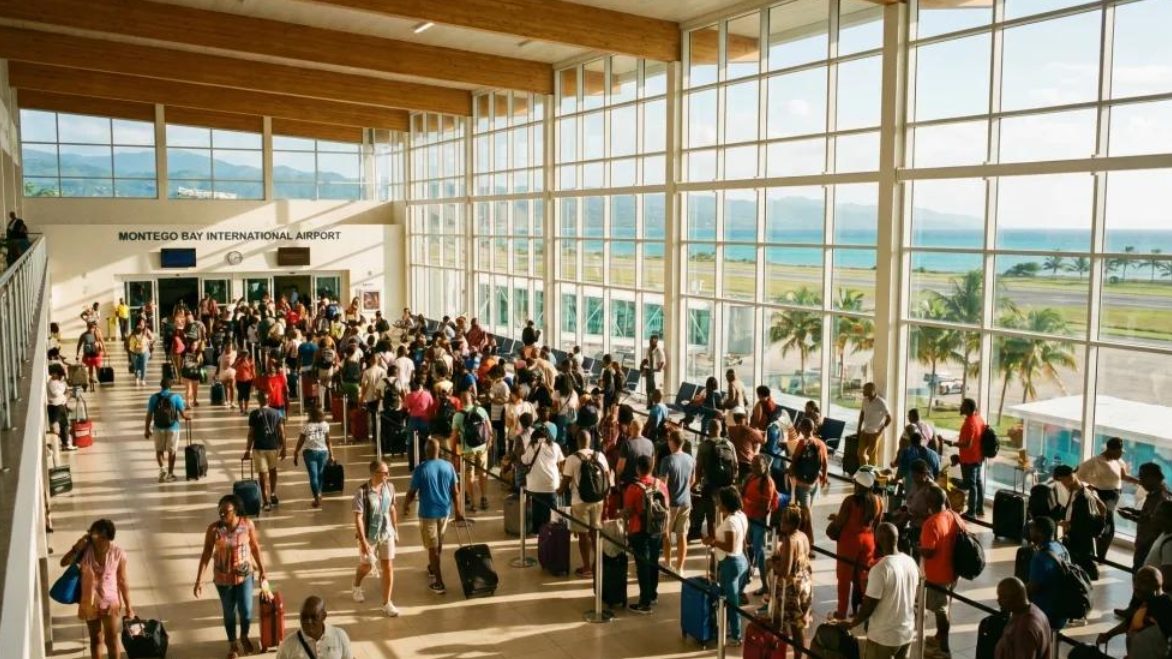
Its first-half passenger decline is one of the clearest measurements of the disruption Melissa caused to western tourism.
Later projections for winter 2026 suggested scheduled airline seat capacity could return to roughly pre-hurricane levels.
That would be significant.
Scheduled seats, however, are not the same thing as passengers.
Passengers are not the same thing as occupied hotel rooms.
And hotel rooms are not the same thing as a city prepared to absorb another development cycle.
The airport can bring people into Montego Bay.
What happens after they arrive depends on everything around it.
Growth Eventually Leaves the Hotel
A new resort is measured first in rooms.
A city experiences it differently.
Workers need housing.
Guests and staff use roads.
Developments require water and electricity.
Suppliers move goods.
Waste has to go somewhere.
Air traffic increases.
Construction changes land.
The larger Montego Bay’s hospitality economy becomes, the less useful it is to treat hotel development as something happening only behind resort gates.
The next phase of the city’s tourism story will therefore depend partly on infrastructure that receives far less attention than a groundbreaking ceremony.
Roads.
Water.
Power.
Housing.
Public space.
Transport.
The question is not whether Montego Bay can build more hotel rooms.
The pipeline already answers that.
The harder question is what kind of city exists around them.
Melissa Changed the Timing
Without the hurricane, Montego Bay’s current development cycle would still matter.
Melissa changed the context.
The city now has to make decisions about future growth while parts of the existing tourism economy are still recovering from a major climate shock.
That puts resilience inside the development argument whether developers want it there or not.
A hotel designed for the next several decades is also being designed for a Jamaica in which extreme weather cannot be treated as an abstract future risk.
The same is true of roads, utilities, airports and coastal infrastructure.
Reconstruction and development therefore meet at a more consequential question than room count.
What is being rebuilt differently?
What Happens Next
Montego Bay has been one of Jamaica’s most important tourism centres for decades.
Another development cycle does not automatically make this one historic.
The scale of current investment does make it consequential.
Moon Palace will either clear approval and move toward physical reality or it will not.
Sandals’ Montego Bay properties are scheduled to return.
The Hyatt resorts will test whether early 2027 holds.
Other projects will advance, change or stall.
Hotel inventory will continue to come back online.
Sangster’s passenger numbers will show whether air traffic follows.
The city will reveal, gradually, whether the infrastructure around all of that development can keep pace.
That is the part worth watching.
Montego Bay is rebuilding what Melissa interrupted while simultaneously planning what tourism officials and developers believe comes next.
The two versions of the city are already occupying the same ground.
Frequently Asked Questions
Has Montego Bay recovered from Hurricane Melissa?
Recovery has advanced substantially, but it should not be described as complete. Jamaica had recovered more than 80 percent of pre-Melissa visitor-arrival levels by April 2026, while tourism inventory and Sangster passenger traffic still showed the effects of the storm.
How strong was Hurricane Melissa?
The National Hurricane Center’s final report identifies Melissa as the strongest hurricane on record to make landfall in Jamaica, with 185 mph sustained winds at landfall near New Hope, Westmoreland, tied for the strongest Atlantic landfall ever recorded by wind speed.
Is Montego Bay getting new hotels?
Major hotel investment is planned or under development in and around Montego Bay and the wider north-coast corridor. Projects sit at different stages, from approval processes to active construction, and should not be treated as uniformly underway.
How large is Jamaica’s hotel-development pipeline?
Government filings reported in July 2026 placed Jamaica’s pipeline above US$4.2 billion across 13 JAMPRO-facilitated projects, expected to deliver 8,943 rooms and roughly 25,705 jobs. Approximately 10 percent of the pipeline was reported as delayed. Not all of those rooms are in Montego Bay.
What is happening at Sangster International Airport?
Sangster remained fully operational in 2026, but passenger traffic in the first half of the year was 26.7 percent below the same period in 2025 as western Jamaica continued recovering hotel capacity after Hurricane Melissa.
Why does Montego Bay’s development matter beyond tourism?
Large hospitality developments affect housing, transport, roads, utilities, employment, land use and public infrastructure. The city’s next tourism cycle will therefore be shaped by what happens outside the resorts as much as what gets built inside them.