


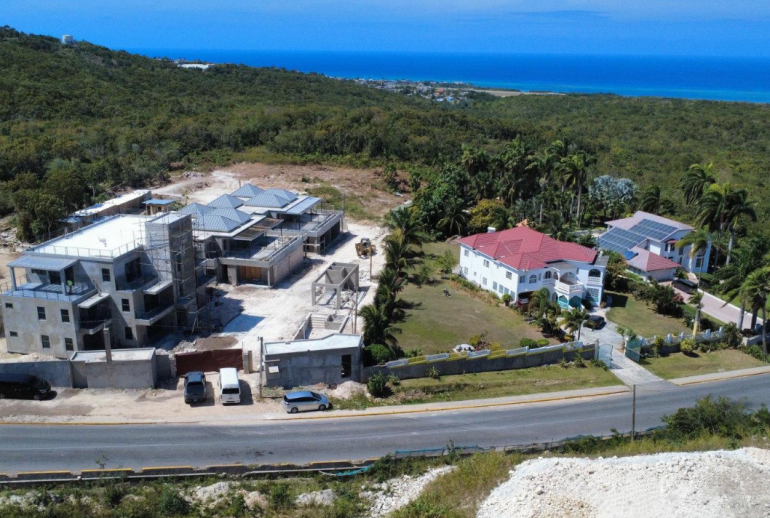
Jamaica is being built quickly.
Hotels. Apartments. Warehouses. Housing developments. Commercial centres. Roads that make new land valuable. Projects that change what used to be considered the edge of town.
The question is not whether the island is developing.
It is who has the legal clarity, capital and access required to turn land into something that can be built.
That question starts with a fact sitting beneath almost every property conversation in Jamaica. A large share of the country’s land still does not have registered title.
Jamaica Still Has a Title Problem
In May 2026, Minister of Land Titling and Settlements Robert Montague said Jamaica has approximately 900,000 parcels of land, of which approximately 500,000 are titled. That is roughly 55 percent.
The remaining parcels are not all abandoned, disputed or informally occupied.
Many have families living on them. Some have passed through generations. Some are held through older legal arrangements. Some are tied up in estates. Some have occupation that is socially understood inside a family or community but is harder to translate into a mortgage, a sale or a formal development.
That difference matters.
Land can be emotionally certain and legally complicated at the same time.
A Title Changes What Land Can Do
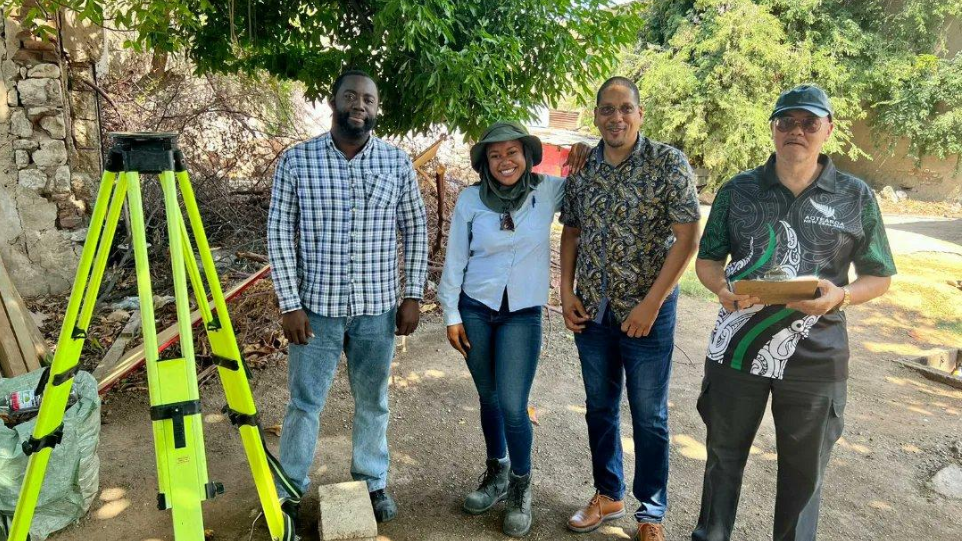
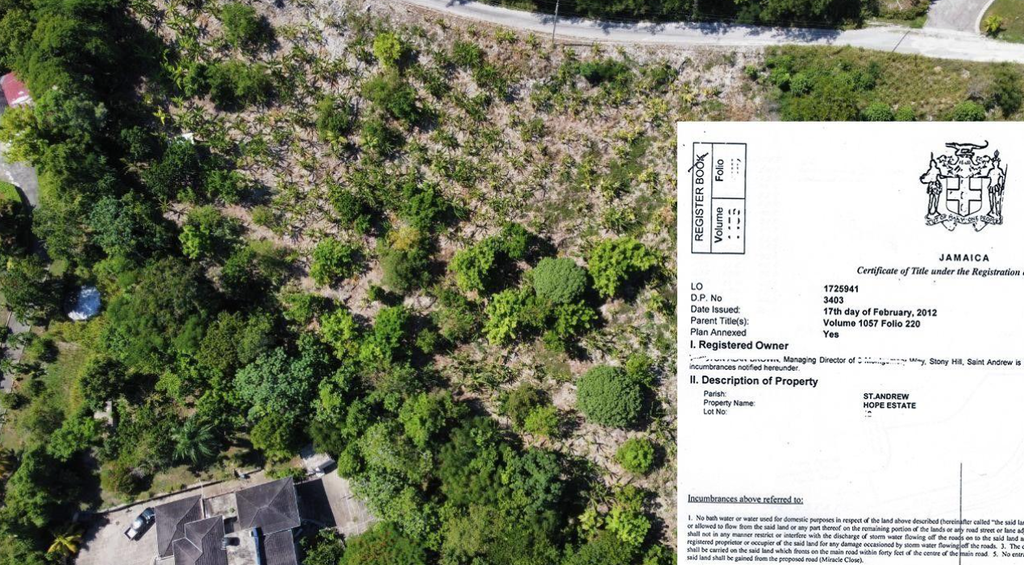
Registered title does more than identify an owner. It makes other transactions possible.
A bank can assess collateral. A buyer can investigate ownership. An estate can transfer property cleanly. A developer can assemble land with greater certainty. A family can divide or sell through a formal process.
Without that clarity, land may hold enormous personal value while remaining difficult to use inside the formal economy.
The government has been working to close that gap. In May 2026, Jamaica signed a J$1.42 billion agreement funded by the Korea International Cooperation Agency to modernise land administration, strengthen the National Land Agency’s capacity and expand registration at scale, including through a new Land Administration Innovation Centre.
Officials have been direct about why. Untitled land is a barrier to inheritance, housing security, lending and the wider property market.
They have also been direct about the difficulty. Jamaicans with untitled land frequently face costs, family disputes, missing documents, unclear boundaries, or simple uncertainty about where to begin.
Development Rewards Certainty
A development market prefers land that can move.
Clear title. Clear boundaries. A seller legally able to sell. Financing. Planning approval. Infrastructure. Time.
The people and companies able to assemble those things are in a stronger position to shape what gets built. That is not uniquely Jamaican.
The Jamaican complication is that development is accelerating while land formalisation remains incomplete.
A hotel project can move through financing and planning in a few years. A family land dispute can survive generations.
Those clocks do not run together.
Foreign Buyers Can Participate
Jamaica’s investment framework is comparatively open.
Current investment-climate reporting indicates foreign private entities can generally own businesses and property without a broad legal cap on foreign ownership or control. There is no general foreign-investment screening regime of the kind used in some larger economies, and the law does not broadly create one set of ownership rights for Jamaicans and another for foreign investors.
That does not mean everybody enters the market with equal power.
Legal access is one thing. Capital is another.
A buyer arriving with cash, institutional financing or development partners moves differently from a Jamaican family still establishing who legally owns the land beneath the house.
The inequality is not written into the ownership law. It exists in the ability to use it.
Inheritance Is Part of the Development Story
Land ownership in Jamaica is often discussed as though every property has one clear owner. Family land makes that assumption difficult.
Property passes through generations. People migrate. Some beneficiaries remain in Jamaica. Others live abroad. Estates remain unfinished. Informal arrangements become accepted over time without becoming legally simple.
The Administrator-General’s Department offers one window into that complexity. The Department has reported managing tens of billions of Jamaican dollars in real-estate assets belonging to estates under administration.
Those assets are not unclaimed land. They represent the legal work required when ownership, inheritance and estate administration have not been resolved privately.
That work sits inside the same country trying to move development faster.
Possession Is Not the Same as Title
Adverse possession adds another layer.
Jamaican law recognises limitation periods that can affect a registered owner’s ability to recover land after long periods of possession by somebody else. The relevant period is commonly twelve years.
That does not mean occupying property for twelve years automatically makes somebody the owner. Courts consider factual possession, intention to possess, the rights of the registered owner and the specific legal history of the land.
The distinction matters because informal occupation is sometimes described as though it were a straightforward path to ownership. It is not.
The broader point is that Jamaica has multiple ways in which physical possession and formal legal ownership can diverge. Development exposes those differences quickly.
The Coast Makes the Argument Visible
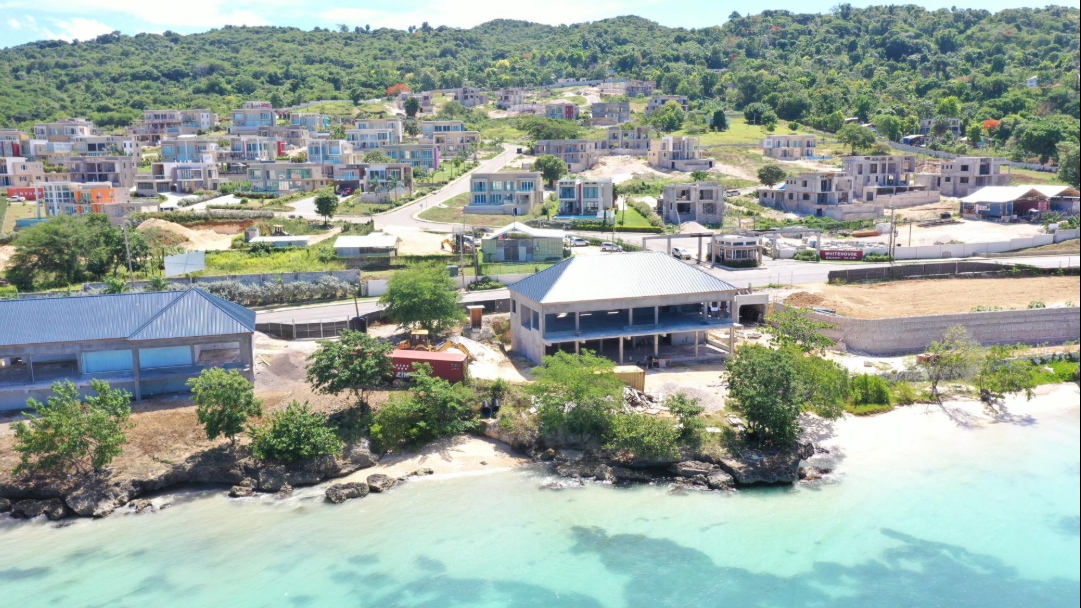
Some land disputes remain inside families. Others reach the courts.
In October 2025, the Jamaica Beach Birthright Environmental Movement, the Flanker Resource Centre and residents of communities including Flankers, Providence Heights, Whitehouse and Norwood filed an action concerning access to Providence Beach in Montego Bay. The claim was brought under the Prescription Act of 1882. Named respondents include the Commissioner of Lands, Le Cap Riviera Estate Limited and the Airports Authority of Jamaica, which holds part of the adjoining land.
The dispute followed Sandals Resorts International’s plans to expand with villas and overwater bungalows. Residents had objected during an environmental impact assessment process hosted by the National Environment and Planning Agency. Sandals has claimed the property since 1981.
Plaintiffs have described what the beach is used for: fishing, bathing, gathering, baptisms.
It is not an isolated case. By mid-2026, five separate court actions were underway concerning beach access in Jamaica, covering Mammee Bay, Providence Beach, Bob Marley Beach, Little Dunn’s River and the Blue Lagoon. Campaigners have called for the repeal of the 1956 Beach Control Act and its replacement with legislation conferring clearer rights of access.
The legal arguments belong to the courts. The structural point is visible without them.
Development rarely arrives on empty land in an empty social landscape. People have relationships with places before a title search begins. Those relationships do not automatically override legal ownership. Legal ownership does not automatically make them irrelevant.
The State Is Also a Landowner
Private developers are not the only actors shaping the island.
Government agencies control major landholdings, as the Airports Authority’s involvement in the Providence matter illustrates. Infrastructure decisions change land values. New roads create development corridors. Public housing changes density. Urban-development authorities influence entire districts.
A development question focused only on foreign investors therefore misses much of the picture.
The state helps determine which land becomes valuable, accessible and buildable. Private capital responds. Sometimes local. Sometimes foreign. Often both.
Who Gets to Build?
The answer is not one group.
Jamaicans build. Foreign investors build. Government builds. Diaspora capital builds. Large companies build. Small developers build. Families build one house at a time.
But the ability to shape the next version of the island is not distributed evenly.
Clear title helps. Capital helps. Legal support helps. Access to planning systems helps. Infrastructure helps. Time helps.
A family resolving inherited land does not enter the development market with the same tools as an institutional investor assembling a project.
That difference is where the headline becomes useful. The question is not simply who owns Jamaica. It is who can make ownership productive.
The New Jamaica Is Being Negotiated Through Land
Jamaica needs development. It also needs housing, investment, jobs, infrastructure and urban renewal.
The harder question is whether the systems governing land become more accessible as development accelerates.
Title regularisation matters because it gives Jamaicans more than paperwork. It gives land economic mobility. Estate reform matters for the same reason. So does transparent planning. So does public access. So does the ability of communities to understand what is happening before a development becomes irreversible.
The new Jamaica will not be built only by architects and contractors.
It will be built through decisions about ownership long before construction starts.
Frequently Asked Questions
What percentage of land in Jamaica has registered title?
In May 2026, the Minister of Land Titling and Settlements said Jamaica has approximately 900,000 land parcels, of which approximately 500,000 are titled, roughly 55 percent.
Can foreigners own land in Jamaica?
Generally, yes. Jamaica does not impose a broad prohibition on foreign ownership of property or businesses, and there is no general foreign-investment screening regime. Buyers still comply with the same legal, tax and transaction requirements applying to the property.
What is Jamaica doing about untitled land?
In May 2026, Jamaica signed a J$1.42 billion agreement funded by the Korea International Cooperation Agency to modernise land administration, strengthen the National Land Agency and expand registration, including through a new Land Administration Innovation Centre.
Does living on land for twelve years make you the owner in Jamaica?
Not automatically. Jamaican law includes a twelve-year limitation period relevant to adverse possession, but legal ownership depends on factual possession, intention to possess, the rights of the registered owner and the specific legal history of the land.
Why are there court cases about beach access in Jamaica?
By mid-2026, five separate actions were underway concerning access to Mammee Bay, Providence Beach, Bob Marley Beach, Little Dunn’s River and the Blue Lagoon. Campaigners argue coastal development is restricting long-standing public access and have called for the 1956 Beach Control Act to be replaced.
Why does land title matter for development?
Clear title makes financing, sale, transfer, inheritance and formal development easier. Land without clear title can still hold substantial value but is harder to use inside the formal property and banking system.