


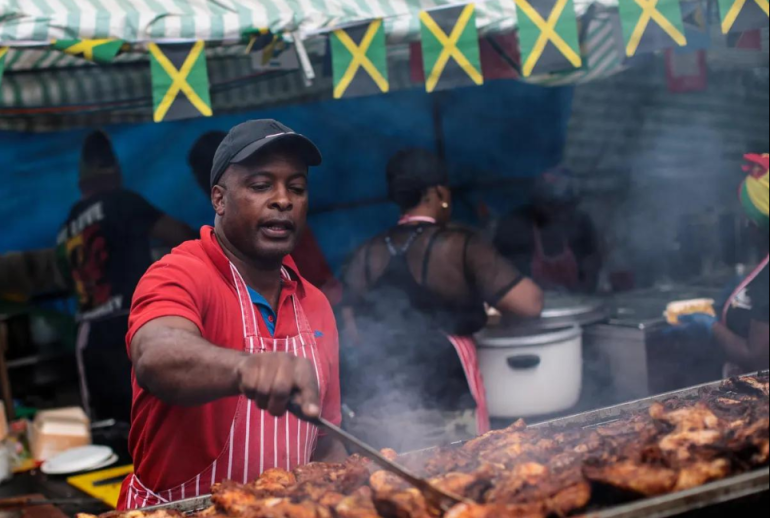
Jamaican street food has spent years being treated as something you grab on the roadside. Now some of the island’s most ambitious kitchens are taking notes from the vendors who figured it out first.
There is a particular kind of Jamaican food that does not need a reservation.
You smell it before you see it.
Smoke hanging over the road. A griddle working. Oil crackling. A vendor calling out what is ready. Someone standing nearby with a paper plate, eating before the food has had time to cool.
Then, somewhere else on the island, a chef puts a version of the same idea on a ceramic plate.
That reversal is becoming harder to ignore.
Jamaican street food has always been about immediacy, flavour and making something satisfying with what is available. It is food designed to be eaten, not explained.
The country’s restaurant scene has increasingly recognised the value of that instinct.
Not by simply reproducing roadside dishes, but by borrowing the things that made them work in the first place: bold seasoning, smoke, texture, portability, local ingredients and the confidence to let one good idea carry the plate.
The funny part is that the roadside vendors were already there.
Street food did not need a chef’s permission
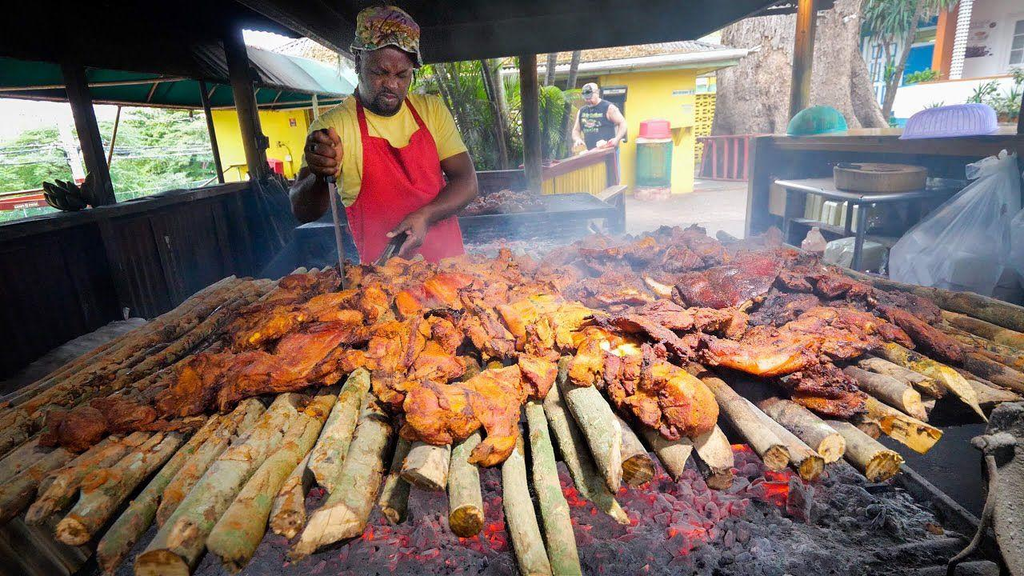
Jamaican street food is not one neat category.
It includes jerk chicken and pork, roast yam and saltfish, patties, corn, soup, fried fish, festival, bammy, roasted breadfruit and a long list of snacks and meals that change according to where you are and who is cooking.
Some are closely associated with particular places. Others have become national favourites.
What they share is less about a recipe than a way of cooking.
Food is prepared close to the customer.
Flavour has to arrive immediately.
The cooking often happens in full view.
And the person selling it has very little room for unnecessary complication.
That is an important lesson for a modern restaurant.
Jerk is the obvious example
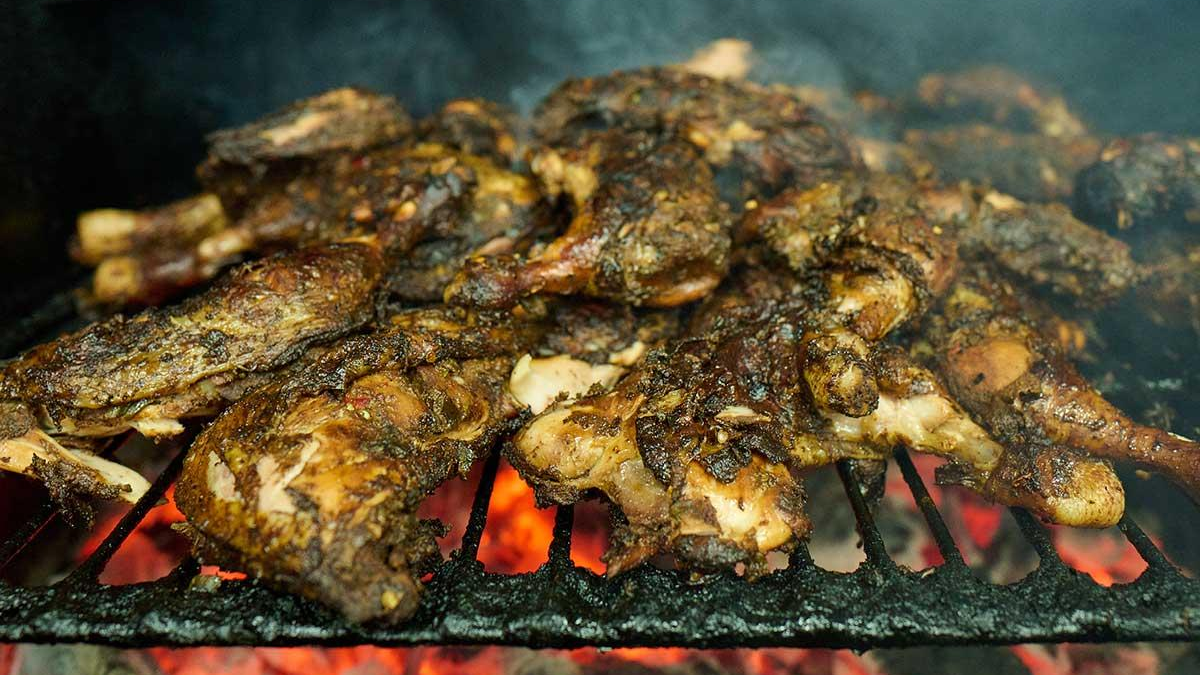
If Jamaican street food has an international ambassador, it is jerk.
The technique is older than the tourism industry that eventually helped turn it into a global Jamaican export. Today, jerk is served everywhere from roadside stands to hotel restaurants and international kitchens.
The basic appeal is difficult to improve upon.
Heat.
Smoke.
Seasoning.
Char.
Juiciness.
The combination creates a flavour profile that travels remarkably well.
Jerk has also become a point of creative experimentation in restaurants, appearing in different preparations and alongside ingredients that would not necessarily appear at a traditional roadside cookout.
But the best versions still understand the original logic.
The smoke should matter.
The seasoning should matter.
The meat should taste like itself.
And the fire should leave evidence.
The restaurant trick is often to stop overcomplicating it
High-end cooking has a habit of adding things.
Another sauce.
Another garnish.
Another texture.
Another explanation.
Street food often does the opposite.
It identifies what people want and gets out of the way.
Take roast yam and saltfish.
The ingredients are straightforward. The experience is not.
The smoky, starchy yam meets saltfish seasoned with aromatics, pepper and other ingredients. It is filling, portable and deeply tied to Jamaican food culture.
A restaurant can reinterpret that combination, but it cannot improve it simply by making the ingredient list longer.
That is one reason street food is such useful inspiration for chefs.
It imposes discipline.
The patty understood convenience before restaurants discovered “grab and go”
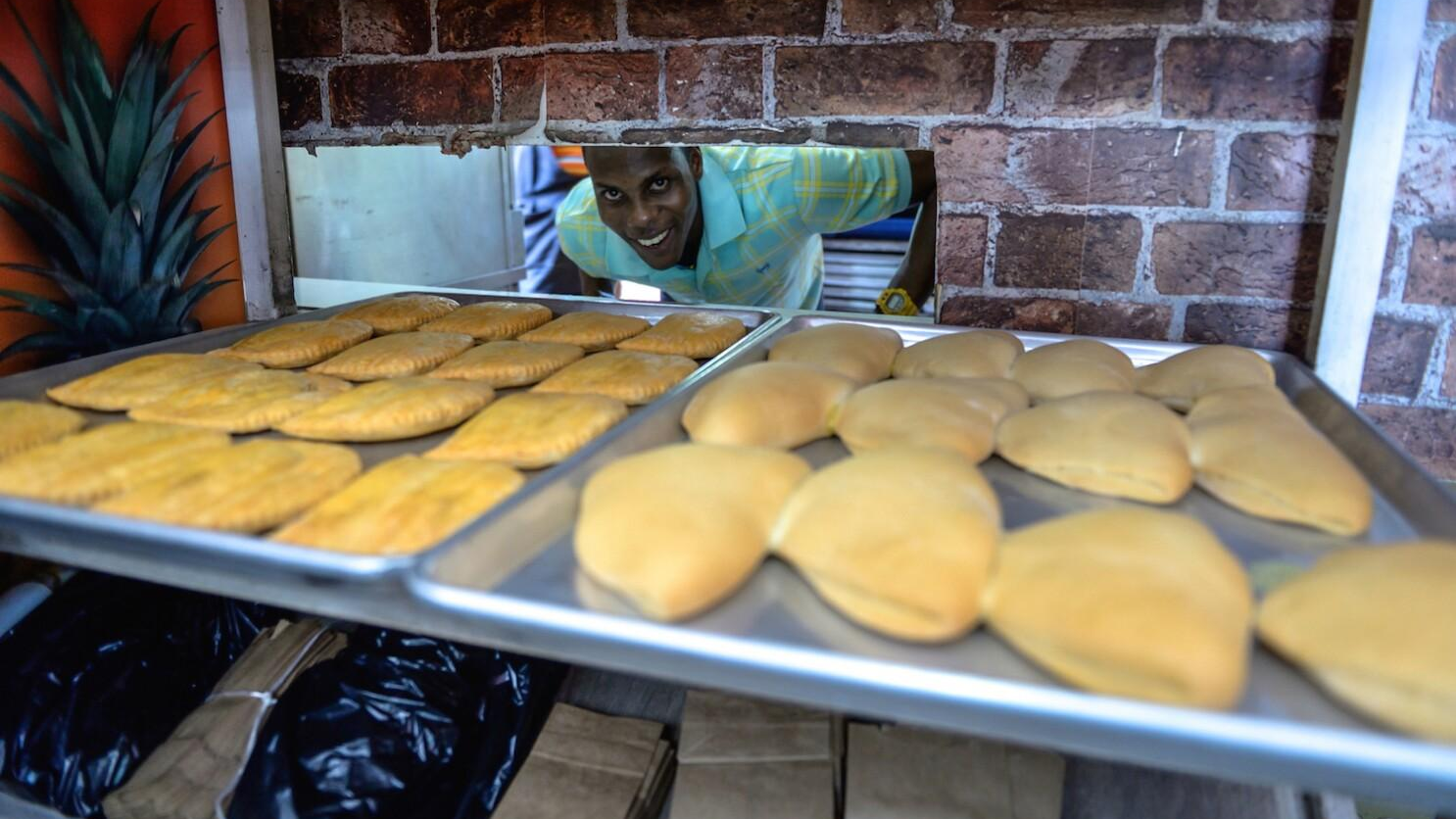
Jamaican patties are another example of a food that solved several problems at once.
They are portable.
They are inexpensive relative to a full sit-down meal.
They can be filled with different proteins and vegetables.
And they are designed around the reality that people have somewhere else to be.
The Jamaican patty’s history is also a reminder that street food is rarely culturally isolated. Jamaica’s cuisine developed through layers of African, European, Asian and Indigenous influences, and the patty itself reflects a particularly interesting combination of Jamaican and British culinary history, with later adaptations becoming distinctly Jamaican.
Today, the idea of a filled pastry as a convenient meal is hardly revolutionary.
But Jamaica perfected its own version.
And restaurants have noticed.
Escovitch fish has always understood texture
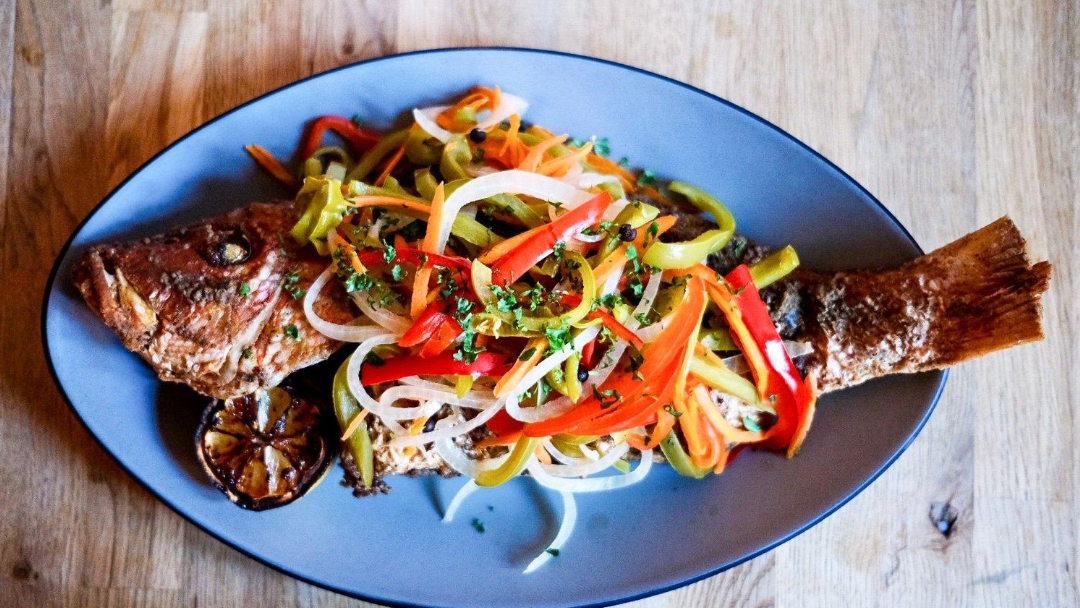
The best Jamaican street and casual food often works because it gives you contrast.
Crisp fish.
Acidic pickle.
Heat from Scotch bonnet.
Soft vegetables.
That is the logic behind escovitch fish.
The dish is traditionally associated with fried fish topped with a vinegar-based preparation of vegetables and peppers. It is a powerful combination because every component has a job.
The vinegar cuts through the richness.
The pepper brings heat.
The vegetables bring freshness and texture.
The fish provides the centre.
A chef looking for a lesson in balance could spend a lot of time studying a plate like that.
Festival is proof that side dishes can steal the show
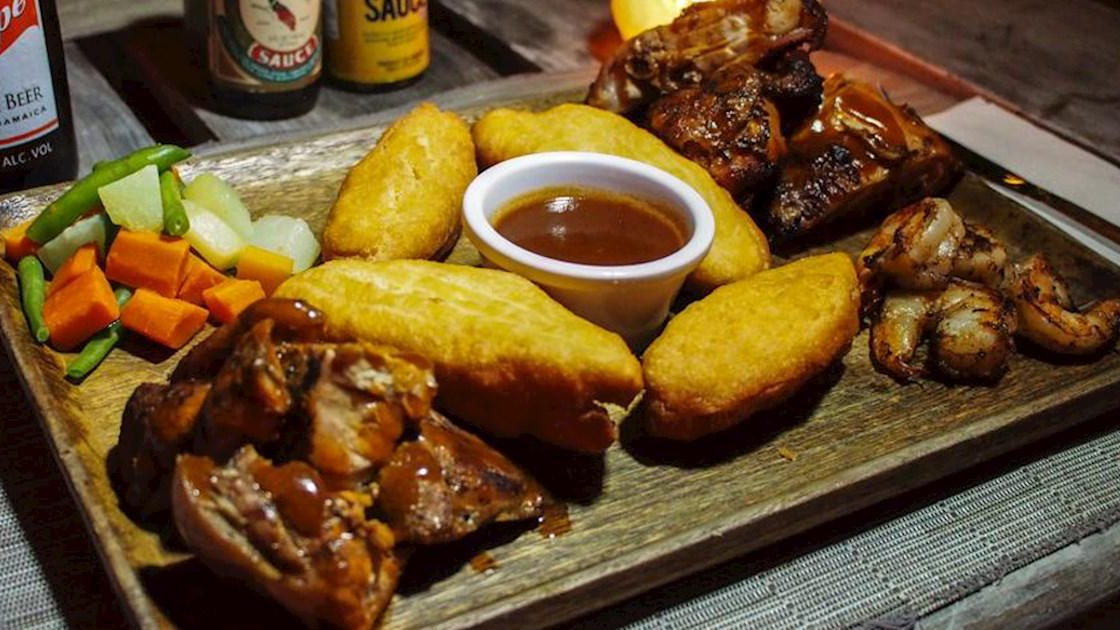
Festival is technically an accompaniment.
Nobody seems particularly interested in treating it like one.
The slightly sweet fried dough is served alongside jerk, fried fish and other dishes, and it has developed its own following.
That matters because modern restaurant menus increasingly understand the value of the side that people remember more than the main course.
Jamaican cooking has been doing that for years.
A great festival changes the meal.
So does good bammy.
So does a properly prepared breadfruit.
The Jamaican plate does not always respect the hierarchy that Western restaurant menus traditionally impose.
The “side” can become the reason people come back.
The roadside cook understands theatre
There is another thing restaurants can learn from street vendors.
People like watching food being made.
The fire.
The knife work.
The smoke.
The flipping.
The seasoning.
The moment the food is wrapped or plated.
Street food puts the process in public.
The customer does not have to wonder what is happening behind the kitchen door.
This has obvious relevance to modern restaurants, where open kitchens, chef counters, live-fire cooking and tableside preparation have become increasingly popular.
But again, the roadside version came first.
A jerk vendor turning meat over coals does not need a concept deck to understand that fire is part of the experience.
The best street food is hyper-local
One of the mistakes a restaurant can make is treating Jamaican street food as a single national flavour.
It is not.
The food changes with geography, ingredients, communities and circumstance.
A fish vendor in a coastal community has different raw materials from someone selling food in Kingston.
A rural roadside cook may have access to produce that would be expensive or difficult to source elsewhere.
The food tells you where you are.
That is exactly what makes it valuable to restaurants trying to create a sense of place.
A menu that says “Jamaican” without understanding Jamaica can feel generic.
A menu that understands where its ingredients, techniques and references come from has a much better chance of feeling authentic.
What chefs are really copying is confidence
The most interesting thing restaurants can learn from Jamaican street food is not a specific dish.
It is attitude.
Street food does not apologise for flavour.
It does not dilute the pepper because someone might find it too assertive.
It does not hide the smoke.
It does not ask whether a dish is sophisticated enough.
It simply has to be good.
That confidence is increasingly valuable in contemporary cooking.
The global restaurant industry has spent years talking about authenticity, local sourcing and food heritage.
Jamaican street vendors have been doing versions of those things because they had no reason to do otherwise.
But copying the dish is not the same as understanding it
There is a line between inspiration and extraction.
A restaurant can take a Jamaican dish, give it a new presentation and put it on a menu.
That does not automatically mean it understands the culture behind the dish.
This matters as Jamaican food becomes increasingly visible internationally.
Jerk seasoning can become a generic “Caribbean” flavour.
Plantain can become decoration.
Scotch bonnet can become a novelty heat source.
And traditional dishes can be stripped of context until the thing being celebrated is no longer recognisably Jamaican.
The better approach is to learn from the people who have kept these foods alive.
Buy from local producers.
Work with Jamaican cooks.
Credit the traditions.
Understand the ingredients.
And recognise that the roadside version is not a rough draft waiting for a restaurant to finish it.
It is the original work.
The restaurant version can still be worth eating
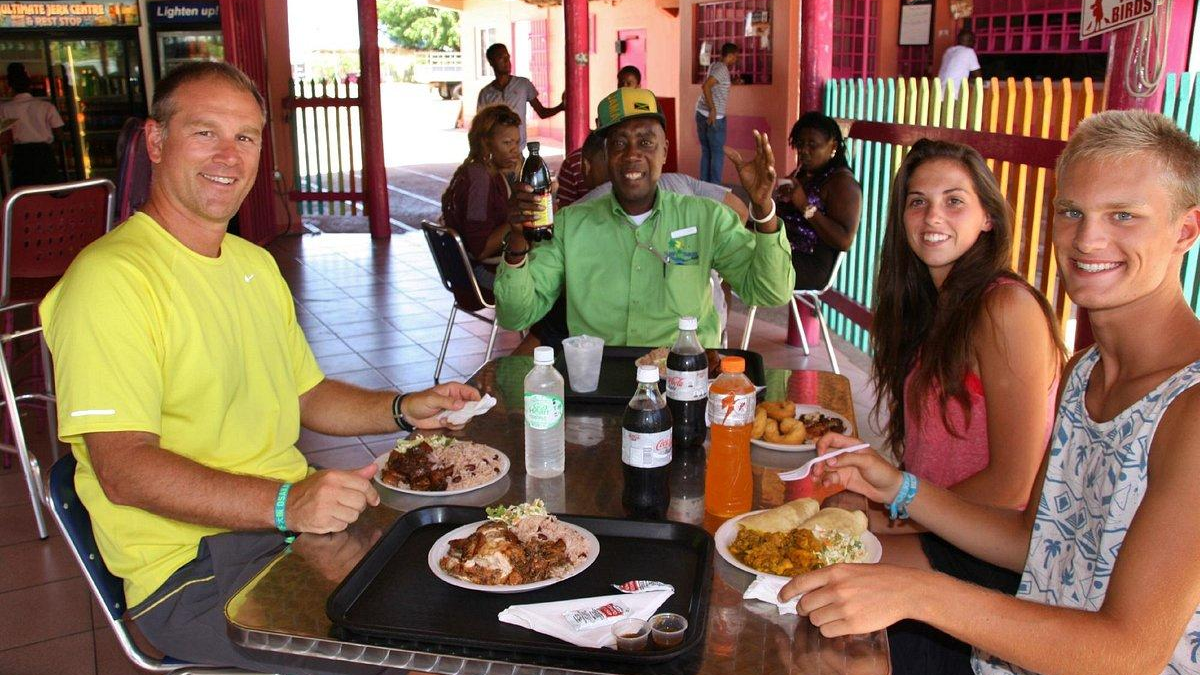
None of this means chefs should leave street food alone.
Quite the opposite.
The best reinterpretations can introduce Jamaican flavours to people who might never have eaten them otherwise.
A chef can take a familiar technique and apply it to a different ingredient.
A restaurant can build a tasting menu around Jamaican food traditions.
A hotel kitchen can source from local vendors and producers.
A contemporary Jamaican restaurant can use modern technique without pretending that tradition has no value.
The key is knowing what can change without losing the thing that made the dish matter.
Jamaica’s street food has an advantage money cannot buy
It has memory.
People know where they ate their first patty.
They remember the jerk stand their family used to visit.
They know whose roast yam is better.
They have strong opinions about soup.
They have watched somebody cook the food.
That emotional connection is difficult to manufacture in a restaurant.
A chef can reproduce the seasoning.
It is much harder to reproduce the memory.
That is why Jamaican street food remains powerful even as the island’s restaurant culture becomes more ambitious.
The roadside kitchen is still ahead
There is a temptation to think of food culture as a ladder.
Street food at the bottom.
Restaurants at the top.
Jamaica makes that hierarchy look increasingly silly.
The roadside cook has already solved problems that expensive kitchens continue to study.
How do you make food people crave?
How do you create theatre?
How do you make local ingredients memorable?
How do you serve food quickly?
How do you build a reputation through word of mouth?
How do you make somebody come back tomorrow?
The answer, very often, is the same.
Make the food good.
Make it distinctive.
And give people a reason to remember where they ate it.
Jamaica’s best restaurants may borrow from the street.
They should.
But they should also remember which direction the influence is travelling.
The roadside kitchen was never waiting for fine dining to catch up.
Frequently Asked Questions
What is Jamaican street food?
Jamaican street food is a broad category of foods prepared and sold in public or informal settings, including jerk meats, patties, roast yam, corn, fried fish, festival, bammy and other snacks and meals. There is no single definitive list because Jamaican street food varies by location and vendor.
What is the most popular Jamaican street food?
Jerk chicken is among Jamaica’s best-known street foods internationally, but popularity varies by location and personal preference. Patties, roast yam and saltfish, fried fish and other roadside foods are also widely associated with Jamaican food culture.
Why is Jamaican street food so popular?
Jamaican street food combines strong flavour, portability, relatively accessible ingredients and the experience of watching food being prepared. Its connection to local communities and memories also gives many dishes cultural significance beyond their ingredients.
Where can you find Jamaican street food?
Street food is found throughout Jamaica, from Kingston and Montego Bay to smaller towns and rural communities. Specific foods and vendors vary considerably by location.
What makes Jamaican jerk different?
Jerk traditionally involves seasoning meat with a characteristic blend of ingredients and cooking it over wood or other fuel that produces smoke. Scotch bonnet peppers, pimento and other seasonings are commonly associated with jerk, although recipes and techniques vary between cooks and regions.
Is Jamaican street food authentic?
Street food is an important part of Jamaican food culture, but “authentic” is not a simple test. Recipes and techniques vary between families, communities and vendors. A dish does not become more authentic simply because it is prepared outdoors, nor does a restaurant version automatically become inauthentic because it uses modern techniques.