


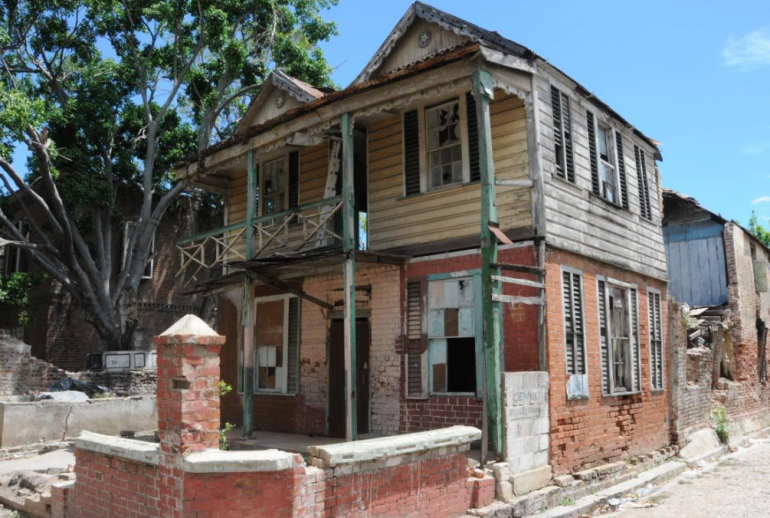
An old house rarely disappears in one moment.
The final demolition can take a day. The loss begins earlier.
A roof goes. Water enters. A family leaves. A property changes hands. A development proposal appears. A building everybody knew as part of a street becomes expensive land with something standing on it.
Then, sometimes, the building is gone.
Jamaica has spent years debating heritage through individual losses. A house in Kingston. A courthouse in St Thomas. A Georgian structure in Spanish Town. A church in Hanover.
What those stories share is not one cause.
Some buildings are demolished. Some burn. Some deteriorate. Some are destroyed by storms.
The common problem is that heritage often becomes urgent only after the structure has already entered crisis.
A Building Can Matter Before the Law Says It Does
Historic importance and legal protection are not the same thing. That difference sits at the centre of Jamaica’s preservation problem.
The Jamaica National Heritage Trust holds statutory powers around protected heritage. But an old private house does not automatically become legally protected because architects, neighbours or historians consider it important.
Recognition has to become formal. That can mean declaration, designation, preservation measures, administrative action.
Until then, a significant building can remain part of Jamaica’s architectural memory while sitting inside an ordinary private-property transaction.
That is a vulnerable position.
The Burnett Webster House Shows How Fast Loss Becomes Permanent
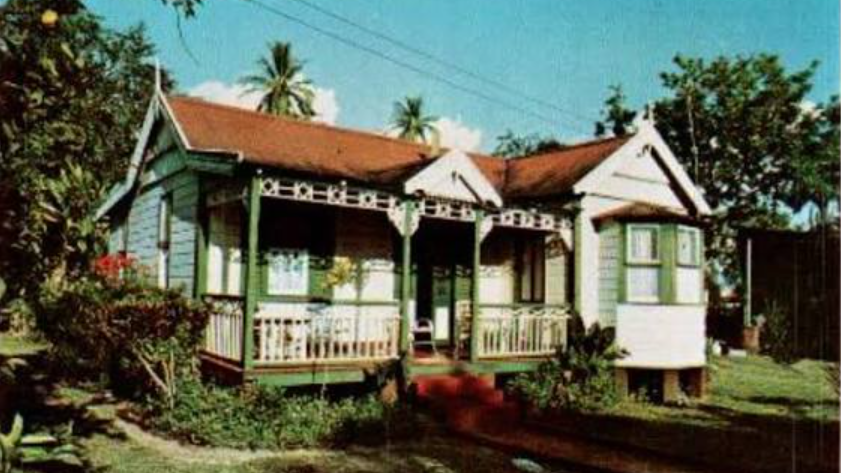
The Burnett Webster house in Kingston was demolished in 2021. Its loss generated criticism from people concerned with Jamaican architecture and heritage.
The building belonged to a generation of domestic architecture that helped describe how Kingston once lived.
That is different from saying every old house should remain forever. Cities change. Families sell. Land becomes more valuable. Buildings sometimes reach the end of practical use.
Preservation becomes difficult when the cultural importance of a building is discussed seriously only after a demolition decision is already moving.
At that point, the argument has arrived late.
The David Boxer House Raised the Same Question
In 2019, reports that the former home of artist and curator David Boxer faced demolition triggered another version of the debate.
The value of such a property is difficult to describe through square footage alone. The building matters partly because of architecture. It can also matter because of the life that happened inside it.
Artists worked there. Collections were formed there. People met there. Ideas moved through rooms that eventually become real estate.
That kind of significance is harder to put inside a planning application. It is still significance.
Not Every Loss Is a Demolition
The historic courthouse at Morant Bay makes that distinction unavoidable. The building was destroyed by fire, not by redevelopment.
The result is still a missing piece of built history, but the mechanism matters, because it changes what preservation even means afterward.
Once a heritage building is destroyed, the debate shifts. Preservation becomes reconstruction. Reconstruction becomes a question of authenticity. Then cost, design and public purpose enter the argument.
The questions become more complicated after the original material is gone.
Melissa Changed the Heritage Conversation Entirely
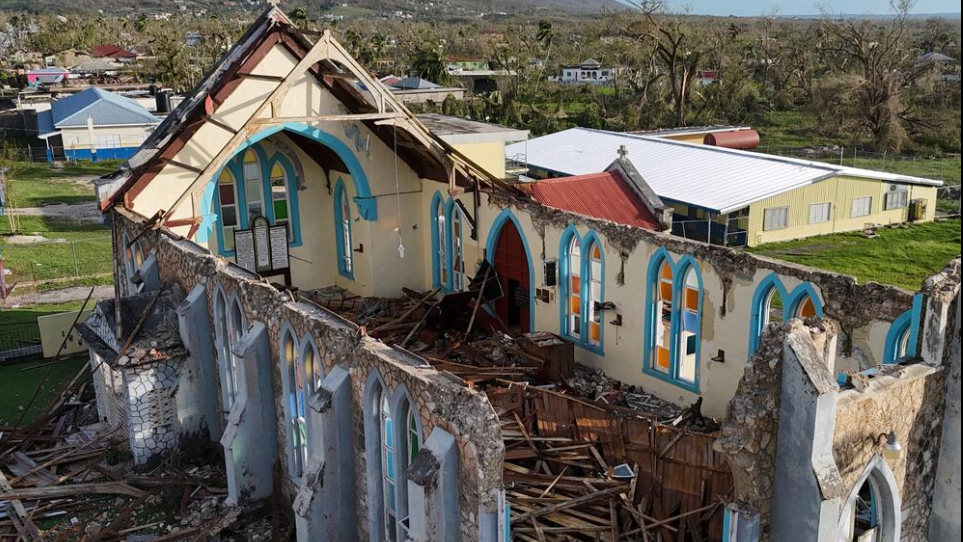
Hurricane Melissa made landfall on October 28, 2025, crossing western Jamaica as a Category 5 storm.
Kingston, roughly 100 miles east of the eye, was largely spared. Its major museums suffered little more than water damage. Western Jamaica was not so fortunate, and the losses there were not incidental to the island’s heritage. They were central to it.
The Accompong Maroons Museum and Community Centre, known as Kindah Tree, lost its roof, along with the roofs of an estimated 80 percent of the settlement. The site is associated with the signing of the 1739 Maroon treaty with the British.
Holland Bamboo, the bamboo corridor in St Elizabeth dating to the mid-1700s and believed to have been planted by enslaved Africans seeking shade, saw its canopy near collapse.
The Falmouth Courthouse, a nineteenth-century Georgian building, was damaged. So was St John’s Anglican Church in Black River, one of Jamaica’s oldest towns and the first to have electricity, according to the Jamaica National Heritage Trust.
Ramble Anglican Church in Hanover, a century old, was demolished by the storm. William Knibb Baptist Church in Falmouth, Calvary Baptist in Montego Bay and Mount Ward Methodist in Hanover were left in ruin. The Frome Sugar Factory in Westmoreland, pivotal to the formation of Jamaica’s trade union movement in the 1930s, suffered significant damage.
Seaford Town in Westmoreland, a hillside settlement housing descendants of Germans brought to Jamaica as indentured labourers more than a century ago, was left with no public buildings standing.
Schools built as community landmarks were not spared. Cornwall College, Mount Alvernia High and Manning’s High all sustained major structural damage.
The Storm Exposed What Neglect Had Already Done
This is the part that connects Melissa back to the rest of the argument.
Speaking to the Jamaica Observer after the storm, two architects with expertise in historic buildings pointed to a lack of maintenance as one reason damage to heritage sites was so extensive. They were not minimising the strength of a Category 5 hurricane. They were identifying a compounding factor.
Preservation architect Sarah Ann Hodges, co-founder of Kingston 10 Architects, described what the first steps should be. Where damage is limited to the roof, covering it quickly to prevent further rain entry and deterioration matters most. Beyond that, she emphasised collecting the material itself, timbers, commemorative stones, tiles, and preventing it from being taken away and used elsewhere.
That is the practical version of a larger point. A building already weakened by deferred maintenance enters a storm with less margin. A building damaged by a storm and left uncovered deteriorates faster afterward.
Neglect does not usually destroy a heritage building on its own. It determines how much of one survives the thing that does.
Jamaica’s Ministry of Culture, Gender, Entertainment and Sport subsequently sought UNESCO support for a Post Disaster Needs Assessment on cultural assets, with particular concern for the Blue and John Crow Mountains and the Archaeological Ensemble of seventeenth-century Port Royal, both World Heritage sites, alongside cultural sites across the west.
The Uncomfortable Question Underneath
Much of what Melissa destroyed in western Jamaica was colonial-era architecture, buildings constructed during and funded by slavery.
Writing in The Art Newspaper in November 2025, the Jamaican critic Annie Paul framed the storm’s effect on those structures directly, asking whether Melissa functioned as a decolonial wind.
It is a genuine tension rather than a settled position, and it does not resolve cleanly. A Georgian courthouse and a Maroon community centre both count as Jamaican heritage. They do not carry the same history, and people can reasonably disagree about what is owed to each.
That disagreement matters for preservation policy, because limited restoration funding forces exactly this question. What gets rebuilt first is not only a technical decision.
Saving a Building Does Not Mean Freezing It
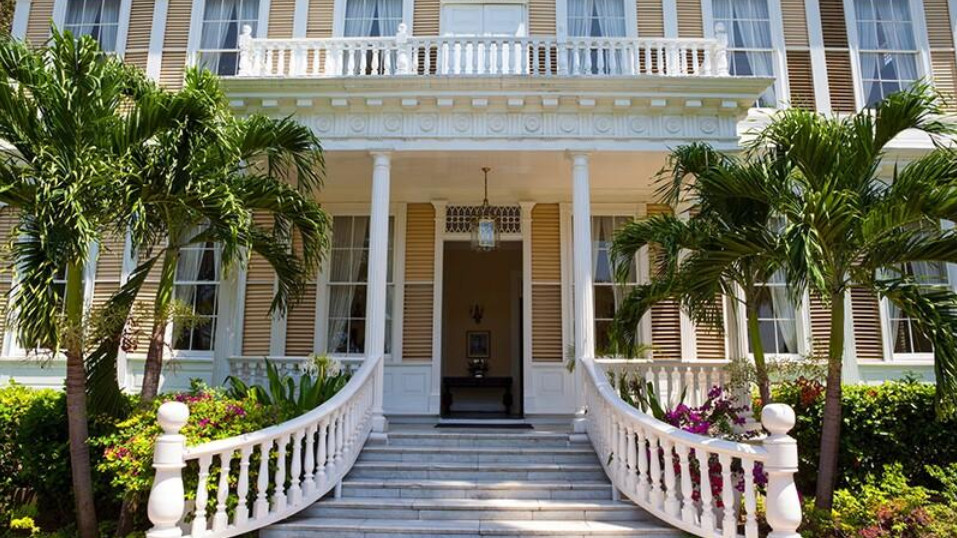
Devon House offers another model. Its continued life depends partly on use. People visit. Businesses operate. Events happen. The property functions as part of contemporary Kingston while retaining historical identity.
Adaptive reuse does not solve every heritage problem. It does demonstrate that the choice is not always demolish or turn into a museum.
Old buildings can earn a new function. That can be one of the strongest arguments for keeping them.
What Disappears With a Building
The obvious answer is architecture. Materials, craftsmanship, proportions, verandas, rooflines, construction methods.
But buildings also hold information that is less visible. How people moved through a house. How climate shaped design before air-conditioning became standard. How families used public and private rooms. How wealth was displayed. How labour was organised. How a town understood itself.
Once the structure disappears, some of that survives in photographs, plans and memory.
Some does not.
Recognition Has to Arrive Earlier
Jamaica cannot preserve every old building, and age alone should not be enough. Cities need housing. Businesses need land. Buildings fail. Property rights matter. Development matters.
The harder task is deciding which structures carry enough architectural, historical or cultural value that losing them would cost more than the land beneath them suggests.
That decision has to happen before the excavator arrives. Before the roof collapses. Before the fire. Before the hurricane.
Melissa demonstrated the cost of getting that timing wrong at national scale. Buildings that had been quietly deteriorating for years were the ones least able to withstand a storm, and the least likely to be stabilised quickly afterward.
Heritage protection is weakest when everybody agrees a building mattered only after it is gone.
Frequently Asked Questions
Who protects historic buildings in Jamaica?
The Jamaica National Heritage Trust is the main statutory heritage body, but legal protection depends on the status of the specific site and the powers available under Jamaica’s heritage laws. Cultural importance alone does not create automatic legal protection.
Are all old buildings in Jamaica protected?
No. Age or recognised cultural importance does not automatically confer formal legal protection. A building generally needs to enter the statutory system through declaration or designation.
What happened to the Burnett Webster house?
The Kingston property was demolished in 2021, prompting criticism from heritage and architectural observers.
Did Hurricane Melissa damage Jamaican heritage sites?
Extensively. Documented losses across western Jamaica include the Accompong Maroons Museum, Holland Bamboo, the Falmouth Courthouse, Ramble Anglican Church in Hanover, William Knibb Baptist Church, the Frome Sugar Factory and numerous historic churches and schools. Kingston, further east, was largely spared.
Why was heritage damage from the hurricane so severe?
Architects with heritage expertise told the Jamaica Observer that a lack of maintenance was one factor in the extent of the damage, alongside the strength of the Category 5 storm itself. Buildings already weakened by deferred maintenance had less margin.
Can historic buildings be reused instead of demolished?
Yes. Adaptive reuse allows historic buildings to serve contemporary functions while preserving architectural and cultural elements. Devon House is a prominent Jamaican example of a historic property that remains actively used.